HomePoultryStudy Links Chronic Imidacloprid Exposure to DNA Damage & Reproductive Decline in...

Study Links Chronic Imidacloprid Exposure to DNA Damage & Reproductive Decline in Quail

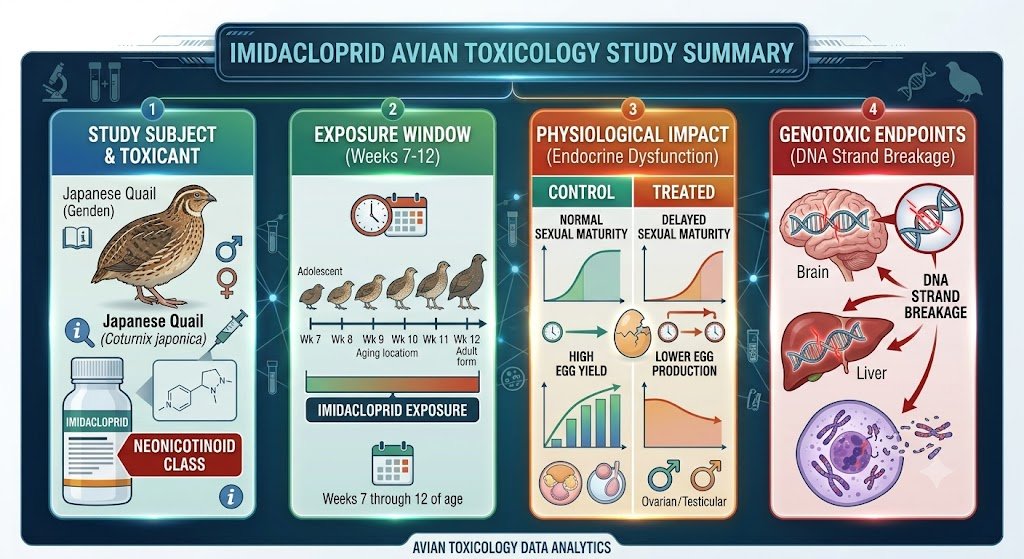
LAUSANNE, SWITZERLAND — A groundbreaking toxicology study published in Frontiers in Veterinary Science reveals that chronic, low-dose oral exposure to imidacloprid—a widely used neonicotinoid insecticide—causes significant reproductive disruption and organ-specific DNA damage in Japanese quail (Coturnix japonica).

The research tracked birds from seven to twelve weeks of age, simulating agricultural field exposures to evaluate sub-lethal systemic impacts on avian wildlife.

Key Findings from Avian Research

  • Behavioral & Reproductive Decline: Imidacloprid significantly reduces female proceptive behaviors and mating compliance scores (P ≤ 0.001), while causing major declines in overall egg production, weight, and total egg mass

  • Genotoxicity & DNA Damage: Alkaline comet assays indicate prominent genomic DNA damage within hepatic and cerebral tissues, reflecting increased tail moments and DNA fragmentation

  • Gonadal & Systemic Toxicity: Sub-chronic exposure triggers oxidative stress, lipid peroxidation, structural ovarian and testicular lesions, and hepatic fibrosis

  • Ecotoxicological Risk: Research highlights that environmental residues present substantial physiological and reproductive hazards to non-target wild and domestic avian populations

Industry & Ecotoxicology Implications

The study adds peer-reviewed evidence to the global regulatory debate surrounding neonicotinoid pesticide usage.

The findings indicate that sub-lethal agricultural runoff or treated seed consumption can impair avian population dynamics through reduced reproductive output and cellular toxicity, supporting stricter environmental impact assessments for systemic insecticides.

Animal Health India Editorial Team
Animal Health India Editorial Teamhttps://animalhealthindia.com
Animal Health India (AHI) is an independent news and intelligence platform covering the global animal health, veterinary, livestock, poultry, companion animal and pet food sectors. Our editorial team comprises veterinary journalists, animal health professionals, regulatory affairs specialists and industry analysts with over 30 years of combined experience covering India, Asia, Europe and North America. AHI publishes news, regulatory updates, market intelligence and company news drawn from primary sources including DAHD, EMA, USDA, AVMA and leading veterinary publications worldwide.

RELATED ARTICLES