


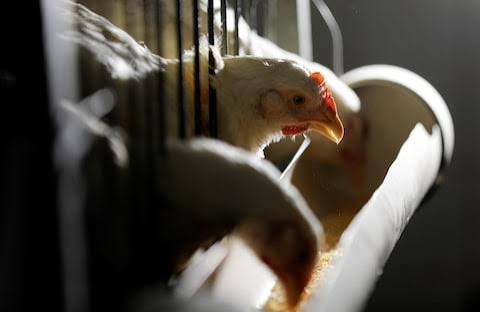
Newcastle disease detection in southern Brazil disrupts poultry trade
Brazil’s confirmation of Newcastle disease at a commercial turkey farm in Nova Itaberaba, Santa Catarina, on 19 October 2026 has triggered temporary trade restrictions and renewed scrutiny of poultry-export biosecurity. Mexico suspended imports of specified Brazilian poultry products, while China and Chile introduced restrictions covering products originating in Santa Catarina.
The Brazilian Ministry of Agriculture and Livestock (MAPA) confirmed the export restrictions in an official update published on 20 October. Its notice distinguishes between Mexico’s nationwide restrictions on Brazilian-origin products and the more geographically limited measures applied by China and Chile. https://www.gov.br/agricultura/pt-br/assuntos/noticias/doenca-de-newcastle-atualizacao-sobre-as-restricoes-as-exportacoes
The incident matters beyond the affected farm because Brazil is the world’s largest chicken-meat exporter. The commercial impact will depend on the disease-control response, the geographic scope of trading partners’ restrictions, the time needed to restore market access and the ability of exporters to redirect shipments.
An important qualification: the outbreak was confirmed at a commercial turkey farm. It is not as yet, a confirmed chicken-farm outbreak. However, the resulting restrictions affect a broader range of poultry products and can have implications for Brazil’s wider poultry trade.
What happened in Santa Catarina?
Brazilian authorities confirmed Newcastle disease at a commercial poultry establishment in Nova Itaberaba, in Santa Catarina, a southern state with a significant poultry industry.
The diagnosis prompted sanitary containment measures and investigations around the affected premises. Reuters reported that authorities were working to contain the event and that the response had implications for nearby farms and export channels. https://www.reuters.com/business/healthcare-pharmaceuticals/brazil-detects-newcastle-disease-turkey-farm-southern-state-2026-10-19/
Newcastle disease is a highly contagious viral disease affecting birds. Depending on the virus strain and the affected bird population, clinical signs can include respiratory and neurological abnormalities, reduced production and mortality. Disease severity varies, and an individual detection should not be taken to mean that all poultry farms in the region are infected.
The immediate priorities are to establish the extent of infection, implement the required containment measures, investigate potential epidemiological links and provide trading partners with verified information about the outbreak and the response.
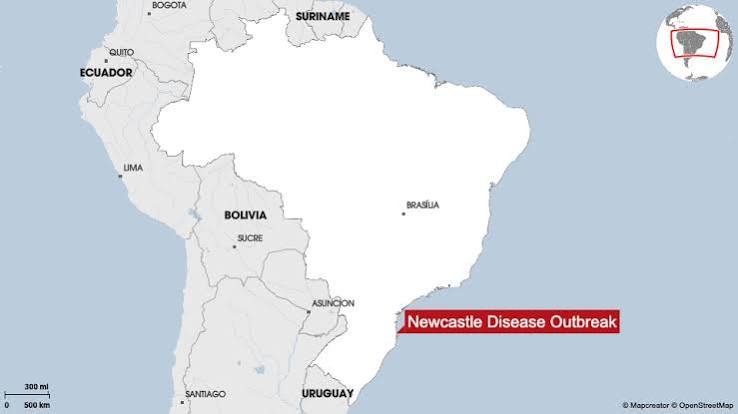
Country-by-country breakdown of trade restrictions
The restrictions announced by 20 October differ materially by destination. Treating them as a single, uniform global embargo would misrepresent the official position.
Importing market |
Geographic scope reported |
Products or categories covered in the official update |
Commercial significance |
|---|---|---|---|
Mexico |
Brazil nationwide |
Live birds, poultry meat and offal, fertile eggs, chicks up to three days old, and specified ornamental, song, raptor and pet birds |
Broadest geographic restriction among the three markets listed |
China |
Santa Catarina |
Poultry meat |
Regional restriction; other Brazilian-origin supply is not covered by this particular state-specific measure |
Chile |
Santa Catarina |
Fertile eggs, SPF eggs, day-old chicks, ornamental birds, fresh poultry meat, eggs for human consumption and meat products containing fresh poultry meat |
Broad product coverage within the affected state’s origin boundary |
Source: Brazil’s Ministry of Agriculture and Livestock, official export-restriction update published 20 October 2026. https://www.gov.br/agricultura/pt-br/assuntos/noticias/doenca-de-newcastle-atualizacao-sobre-as-restricoes-as-exportacoes
The table reflects the restrictions reported in that official update; import requirements can change as negotiations proceed. Exporters must verify the current requirements for each product, production date, establishment and destination before dispatch.
Mexico: nationwide restriction creates wider exposure
Mexico suspended imports of specified poultry products originating anywhere in Brazil. The decision is commercially significant because it extends beyond the state where the outbreak was identified.
Reuters reported that Mexico was Brazil’s seventh-largest poultry buyer in 2025. This gives the restriction significance for both Brazilian exporters and Mexican buyers that may need to assess alternative supply options.
The restriction covers multiple product categories, not only processed chicken meat. That matters because the effects may extend to breeding and genetic-material supply chains, depending on the precise scope of the applicable rules.
China: the geographic scope is the key variable
China is an especially important market because of its position as a major destination for Brazilian poultry exports. The restriction reported by MAPA was limited to products originating in Santa Catarina.
This distinction is material: a state-specific restriction can have a substantially different effect from a nationwide embargo. The commercial consequences will depend on eligible supply from other Brazilian states, establishment-level requirements, the treatment of shipments already certified and the duration of the restriction.
Reuters reported that China accounted for approximately 10% of Brazilian chicken exports, citing analyst assessments. Its response was identified as a major uncertainty for the market. https://www.reuters.com/business/healthcare-pharmaceuticals/brazils-newcastle-poultry-outbreak-unlikely-have-major-long-term-impact-analysts-2026-10-20/
Chile: multiple poultry-product categories affected
Chile’s reported restrictions also apply to Santa Catarina-origin products and cover more than fresh meat. Fertile and SPF eggs, day-old chicks, ornamental birds, eggs for human consumption and certain meat products are included in the Brazilian government’s update.
This wider product coverage illustrates how animal-disease controls can affect the poultry breeding and production chain, rather than only finished meat exports.
The 15% production-exposure estimate: what it means—and what it does not
Analysts cited by Reuters estimated that trade restrictions under the protocols in force could affect approximately 15% of Brazil’s chicken production.
This figure requires careful interpretation.
It is an analyst estimate of potential exposure under a particular set of trade restrictions, not a measurement of poultry production lost, destroyed or rendered unmarketable. It does not establish that 15% of Brazilian production is infected, that 15% of farms are affected or that national output will fall by 15%.
The realised impact will depend on several variables:
-
Geographic scope: whether restrictions are limited to Santa Catarina or extended to other regions.
-
Destination-specific rules: whether importing countries accept regionalisation and compartmentalisation arrangements.
-
Duration: how quickly authorities can satisfy the applicable conditions for restoring trade.
-
Product eligibility: whether individual products, establishments and production dates meet destination requirements.
-
Alternative demand: whether shipments can be redirected to other export markets or the domestic market.
-
Price effects: whether redirected volumes create temporary oversupply and put pressure on producer or processor margins.
Lessons from Brazil’s 2024 Newcastle disease episode
Brazil experienced a previous Newcastle disease outbreak in neighbouring Rio Grande do Sul in July 2024. Reuters cited JPMorgan analysts’ estimate that chicken exports fell by approximately 25%, or 100,000 metric tonnes, during the month affected by restrictions.
According to the same reporting, exports subsequently rebounded as markets reopened, and analysts said the episode did not have a material lasting effect on the earnings of major processors MBRF and JBS.
The 2024 episode is a useful reference point, but it should not be treated as a direct forecast for 2026. The affected geography, importing-country responses, product mix, commercial contracts and duration of restrictions may differ.
The key lesson is that the financial impact of a livestock-disease event is not determined solely by the biological characteristics of the pathogen. It is also shaped by market-access rules, the speed of regulatory communication and the flexibility of exporters’ distribution networks.
Newcastle disease: animal-health and biosecurity implications
Newcastle disease control depends on early detection, surveillance, appropriate veterinary investigation, biosecurity and the implementation of measures required by the relevant authorities.
For commercial poultry operators, the incident reinforces the importance of:
-
Farm biosecurity: controlling access, reducing contact with potentially infected birds and maintaining effective cleaning and disinfection protocols.
-
Movement controls: complying with restrictions on live birds, eggs, equipment and other materials that could contribute to disease spread.
-
Surveillance and reporting: escalating suspicious clinical signs and mortality patterns promptly through established veterinary channels.
-
Traceability: maintaining accurate flock, movement, hatchery, slaughter and shipment records.
-
Export documentation: ensuring that origin, establishment, certification and production-date information are accurate and consistent with destination requirements.

