



FDA approves higher-concentration, ready-to-use cefovecin injection for dogs
The US Food and Drug Administration (FDA) approved Convenia RTU for Dogs, a ready-to-use cefovecin injectable suspension developed by Zoetis, on 20 October 2026. The prescription veterinary medicine is indicated for the treatment of certain skin infections in dogs caused by susceptible strains of Staphylococcus pseudintermedius and Streptococcus canis (Group G).
The approval introduces a 160 mg/mL formulation, double the concentration of the original Convenia formulation, which contains 80 mg/mL. The product is supplied as a ready-to-use suspension in a 10 mL multi-use vial containing 1,600 mg of cefovecin. It is approved for dogs only. https://www.fda.gov/animal-veterinary/cvm-updates/fda-approves-ready-use-cefovecin-injectable-treatment-certain-skin-infections-dogs

The regulatory decision is a formulation and label development within an established veterinary antibiotic category rather than the introduction of a new active pharmaceutical ingredient. Its commercial relevance will depend on prescribing practices, clinic workflows, product availability, pricing and how veterinarians assess the formulation against other appropriate treatment options.
What infections does Convenia RTU target?
The FDA-approved indication covers skin infections associated with susceptible strains of two bacterial species.
-
Staphylococcus pseudintermedius: This bacterium can be found on healthy canine skin but can cause infection when the skin’s protective barrier is disrupted.
-
Streptococcus canis (Group G): Another organism that can be present without causing disease but can act as an opportunistic pathogen under suitable conditions.
Scratching, allergic skin disease, wounds and other forms of skin-barrier damage can create conditions in which these organisms multiply and cause clinical infection. Treatment decisions should reflect the clinical presentation and the likelihood that the responsible bacteria are susceptible to cefovecin.
The indication is not a blanket approval for every canine dermatological condition. Allergic dermatitis, parasitic disease, fungal infections and other non-bacterial causes of skin lesions require appropriate diagnosis and management; an antibiotic does not address all underlying causes of itching or inflammation.
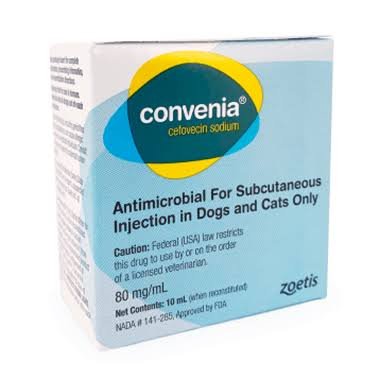
Convenia RTU versus the original Convenia formulation
Product characteristic |
Convenia RTU for Dogs |
Original Convenia formulation |
|---|---|---|
Active ingredient |
Cefovecin sodium |
Cefovecin sodium |
Concentration |
160 mg/mL |
80 mg/mL |
Formulation |
Ready-to-use injectable suspension |
Earlier cefovecin formulation |
Approved species |
Dogs only |
Dogs and cats under its approved label |
Presentation |
10 mL multi-use vial |
Different formulation and label |
Regulatory milestone |
FDA approval, 20 October 2026 |
Original US approval in 2008 |
The concentration comparison is straightforward: 160 mg/mL is twice 80 mg/mL. However, concentration alone does not establish superior clinical efficacy, a longer duration of effect, a lower risk of resistance or improved safety. Those conclusions require appropriate comparative evidence and must not be inferred solely from the formulation strength.
The new product contains benzyl benzoate and propylene glycol as inactive ingredients. The FDA states that these ingredients may be toxic to cats, which is why Convenia RTU is approved for dogs only. The canine-only restriction is a material safety distinction, not simply a marketing choice.
Product presentation and administration considerations
According to the FDA announcement, Convenia RTU is supplied in a 10 mL multi-use vial and is available by prescription from a licensed veterinarian. The product contains 1,600 mg of cefovecin in total.
The FDA specifies that the vial should be shaken for 60 seconds before each use and that the medicine should be administered using a 20-gauge needle. Veterinary professionals should consult the full approved label for dosing, contraindications, warnings, handling, storage and other instructions before use.
Cefovecin is a third-generation cephalosporin and a beta-lactam antimicrobial. Like other antibiotics, its use should be guided by the approved indication, clinical judgment and antimicrobial-stewardship principles. Unnecessary or inappropriate use can contribute to antimicrobial resistance.
Why the approval matters for veterinary practices
1. Formulation convenience – A ready-to-use presentation may simplify preparation compared with formulations requiring reconstitution. Whether that translates into measurable time savings or fewer preparation errors in routine practice will depend on clinic workflows and how the product is handled.
2. A differentiated presentation of an established molecule – The active ingredient is not new to the market: the original Convenia was approved in 2008 for skin infections in dogs and cats. The new formulation creates a differentiated product presentation around concentration, ready-to-use handling and a dog-specific label.
3. Greater importance of species-specific product selection – The canine-only approval reinforces the need to distinguish between products that share an active ingredient and products whose complete formulations and approved labels differ. Veterinarians must not assume that a product approved for one species is appropriate for another.
4. Antimicrobial stewardship remains central – Convenience does not replace diagnosis. Bacterial susceptibility, infection severity, underlying skin disease and the need for alternative or additional treatment remain important considerations. The approval should not be interpreted as a recommendation to use injectable antibiotics for every case of canine skin disease.
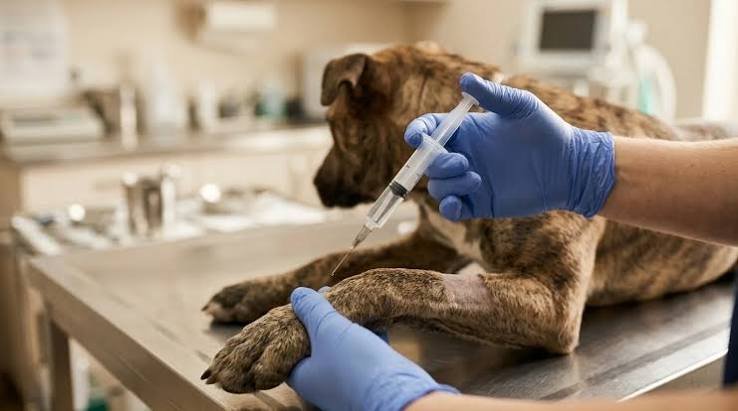
Competitive and commercial implications for Zoetis
The approval gives Zoetis an additional formulation in the companion-animal anti-infective category. Commercial uptake will depend on more than concentration: veterinarians will consider price, availability, prescribing preferences, clinical suitability and the operational value of the presentation.
Key questions for market observers include:
-
How quickly will the product become available through veterinary distribution channels?
-
How will its price compare with the original formulation and other treatment options?
-
Will ready-to-use handling change clinic preferences or procurement patterns?
-
What post-market safety information and prescribing experience emerge?
-
How will the company position the product while maintaining appropriate antimicrobial stewardship?
The FDA approval alone does not establish launch scale, sales forecasts, clinical superiority or market-share gains. Those should be assessed when reliable commercial and clinical data become available.
Outlook
Convenia RTU for Dogs is a regulatory milestone in canine dermatology: an established antibiotic active ingredient delivered in a higher-concentration, ready-to-use formulation. The principal distinctions are its 160 mg/mL concentration, 10 mL multi-use presentation and dog-only approval.
The next meaningful indicators will be commercial availability, prescribing experience, safety monitoring and the extent to which veterinarians value the new presentation in appropriate cases. For the industry, the wider lesson is that formulation innovation can create product differentiation—but clinical decisions must continue to be driven by diagnosis, the approved label and responsible antimicrobial use.

