



EBOS Group’s Animal Care business delivers double-digit earnings growth as branded pet products and veterinary distribution expand
EBOS Group reported strong growth in its Animal Care segment for the financial year ended 30 June 2026, with revenue increasing 34.6% to A$907 million and underlying EBITDA rising 11.6% to A$138 million. The New Zealand- and Australia-listed healthcare and animal-care group attributed the performance to continued growth across its branded portfolio and veterinary-wholesale operations, supported by acquisitions and market-share gains in selected pet-nutrition categories.
The results highlight the growing strategic importance of companion-animal nutrition and veterinary distribution within a diversified animal-health business. EBOS combines branded pet food and treats with wholesale distribution to veterinary practices, allowing it to participate in multiple parts of the companion-animal value chain.
The headline revenue increase, however, should not be interpreted as entirely organic growth. Acquisitions—including New Zealand veterinary wholesaler SVS and additional pet-food manufacturing capabilities—contributed to the expansion. Branded revenue increased by a more moderate 6.7%, providing a useful indication of underlying momentum in the established brand portfolio.
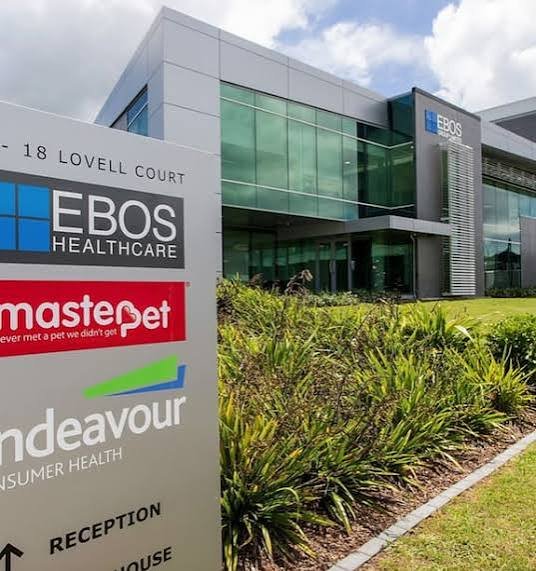
FY2026 Animal Care financial performance
The following figures are reported in Australian dollars and relate to the financial year ended 30 June 2026.
Financial metric |
FY2026 |
FY2025 |
Year-on-year change |
|---|---|---|---|
Revenue |
A$907m |
A$673m |
+34.6% |
Gross operating revenue (GOR) |
A$243m |
A$215m |
+13.1% |
GOR margin |
26.8% |
32.0% |
−5.2 percentage points |
Underlying operating expenses |
A$105m |
A$91m |
+15.1% |
Statutory EBITDA |
A$135m |
A$123m |
+10.1% |
Underlying EBITDA |
A$138m |
A$124m |
+11.6% |
Underlying EBITDA margin |
15.3% |
18.4% |
−3.1 percentage points |
Source: EBOS Group FY2026 results. Figures rounded as reported; margins calculated by the company.
The table reveals two important aspects of the performance
First, Animal Care expanded substantially in revenue and delivered double-digit growth in underlying EBITDA. Second, revenue grew faster than earnings, while both GOR and EBITDA margins declined. The company attributed the GOR-margin movement principally to the addition of the lower-margin veterinary-wholesale business and the resulting change in segment mix.
Branded pet products: Black Hawk and VitaPet remain important growth drivers EBOS’s branded Animal Care portfolio includes established pet-nutrition brands such as Black Hawk and VitaPet, alongside other food and treat businesses. Management reported continued market-share gains across the branded portfolio, supported by product innovation, premiumisation and new-product development. Branded revenue grew 6.7% in FY2026, according to the company’s results commentary.
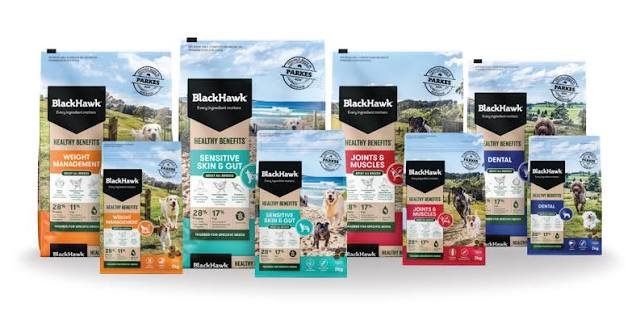
Black Hawk: premium dry dog food
Black Hawk is a key brand in EBOS’s Australian and New Zealand pet-nutrition strategy. The company has highlighted the brand’s performance in specialty dry dog food and its ability to grow faster than the wider market.
At its April 2026 Investor Day, EBOS reported that Black Hawk’s Australian kibble volumes grew at approximately 11% annually from FY2021 to FY2025, compared with approximately 7% annual growth for the measured market over the same period. The company also identified its position as the leading supplier of specialty dry dog food by volume in Australia and New Zealand. These are company-reported figures, and the market comparison uses the specific measured-market definition described in the presentation.
The performance points to several potential sources of competitive advantage: brand recognition, premium positioning, distribution reach and the ability to introduce products that appeal to changing owner preferences.

VitaPet and the wider portfolio
VitaPet broadens EBOS’s presence in everyday pet-care and nutrition categories. The broader branded portfolio allows the group to address different price points and consumer needs rather than relying on a single premium dog-food brand.
For the business, the challenge is to sustain growth while maintaining product quality, brand differentiation and effective retail distribution. New products can expand the addressable market, but their contribution to profit depends on repeat purchases, promotional spending, manufacturing costs and the degree to which they attract incremental demand rather than simply shifting sales between existing products.
Veterinary wholesale: acquisitions strengthen distribution scale
EBOS’s veterinary-wholesale operations include Lyppard in Australia and SVS Veterinary Supplies in New Zealand. These businesses distribute veterinary medicines and related products to veterinary practices and other customers.
The acquisition of SVS, completed in 2025, strengthened EBOS’s position in New Zealand veterinary supply and complemented Lyppard’s Australian network. The group has identified the combination as an opportunity to share customer relationships, operating practices and service capabilities across the two markets.
At its April 2026 Investor Day, EBOS described itself as the leading veterinary wholesaler in Australia and New Zealand and reported serving approximately 3,500 veterinary clinics. Its presentation also identified nine veterinary-wholesale facilities across the region.
The commercial rationale for a scaled distribution network is straightforward: veterinary practices require dependable access to medicines, vaccines, consumables and other clinical products. A wholesaler with broad product availability, reliable fulfilment and established clinic relationships can become an important part of daily veterinary operations.
Scale may also support better purchasing terms, warehouse utilisation and distribution efficiency. However, the financial benefits depend on execution. Wholesalers operate with different economics from premium pet-food brands, and higher revenue does not automatically translate into proportionately higher earnings.
Why the veterinary channel matters
Veterinary wholesale offers EBOS a recurring business-to-business relationship with clinics. Demand is linked to the delivery of veterinary care across companion animals, production animals and equine health, rather than being limited to consumer purchases of pet food.
The distribution business can also give EBOS a direct understanding of clinic requirements and category demand. This creates strategic potential, although the company’s disclosures do not establish that wholesale relationships automatically increase sales of its own branded products.
Acquisitions broaden manufacturing and premium-nutrition exposure
EBOS’s Animal Care strategy has extended beyond distribution and established pet-food brands into manufacturing capabilities and more specialised nutrition categories.
The company has highlighted the acquisition of NextGen Pet Foods, which expands exposure to air-dried treats, and Superior Pet Foods, known for dog rolls and other pet-food products. The group’s manufacturing footprint also includes dry-kibble production at Parkes and capabilities associated with air-dried treats and dog rolls.
These capabilities give EBOS more direct participation in product development and manufacturing, potentially allowing it to respond more quickly to consumer preferences and differentiate its offering.
Premiumisation is an important industry theme, with pet owners increasingly considering ingredient quality, product format and the perceived nutritional value of food and treats. Nevertheless, the commercial attractiveness of any specific segment depends on consumer demand, competitive intensity, production costs and the ability to sustain premium pricing.
The acquisitions also introduce integration requirements. Manufacturing businesses need effective capacity planning, quality assurance, procurement and inventory management. Their contribution should therefore be assessed through earnings, cash generation and utilisation—not revenue growth alone.
Operational productivity and the next phase of growth
At its April 2026 Investor Day, EBOS reported a 19% improvement in owned-manufacturing productivity since FY2022. It also highlighted the role of breeder partnerships and distribution in supporting Black Hawk’s performance.
Manufacturing productivity can create value through better use of equipment, reduced waste, improved labour efficiency and greater output from existing facilities. For a growing pet-food portfolio, these benefits may help offset cost pressures and support product availability.
The company has outlined a strategy focused on:
-
New-product development across established brands.
-
Expanding premium pet-nutrition categories.
-
Extending selected brands into international markets.
-
Growing veterinary wholesale through service quality and customer relationships.
-
Improving productivity and extracting value from recent acquisitions.
EBOS has described its medium-term Animal Care growth outlook as mid-to-high single digit. This is a management outlook, not a guaranteed outcome, and should be distinguished from the reported 34.6% FY2026 revenue growth, which included acquisition contributions.
What the results mean for the companion-animal health industry
1. Pet nutrition is an increasingly strategic part of animal care – EBOS illustrates how pet nutrition can sit alongside veterinary medicines and clinical distribution within a single animal-care platform. This combination provides exposure to both consumer demand and veterinary-care activity.
The opportunity is not confined to premium kibble. Treats, fresh and air-dried formats, specialised diets and other differentiated products can broaden a company’s offering, although each category has its own competitive and margin profile.
2. Distribution scale remains commercially important – Veterinary wholesalers play a central role in supplying clinics with medicines and everyday clinical products. Consolidation can provide a larger geographic footprint and opportunities to improve service levels, but businesses must preserve reliable delivery and customer relationships while integrating acquired operations.
3. Acquisitions can accelerate expansion—but complicate comparisons. EBOS’s revenue growth reflects both business expansion and acquisition effects. Investors and industry analysts should separate organic branded growth, acquired wholesale revenue and the resulting changes in segment margins when comparing performance across periods.
4. Manufacturing capability may support differentiation – Owned manufacturing can help a company develop and scale new products. The value created depends on product-market fit, capacity utilisation, quality control and the economics of production. Productivity improvements are encouraging, but should be assessed alongside capital expenditure and cash conversion.
Risks and indicators to monitor
The FY2026 performance is strong in absolute growth terms, but several factors will determine whether it is sustainable.
Issue to monitor |
Why it matters |
|---|---|
Organic branded growth |
Shows whether established pet brands continue to gain demand beyond acquisition effects |
Wholesale customer growth |
Indicates whether the enlarged distribution platform is expanding its reach |
Gross operating revenue margin |
Tracks the effect of business mix, pricing and operating economics |
Underlying EBITDA growth |
Measures earnings progression after operating costs |
Manufacturing utilisation |
Helps assess whether recent investment and acquisitions generate operating leverage |
New-product performance |
Tests the commercial effectiveness of innovation and premiumisation |
International brand expansion |
May broaden growth opportunities but can require additional distribution and marketing investment |
Acquisition integration |
Determines whether the expected benefits of scale translate into sustainable earnings and cash flow |

