


PETKIT moves beyond smart devices into connected pet-health intelligence
PETKIT has introduced PETKIT TRACE (Trend Recognition and Actionable Care Engine), an AI-powered pet healtAI pet health monitoring, smart pet devices, veterinary technology, pet health data platform, AI pet care, feline health monitoring, connected veterinary care
The data is platform designed to connect information collected through smart feeders, water fountains and litter boxes with veterinary expertise.
Announced in Los Angeles on October 29, 2026, coinciding with National Cat Day in the United States, TRACE represents a strategic extension of PETKIT’s connected pet-care ecosystem. The platform aims to turn everyday behavioural and physiological observations into a more organised longitudinal record that pet owners can share with veterinary professionals.
The initial focus is on three fundamental daily routines: eating, drinking and litter-box use. By combining records over time, PETKIT aims to help owners recognise changes in their pets’ normal behaviour and provide veterinarians with more detailed information during consultations.
The development reflects a broader trend in companion-animal healthcare: the transition from standalone smart pet products towards integrated digital platforms that connect home monitoring, owner engagement and veterinary decision-making.
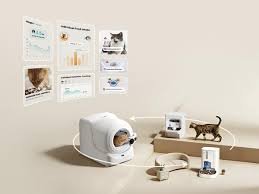
How PETKIT TRACE works
The platform is built around four connected functions.
1. Capture: monitoring everyday activity
Compatible PETKIT devices collect information about feeding, drinking and litter-box behaviour. Depending on the device, records may include the timing, frequency and duration of activities, body-weight measurements and selected behavioural events.
This information can be particularly useful in multi-pet households, where owners may find it difficult to identify which individual animal has eaten, drunk water or used a litter box.
2. Connect: building individual pet profiles
PETKIT says its AI technology can identify individual pets and associate their interactions with connected devices.
The objective is to consolidate information from different devices into individual pet profiles rather than leaving feeding, drinking and elimination records as disconnected household-level measurements.
3. Trace: creating a longitudinal health history
The platform organises the collected information into a reviewable history. This allows owners to compare current activity with an individual pet’s usual baseline and identify changes over time.
For example, a gradual increase in drinking, changes in litter-box frequency or a decline in body weight may warrant veterinary attention, depending on the animal’s clinical context.
4. Support care: improving veterinary discussions
Owners can use historical records and relevant video clips to explain when a change began, how frequently it occurred and whether other behavioural changes developed simultaneously.
This may provide useful context for veterinary evaluation, treatment planning and follow-up.
AI development: company-reported data and training scale
PETKIT reports that its proprietary AI technology has been under development for more than five years.
The company says the system has been developed using a global community of more than 200,000 users, over 500,000 multimodal pet-health data points and more than 100 million AI training iterations.
These figures indicate the scale of the company’s reported development resources. They should not be interpreted as independently validated diagnostic performance metrics. The announcement does not provide clinical sensitivity, specificity, predictive accuracy or prospective evidence demonstrating that TRACE can diagnose particular diseases.
The platform should therefore be understood as a data-organisation and pet-health monitoring support system, rather than a replacement for veterinary diagnosis.
Veterinary partnerships target feline and internal medicine applications
PETKIT has announced collaborations with veterinary professionals working in feline medicine, internal medicine, nephrology and urology. The named partners include:
-
Dr Ashlie Saffire, DVM, DABVP (Feline) – veterinary expertise in feline medicine
-
Dr Autumn Harris, DVM, DACVIM, DACVNU – expertise in internal medicine and veterinary nephrology and urology
The partnerships are intended to help PETKIT identify which home-monitoring observations may be clinically useful and how such information should be presented to pet owners.
The company also plans to develop veterinarian-authored educational content covering chronic kidney disease, urinary tract infections and changes in everyday routines.
The company has disclosed that the veterinarians are its partners. Their involvement should be understood in that context rather than treated as independent clinical validation of the platform.
A potentially important application: recognising urinary abnormalities in cats
One example highlighted in the announcement concerns a two-year-old cat named Leo, with a history of feline idiopathic cystitis.
The animal’s smart litter box recorded more than 13 visits over a few hours, with some visits lasting longer than six minutes. The owner recognised that this was markedly different from the cat’s normal pattern and sought veterinary attention.
The cat was subsequently diagnosed with a potentially life-threatening urinary tract obstruction. The case illustrates how unusual behavioural patterns recorded by connected devices may prompt earlier veterinary assessment.
However, a single company-reported case does not establish that smart litter-box monitoring can reliably detect urinary obstruction or predict clinical emergencies across a broader population of cats.
Repeated litter-box visits can have several possible explanations. Owners should seek veterinary assessment when concerning changes occur rather than relying on an automated device interpretation.
Commercial significance: the emergence of connected pet-health ecosystems
PETKIT TRACE has strategic relevance beyond the launch of another smart pet product.
The company is positioning itself around a connected ecosystem in which hardware generates data, AI organises information, veterinary professionals provide clinical context and owners participate in ongoing monitoring.
This model creates several potential commercial opportunities:
Market segment |
Potential opportunity |
|---|---|
Smart pet devices |
Greater ecosystem integration and customer retention |
Veterinary practices |
Better access to owner-recorded longitudinal information |
Digital pet healthcare |
Development of connected monitoring services |
Veterinary diagnostics |
Potential integration of home observations with diagnostic records |
Pet insurance |
Possible future applications in preventive engagement and risk assessment |
Pet-health research |
Aggregated behavioural data may support future research, subject to appropriate privacy and validation safeguards |

