


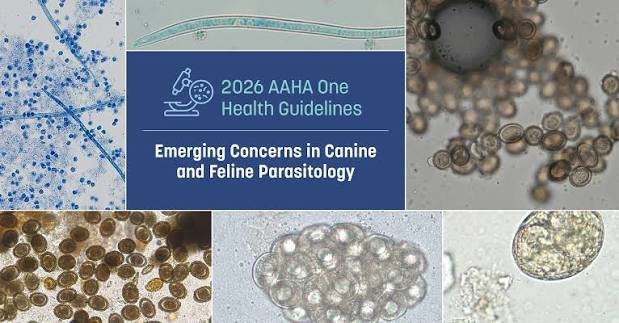
New guidelines address changing parasite risks in companion animals
The American Animal Hospital Association (AAHA) released its 2026 One Health Guidelines: Emerging Concerns in Canine and Feline Parasitology on 29 October 2026, providing veterinary teams with updated guidance on identifying, diagnosing, treating and preventing emerging parasitic infections in dogs and cats.
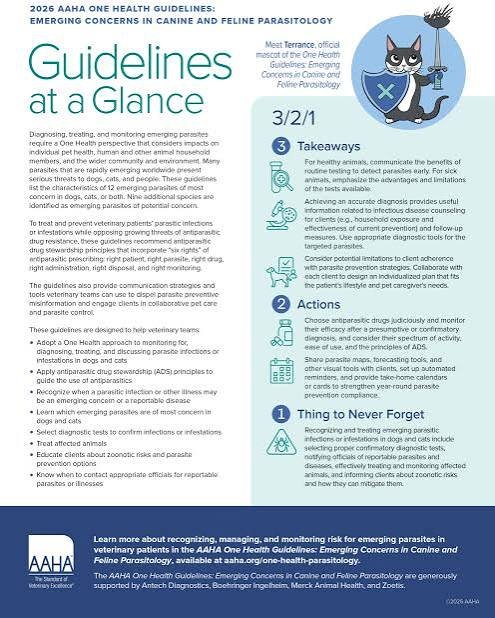
The free clinical resource identifies 12 emerging parasites of greatest concern in companion animals, together with nine additional parasites considered potential emerging threats. It brings together clinical recommendations, diagnostic considerations, treatment approaches, reporting responsibilities and communication strategies for veterinary professionals.
The guidelines are supported by four major animal-health businesses: Boehringer Ingelheim, Antech Diagnostics, Merck Animal Health and Zoetis.
The publication is clinically relevant beyond the United States because international travel, animal relocation, changing environmental conditions and the movement of companion animals can alter parasite exposure patterns. However, the guidelines specifically identify parasites of greatest concern in the United States and Canada; their geographic relevance should be assessed against local epidemiology and veterinary regulations before applying recommendations elsewhere.
Four drivers are changing the emerging-parasite landscape
The guidelines identify four broad drivers that can increase the prevalence, geographical distribution or recognition of parasitic infections.
1. Antiparasitic use and resistance – Frequent exposure to antiparasitic medicines can create selection pressure favouring resistant parasite populations. The guidelines highlight the importance of choosing treatments according to the parasite involved, confirming efficacy where appropriate and monitoring treatment outcomes.
The issue is particularly relevant to multidrug-resistant canine hookworms, including Ancylostoma caninum. Treatment failure should not automatically be interpreted as poor owner compliance; diagnostic confirmation and assessment of drug efficacy may be necessary.
2. Environmental and host changes – Climate variation, land-use changes, ecological disruption and changes in host distribution can influence parasite habitats and transmission patterns.
As a result, historical assumptions about geographical risk may become outdated. Veterinary practices may need to reassess parasite exposure according to an animal’s current location, travel history and lifestyle.
3. Animal movement and interaction – International travel, relocation, rescue operations, disaster shelters, boarding facilities, daycare centres and off-leash environments can increase contact between animals and facilitate parasite transmission.
The movement of animals from endemic regions may also introduce parasites into areas where veterinary teams have limited experience diagnosing them.
4. Improved detection and awareness – More sensitive diagnostic tests and improved surveillance can reveal infections that were previously missed or misidentified.
Consequently, an increase in reported cases does not necessarily mean that a parasite has only recently entered a region. It may reflect improved recognition, testing and reporting.
Antiparasitic stewardship becomes a central clinical message
A particularly important feature of the guidelines is their emphasis on antiparasitic drug stewardship (ADS). Rather than promoting a single universal prevention strategy, AAHA recommends a more individualised approach based on six principles:
-
Right patient: Consider the animal’s clinical condition, age, lifestyle and exposure.
-
Right parasite: Identify the suspected or confirmed parasite.
-
Right drug: Select an appropriate treatment with a relevant spectrum of activity.
-
Right administration: Ensure correct dose, route and treatment schedule.
-
Right disposal: Prevent environmental contamination and inappropriate disposal of medicines or parasite material.
-
Right monitoring: Assess treatment efficacy and follow up where indicated.
This approach is intended to preserve the effectiveness of antiparasitic medicines while improving clinical outcomes and reducing unnecessary exposure.
Diagnostic testing and zoonotic communication
The guidelines also place considerable emphasis on selecting appropriate diagnostic methods. Depending on the parasite, veterinary teams may need faecal examination, PCR, serology, blood testing, specialised parasite identification or post-treatment monitoring.
The clinical implications extend beyond the infected animal. Some parasites have zoonotic potential, meaning that infected pets or contaminated environments may pose risks to people. Veterinary teams are therefore encouraged to discuss household exposure, hygiene, safe faeces disposal, environmental contamination and prevention options with pet owners.
The document also addresses when suspected infections should be reported to relevant authorities. Reporting requirements vary by disease and jurisdiction, so clinicians should consult applicable local and state regulations.
Commercial significance for animal-health companies
The guidelines have implications for several interconnected segments of the companion-animal healthcare market.
Industry segment |
Potential commercial relevance |
|---|---|
Antiparasitic medicines |
More targeted treatment and prevention decisions |
Veterinary diagnostics |
Greater emphasis on confirmatory testing and monitoring |
Reference laboratories |
Demand for specialised parasite identification and molecular testing |
Veterinary practices |
Improved clinical protocols and client education |
Digital veterinary platforms |
Opportunities for reminders, risk mapping and longitudinal monitoring |
Pet healthcare distribution |
Continued demand for evidence-based prevention products |

