


Global | Corporate results | Companion animal and livestock | 29 October 2026
Merck & Co. reported third-quarter 2026 Animal Health sales of $1.676 billion, representing 4% growth compared with the corresponding quarter of 2025. The results highlight a stronger performance from the company’s Companion Animal portfolio, which grew 6% to $628 million, compared with 2% growth in Livestock sales to $1.048 billion.
The figures, disclosed in Merck’s third-quarter financial results on 29 October, indicate that companion-animal products are currently providing a stronger growth contribution than livestock products within the company’s global animal-health business.
Importantly, growth was not solely a consequence of currency movements. Animal Health sales increased 3% when adjusted for foreign exchange, while Companion Animal sales grew 6% on the same basis. Livestock sales increased 2% at constant exchange rates.
Merck attributed Companion Animal growth largely to new product launches, while higher demand for poultry products was the principal driver of Livestock growth.
Merck Animal Health Q3 2026: Segment performance
The third-quarter results show a clear difference in growth rates across the two principal business segments.
Business segment |
Q3 2026 sales |
Q3 2025 sales |
Reported growth |
Growth excluding FX |
|---|---|---|---|---|
Total Animal Health |
$1,676m |
$1,615m |
+4% |
+3% |
Companion Animal |
$628m |
$592m |
+6% |
+6% |
Livestock |
$1,048m |
$1,023m |
+2% |
+2% |
Source: Merck Q3 2026 financial disclosures. Figures in US dollars; minor differences may occur due to rounding.
The Companion Animal business generated approximately 37.5% of quarterly Animal Health revenue, while Livestock contributed approximately 62.5%. Although Livestock remains the larger business by revenue, Companion Animal delivered the faster growth rate. Its $36 million year-on-year increase accounted for a substantial share of the segment’s overall quarterly revenue expansion.
Companion Animal: New product launches drive 6% growth
Merck’s Companion Animal business generated $628 million in Q3 2026, compared with $592 million in the same period last year. The company attributed the 6% increase primarily to contributions from new product launches. This is an important distinction because it suggests that growth is being supported by portfolio expansion rather than depending exclusively on established blockbuster brands.
For the animal-health industry, the result reinforces the importance of product innovation, differentiated indications, geographic expansion and effective commercial execution in the competitive companion-animal market.
The segment includes products across parasitology, vaccines and other veterinary therapeutic categories. However, Merck’s Q3 commentary does not quantify the individual contribution of each new launch. It would therefore be premature to attribute the segment’s growth to any particular product without additional product-level disclosures.
The result also needs to be viewed in the context of the company’s broader portfolio: established products remain commercially important, but the latest quarter indicates that newer launches are contributing meaningfully to incremental revenue.
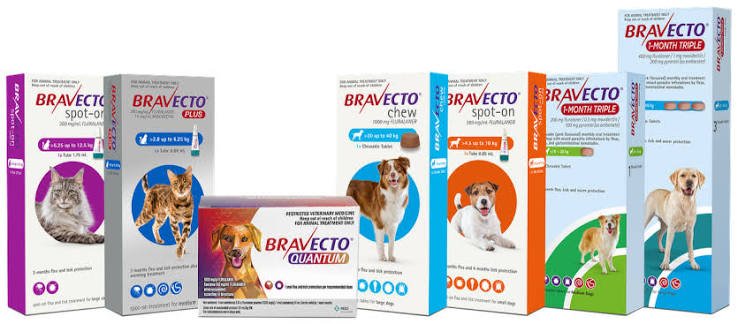
Bravecto generates $264 million, but growth remains subdued
The Bravecto family of flea and tick products recorded quarterly sales of $264 million, compared with $262 million in Q3 2025.
Bravecto family |
Q3 2026 |
Q3 2025 |
Growth |
|---|---|---|---|
Sales |
$264m |
$262m |
+1% reported |
Constant-currency growth |
— |
— |
Flat |
Bravecto’s performance is noteworthy because it did not match the 6% growth recorded by the overall Companion Animal segment.
The figures suggest that the company’s broader companion-animal portfolio, including newer product launches, is providing growth beyond the Bravecto franchise.
This does not diminish Bravecto’s commercial importance. At $264 million in quarterly revenue, it remains a substantial product family. However, the latest results underline why investors and competitors should assess the entire Companion Animal portfolio rather than use Bravecto as a proxy for the performance of the whole business.
For the flea and tick category, the result also highlights the importance of monitoring competitive intensity, product differentiation, customer retention and the performance of newer parasiticide alternatives.
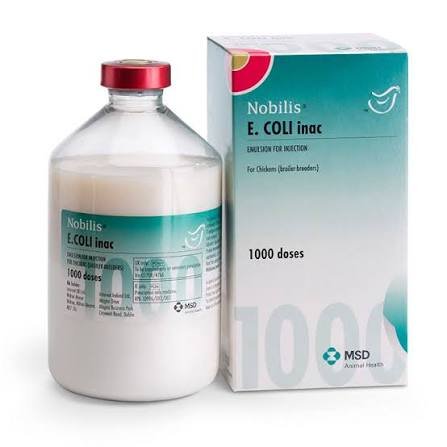
Livestock business: Poultry demand supports 2% growth
Merck’s Livestock business recorded Q3 sales of $1.048 billion, compared with $1.023 billion in the corresponding quarter of 2025.
The 2% increase was primarily driven by higher demand for poultry products, according to the company. Livestock remains the larger contributor to Merck’s Animal Health revenue, accounting for approximately 63% of the business in the quarter. Its performance therefore remains important to the company’s overall growth trajectory.
The poultry contribution is particularly relevant in the context of global demand for animal protein, commercial poultry production and the continuing need for disease prevention and flock health management.
However, the reported results do not provide a detailed breakdown of poultry, ruminant, swine and aquaculture sales. The 2% growth rate should therefore not be interpreted as a uniform performance across all livestock species or geographic markets.
Nine-month performance: Both businesses grow 8%
The year-to-date numbers provide a broader perspective than the third-quarter comparison alone. For the first nine months of 2026, Merck reported Animal Health sales of $5.243 billion, compared with $4.849 billion in the same period of 2025, representing 8% growth.
Business segment |
Nine-month 2026 sales |
Nine-month 2025 sales |
Reported growth |
|---|---|---|---|
Total Animal Health |
$5,243m |
$4,849m |
+8% |
Companion Animal |
$2,089m |
$1,940m |
+8% |
Livestock |
$3,154m |
$2,909m |
+8% |
Both principal segments therefore recorded the same reported growth rate over the first nine months, despite Companion Animal outperforming Livestock in the third quarter.
What the results signal for the global animal-health industry
1. Companion-animal innovation is becoming a more visible growth driver
Merck’s attribution of Companion Animal growth to new product launches highlights the importance of continued innovation in veterinary therapeutics. Companies with differentiated products, strong veterinary engagement and effective launch execution may be better positioned to capture growth in the companion-animal market.
2. Established blockbuster brands cannot be viewed in isolation
Bravecto’s $264 million quarterly revenue demonstrates the scale of the franchise, but its flat constant-currency performance contrasts with the wider segment’s 6% growth. This reinforces the need to assess portfolio breadth, new launches and product-level competitive dynamics.
3. Livestock remains the revenue foundation
Despite slower quarterly growth, Livestock generated more than $1 billion in quarterly sales. Its performance continues to provide significant scale and diversification across the animal-health business.
4. Poultry demand remains commercially important
Merck’s reference to higher poultry-product demand as the main driver of livestock growth provides a useful market signal. Poultry vaccines, disease prevention, biosecurity and production-efficiency solutions remain important areas for animal-health companies to monitor.
Competitive context: A benchmark ahead of Zoetis and Elanco results
Merck’s Q3 results provide an early benchmark for assessing the performance of the global animal-health sector as other major companies report their financial results. The most useful comparisons will include:
-
Companion-animal revenue growth and the contribution of new launches.
-
Parasiticide and dermatology portfolio performance.
-
Livestock growth by species and product category.
-
Constant-currency sales growth.
-
Geographic performance and the contribution of emerging markets.
-
Pipeline investment, product launches and strategic partnerships.

