


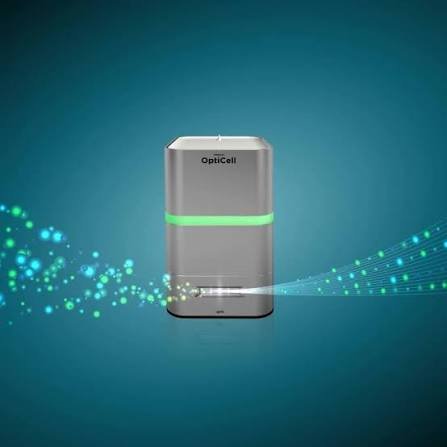
New equine testing capabilities strengthen Zoetis’s diagnostics portfolio
Animal Health | Equine diagnostics | October 2026
Zoetis has expanded its point-of-care diagnostic offering for equine veterinarians, adding species-specific complete blood count (CBC) testing to its Vetscan OptiCell hematology analyser and AI-assisted blood-smear analysis for equine samples to its Vetscan Imagyst platform.
The company announced the expansion in September, with veterinary industry reporting carrying the news into October. Zoetis said the updated capabilities would become available to customers globally from October 2026. Sources: Zoetis announcement as reported by Vet Candy and VetClick.
Vetscan OptiCell: 22-parameter equine CBC
Vetscan OptiCell is a cartridge-based, automated hematology analyser designed to deliver complete blood count results at the point of care. Zoetis says the equine profile provides 22-parameter CBC results in as little as six minutes.
Rapid in-clinic testing can help veterinarians assess blood-cell counts and related haematological indicators without waiting for routine reference-laboratory turnaround. This may be especially useful where an equine patient is acutely unwell, requires rapid clinical assessment or is being monitored over time.
The platform uses viscoelastic focusing technology and AI-powered cell classification. Its single-use cartridge design is intended to reduce routine maintenance, with no daily cleaning, calibration or reagent packs required according to the company’s product information. Actual workflow benefits depend on practice volumes, staff training, quality-control procedures and the clinical context.
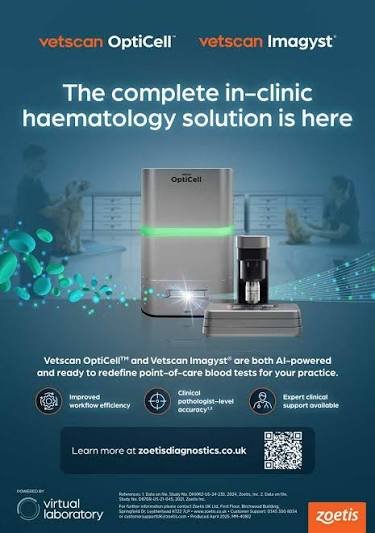
Vetscan Imagyst adds AI Blood Smear for equine samples
The second component is AI Blood Smear analysis on Vetscan Imagyst. It provides qualitative information from blood-smear images to supplement automated CBC results.
The distinction is clinically important: an automated blood count provides quantitative information, while smear assessment can contribute additional information about blood-cell morphology and the presence of abnormal findings. The two approaches are complementary rather than interchangeable.
Zoetis already offers equine-relevant applications on Imagyst, including AI Equine Fecal Egg Count and digital cytology workflows. Adding equine blood-smear capability extends the platform’s relevance to routine and more complex equine clinical assessments. Source: Zoetis Diagnostics.
Competitive significance: diagnostics beyond the reference laboratory
Veterinary diagnostics is increasingly moving towards decentralised testing, digital image interpretation and connected clinical workflows. This creates opportunities for companies that can combine instruments, consumables, software, clinical support and diagnostic reference services.
Zoetis’s strategy links two distinct capabilities: rapid quantitative CBC testing and AI-supported qualitative smear analysis. That combination could strengthen the company’s position in clinics seeking to bring more diagnostic work in-house.
The commercial opportunity extends beyond instrument sales. Cartridge and consumable revenue, software updates, integration with practice-management systems, customer training and service support can all influence the long-term economics of a diagnostic platform.
What veterinarians should consider
Point-of-care testing can shorten the time to an initial result, but clinical interpretation remains essential. Results must be considered alongside history, physical examination, sample quality and other diagnostic findings. Abnormal or inconclusive results may still require reference-laboratory confirmation or review by a qualified clinical pathologist.
Manufacturers’ performance claims should also be distinguished from independently demonstrated clinical outcomes. The announcement does not, by itself, establish that every clinical decision will be faster or more accurate, or that the new capabilities replace specialist review.
Implications for competitors
Competing diagnostic companies will need to demonstrate the value of their systems across speed, analytical performance, species-specific validation, ease of use, workflow integration and total cost of ownership. Equine practices may place particular value on portability and rapid results because patients are often assessed in field, stable or hospital settings.
For Zoetis, the expansion reinforces a broader strategy of developing connected diagnostic platforms across species rather than relying on a single test category.
Conclusion
The addition of equine hematology expands the clinical scope of Vetscan OptiCell and Vetscan Imagyst. Its commercial significance will depend on real-world adoption, validated performance and the extent to which faster in-clinic information improves veterinary workflows.

