

HomeLivestockBotswana Launches Animal Disease Surveillance Dashboard to Protect Livestock and Speed Up...

Botswana Launches Animal Disease Surveillance Dashboard to Protect Livestock and Speed Up Outbreak Response

New digital animal health system will track disease trends, combine veterinary field data and help Botswana respond faster to livestock outbreaks

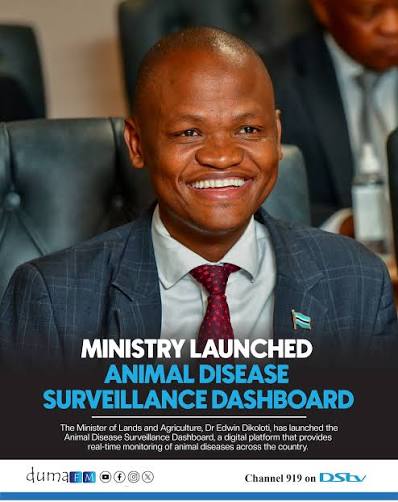
GABORONE, July 13, 2026: Botswana has launched a new Animal Disease Surveillance Dashboard as the country strengthens its fight against livestock diseases, including foot-and-mouth disease (FMD).

The digital system is designed to give veterinary authorities a clearer, up-to-date picture of animal disease across the country. It will bring together information collected by veterinary teams and help officials identify disease trends and respond more quickly when new cases appear.

For Botswana, where livestock supports rural incomes and access to export markets, faster animal disease detection is an economic issue as well as a veterinary priority.

New dashboard brings animal disease information into one system

The Animal Disease Surveillance Dashboard will collect and display animal health information in a visual format.

According to local reporting, the platform provides real-time disease tracking and data display, allowing veterinary authorities to monitor changes and identify areas of concern.

The system is also expected to combine field information with the Botswana Animal Information and Traceability System, known as BAITS, and district veterinary networks.

Botswana Animal Information and Traceability System already supports livestock registration, ownership transfers, veterinary treatment records and other animal information.

The new dashboard adds a wider disease-monitoring layer. In simple terms, Botswana wants to move from animal health information being scattered across different locations to a system that gives veterinary officials a broader national view.
Foot-and-mouth disease makes faster surveillance urgent

The launch comes at an important time for Botswana. The country has been dealing with foot-and-mouth disease outbreaks in several livestock control zones.

In February 2026, Botswana’s Ministry of Lands and Agriculture officially confirmed FMD in Zone 3c and Zone 6b. At that stage, 15,305 cattle had been vaccinated against a target of 17,000 animals in the affected areas. Cases were later confirmed in Zone 13, where vaccination and surveillance teams were deployed.

Botswana’s agriculture minister, Dr Edwin Dikoloti, now says outbreaks in Maitengwe and Zone 6b have been successfully suppressed following vaccination and farmer cooperation. However, the disease situation in Zones 11 and 13 remains more difficult, with active cases still reported in some recently affected areas.

This is exactly the type of animal disease situation where faster information can matter. Veterinary officials need to know where cases are appearing, whether infections are moving into new areas and where vaccination or field teams should be sent.

Botswana already has a strong livestock traceability system

The new disease dashboard is not being built in isolation. Botswana has already invested in BAITS, its national animal identification and traceability system.

The government has described animal traceability as a primary defence against foot-and-mouth disease because accurate animal records can help officials trace livestock and locate disease within specific control zones.

The Animal Disease Surveillance Dashboard is expected to connect with this existing system. That could give veterinary authorities a more complete picture of livestock location, animal movement and disease reports.

Faster disease detection can protect livestock trade

Animal disease outbreaks can quickly become trade problems. Foot-and-mouth disease can lead to livestock movement restrictions and affect access to meat export markets.

Botswana is currently constructing a 350-kilometre Otse–Ramotswa–Mmathethe–Werda containment zone fence. The government aims to complete the work by the end of July and later seek formal recognition of the containment zone from the World Organisation for Animal Health.

The goal is to support the restoration of international livestock trade status for areas affected by disease restrictions. Reliable disease information will be important in that process.

Countries buying livestock products need confidence that outbreaks are being detected, recorded and controlled.

A significant digital animal health development for Africa

Botswana’s new system is also an important example of the growing use of digital tools in African animal health. Livestock diseases do not wait for monthly reports.

A delay in identifying a new disease cluster can allow infected animals to move, increasing the area that veterinary teams must investigate. A working national dashboard can help officials see changes earlier and direct vaccination and surveillance teams towards higher-risk areas.

However, the success of the system will depend on the speed and quality of information coming from farms, field veterinarians and district offices. A dashboard is only as useful as the data entered into it.

Botswana puts animal disease data at the centre of veterinary response

The launch of the Animal Disease Surveillance Dashboard marks an important change in Botswana’s approach to livestock disease control.

The country is combining animal identification, field veterinary reports and national disease monitoring in a more connected system. With foot-and-mouth disease still affecting parts of Botswana, the new platform faces an immediate real-world test.

If the dashboard helps Botswana detect outbreaks earlier, follow disease movement and send veterinary teams where they are most needed, it could become an important model for digital animal disease surveillance across Africa.

Animal Health India Editorial Team
Animal Health India Editorial Teamhttps://animalhealthindia.com
Animal Health India (AHI) is an independent news and intelligence platform covering the global animal health, veterinary, livestock, poultry, companion animal and pet food sectors. Our editorial team comprises veterinary journalists, animal health professionals, regulatory affairs specialists and industry analysts with over 30 years of combined experience covering India, Asia, Europe and North America. AHI publishes news, regulatory updates, market intelligence and company news drawn from primary sources including DAHD, EMA, USDA, AVMA and leading veterinary publications worldwide.
RELATED ARTICLES