

HomePoultryResearchers Identify 3 Viruses Linked to Runting-Stunting Syndrome in Broiler Chickens

Researchers Identify 3 Viruses Linked to Runting-Stunting Syndrome in Broiler Chickens

A lesion-focused virology study led by Queen’s University Belfast links gallivirus, avian astrovirus and an avian rotavirus to damaged intestinal tissue, opening new avenues for poultry diagnostics and disease-control research.

BELFAST, UNITED KINGDOM, 15 October 2026 — Researchers from Queen’s University Belfast and collaborating institutions have identified three candidate enteric viruses associated with intestinal lesions in broiler chickens affected by runting-stunting syndrome (RSS).

The findings, published in the journal Microbiome, could help clarify the infectious factors involved in a disease complex that can undermine growth, flock uniformity and production efficiency.

The study used laser-capture microdissection and viral sequencing to examine tissue directly from affected areas of the gastrointestinal tract. By comparing lesion tissue with non-lesion tissue, researchers were able to investigate which viruses were enriched at sites of damage, rather than relying solely on detection in whole-tissue samples.

The 3 leading candidates were gallivirus, avian astrovirus and a rotavirus. The researchers also confirmed the candidate-virus findings through additional molecular testing and successfully isolated chicken astrovirus in cell culture.
Why runting-stunting syndrome matters to poultry production

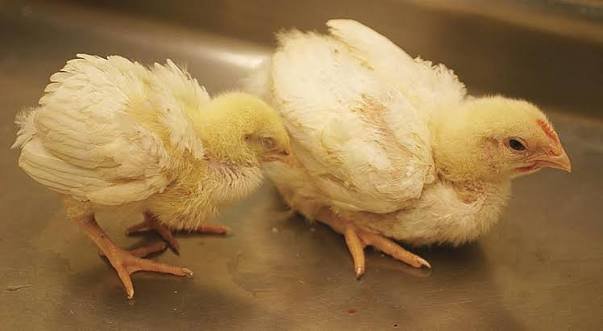
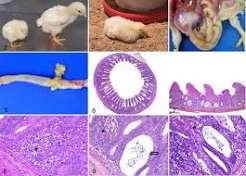
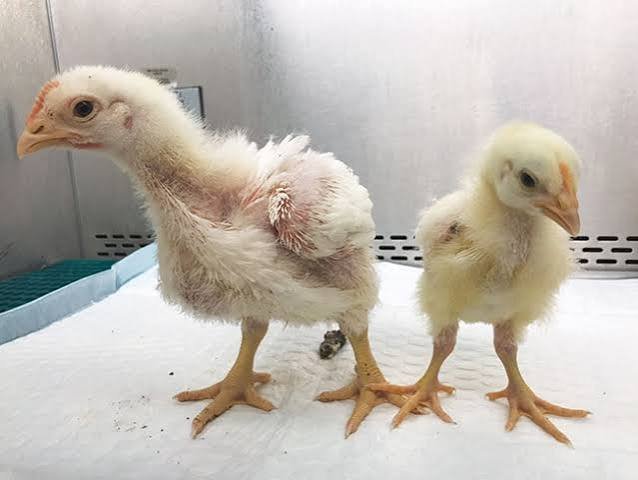
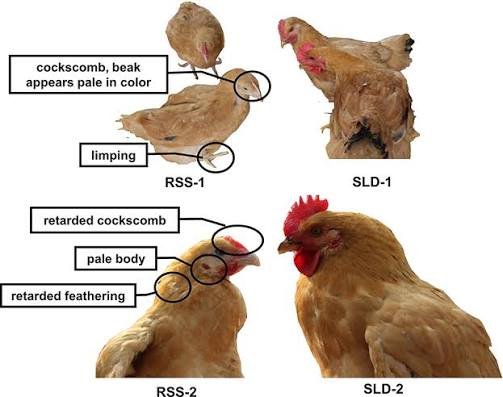
Runting-stunting syndrome is associated with impaired growth and intestinal dysfunction in young chickens. Affected birds may show poor weight gain, uneven body size, abnormal feathering, diarrhoea or the passage of undigested feed. The resulting variation within a flock can complicate management and reduce the efficiency of commercial production.

The economic consequences may include poorer feed utilisation, inconsistent market weights, additional diagnostic and veterinary costs, and greater difficulty achieving uniform processing batches. The scale of the impact varies with the severity and prevalence of disease, production conditions and the effectiveness of management interventions.

The syndrome has been difficult to attribute to a single cause. Previous investigations have detected a range of viruses in affected flocks, but the presence of a virus in a sample does not necessarily mean it is responsible for the observed tissue damage.

This uncertainty has made it challenging to translate pathogen detection into targeted prevention or treatment strategies.
The study: examining viruses at the site of tissue damage

The researchers applied laser-capture microdissection to archived tissue sections, allowing them to isolate microscopic areas identified as lesions and compare them with adjacent non-lesion areas. Samples represented several gastrointestinal regions, including the duodenum, jejunum, proventriculus and gizzard.

In the RSS analysis, the team examined 71 lesion and non-lesion preparations. Viral genetic material was analysed using sequencing-based methods to identify viruses enriched in damaged tissue.

The approach addresses a key limitation of conventional virome studies. When an entire organ or tissue sample is homogenised, detected viral material may originate from infected cells, intestinal contents, incidental viral carriage or other background sources. Whole-tissue detection alone cannot reliably establish whether a virus is specifically associated with the lesion.

By linking viral signatures to histologically defined damage, the new approach provides more focused evidence for selecting pathogens for further investigation.

Three candidate viruses identified

1. Gallivirus

Gallivirus sequences were repeatedly associated with RSS lesion tissue. Galliviruses have been detected in poultry, but their precise role in stunting disease has remained uncertain. Their enrichment at lesion sites provides a stronger basis for investigating whether particular strains contribute to intestinal pathology.

2. Avian astrovirus

Avian astrovirus is an enteric virus group already recognised as relevant to poultry health research. In this study, astrovirus genetic material was associated with affected tissue, and the researchers successfully recovered chicken astrovirus in cell culture. This isolation is an important additional step in characterising the candidate agent, although it does not by itself prove that the virus causes RSS.

3. Avian rotavirus

An avian rotavirus was also enriched in affected gastrointestinal tissue. The result supports further investigation into the role of rotaviruses in intestinal injury, either as primary contributors or as participants in mixed infections.

The presence of more than one candidate virus in some lesions raises the possibility that co-infections contribute to disease development or severity. However, the relative contribution of each virus remains to be established.

Why the findings are scientifically important

The study adds spatial evidence to the investigation of a disease whose infectious causes have remained difficult to resolve. Rather than simply reporting that a virus is present in affected birds, the researchers examined whether viral genetic material was concentrated where tissue injury occurred.

The team also tested the candidate-virus findings in matched fresh-frozen material using molecular techniques, including PCR-based methods and amplicon sequencing. These additional analyses strengthened confidence that the results were not solely an artefact of the archived tissue preparation or sequencing workflow.

A separate comparison with transmissible viral proventriculitis (TVP) revealed a different viral profile. This distinction matters because RSS and TVP can both present as poor growth but are not necessarily the same disease process.

RSS is commonly associated with intestinal damage and impaired nutrient absorption, while TVP is characterised by lesions affecting the proventriculus and impaired digestion. Their overlapping production signs can obscure important differences in underlying pathology.

A 2026 systematic review by Hsieh and colleagues in Avian Pathology also highlighted the need to distinguish stunting syndromes according to clinical presentation, age of onset and histological lesions. Together, these research directions reinforce the importance of precise diagnosis rather than treating all poor-growth cases as one condition.

Implications for vaccine development and disease prevention

The findings create a clearer shortlist of candidates for experimental research, including controlled infection studies and investigations of whether particular strains can reproduce relevant lesions and clinical outcomes.

For poultry integrators and producers, the near-term priority remains sound flock management: prompt investigation of uneven growth, appropriate diagnostic sampling, biosecurity, chick-quality assessment, feed and water management, and veterinary review of disease patterns.

Research reference: “Lesion-anchored viromics identifies candidate viral agents of broiler stunting diseases.” Microbiome. DOI: https://doi.org/10.1186/s40168-026-02556-w.
Related research: Hsieh E, Sheridan PM, Smyth VJ, Kyriazakis I. “A systematic review of the aetiology and presentation of stunting diseases in broiler chickens.” Avian Pathology. 2026;55(3):233–249. DOI: https://doi.org/10.1080/03079457.2026.2632916.
Animal Health India Editorial Team
Animal Health India Editorial Teamhttps://animalhealthindia.com
Animal Health India (AHI) is an independent news and intelligence platform covering the global animal health, veterinary, livestock, poultry, companion animal and pet food sectors. Our editorial team comprises veterinary journalists, animal health professionals, regulatory affairs specialists and industry analysts with over 30 years of combined experience covering India, Asia, Europe and North America. AHI publishes news, regulatory updates, market intelligence and company news drawn from primary sources including DAHD, EMA, USDA, AVMA and leading veterinary publications worldwide.
RELATED ARTICLES