


CA MAU, Vietnam — October 2026
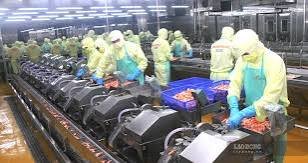
Vietnam’s southernmost province of Ca Mau is targeting seafood production exceeding 1.33 million tonnes and export turnover of approximately US$2.8 billion in 2026, supported by higher-value shrimp processing, intensive aquaculture, traceability improvements and the development of new export markets.
The provincial industry has reported a 16.8% year-on-year increase in processed shrimp output, while total seafood production has risen 6.7%. Export turnover has exceeded US$2 billion, up approximately 10.6%, according to provincial figures reported by Vietnamese newspaper Lao Dong.
The performance highlights the growing importance of processing efficiency and product value in Vietnam’s seafood export economy, where shrimp is a major source of foreign-exchange earnings.
Key figures: Ca Mau seafood industry
Indicator |
Reported figure |
|---|---|
2026 seafood production target |
More than 1.33 million tonnes |
2026 export turnover target |
US$2.8 billion |
Growth in processed shrimp output |
16.8% |
Growth in total seafood output |
6.7% |
Growth in reported export turnover |
10.6% |
Export turnover already achieved |
More than US$2 billion |
Dong Hai commune aquaculture area |
More than 8,392 hectares |
Dong Hai output, first nine months of 2026 |
Approximately 25,000 tonnes |
Dong Hai full-year production plan |
35,000 tonnes |
Processing is becoming a central growth driver
The rise in processed shrimp output is significant because higher levels of processing can expand the range of products available to international buyers, improve convenience and support greater value addition within Vietnam.
Ca Mau’s strategy combines shrimp and crab production with closer links between farmers and processors, stronger product branding, traceability, improved seed quality and tighter management of aquaculture environments.
The province is also promoting super-intensive shrimp farming and production systems that combine shrimp with crabs or integrate aquaculture with mangrove forests. Such models can diversify production and, when properly managed, help balance commercial output with local environmental conditions.
However, intensive systems also require careful control of stocking density, water quality, disease pressure, biosecurity, feed conversion and waste management. Higher production density can magnify the consequences of inadequate disease prevention.
Dong Hai illustrates the production opportunity
Dong Hai commune, which has more than 8,392 hectares devoted to aquaculture, produced approximately 25,000 tonnes of aquaculture and capture fisheries output in the first nine months of 2026.
That compares with a full-year plan of 35,000 tonnes and reported output of 33,098 tonnes in 2025.
The figures indicate that the commune has a material production base, although its final 2026 result will depend on fourth-quarter harvesting, disease conditions, weather, farm economics and market demand.
Wider Vietnamese seafood export context
The provincial ambitions sit within a larger national industry. Vietnam’s General Statistics Office reported that total fisheries production reached approximately 7.89 million tonnes during January–September 2026, an increase of 3.9% year on year.
Aquaculture production reached approximately 4.86 million tonnes, up 5.9%, while capture fisheries output was approximately 3.03 million tonnes, up 0.9%. Farmed shrimp production increased 7.6% to approximately 1.28 million tonnes.
The national data suggest that aquaculture, rather than wild capture, is providing the stronger production growth. Ca Mau’s US$2.8 billion provincial target must not be confused with Vietnam’s national seafood export target of approximately US$12 billion.
Implications for the animal-health and aquaculture industries
The expansion creates opportunities for businesses supplying:
-
Shrimp health diagnostics, pathogen screening and hatchery biosecurity.
-
Probiotics, water-quality management and aquaculture-health products.
-
Feed additives, nutrition technologies and precision feeding systems.
-
Processing equipment, cold-chain infrastructure and traceability software.
-
Farm certification, environmental monitoring and disease-surveillance services.

