


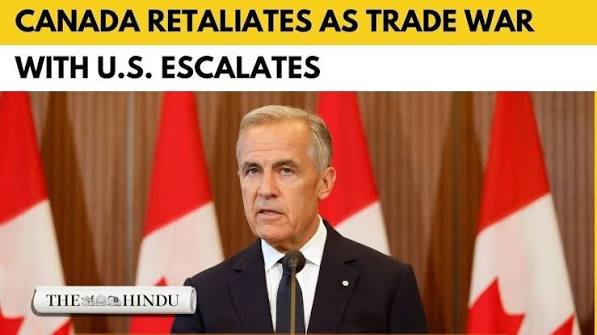
Economic relations between the United States and Canada reached a significant crisis point over the weekend as bilateral trade negotiations collapsed in Washington. Canadian Prime Minister Mark Carney announced on August 22, 2026, that Ottawa will enact a major package of counter-tariffs matching Washington “dollar for dollar”. The Canadian measures, scheduled to take effect on September 8, 2026, explicitly place the U.S. dairy sector in the crosshairs, opening a major front in a cross-border trade dispute.
The announcement directly responds to the immediate implementation of 50% U.S. tariffs targeting approximately $20 billion in Canadian goods (~5.5% of total Canadian exports to the U.S.), imposed under Section 338 authority after negotiations broke down late Friday, August 21.
Key Targeted Sectors in Canada’s Counter-Package
While detailed HTS line items and tariff rates are expected from the Finance Department in the coming days, Ottawa confirmed that retaliatory duties will specifically target high-value U.S. industrial and agricultural exports:
-
Dairy Products (Primary Agri-Target): Butter, butterfat, cheese, whey, and milk protein concentrates (MPCs).
-
Industrial & Heavy Manufacturing: Commercial steel products and agricultural equipment/machinery.
-
Consumer & Tech Goods: Household appliances, pulp and paper products, and commercial electronics.
Notable Strategic Exclusions: In this initial retaliation round, Canadian trade strategists have notably spared bulk U.S. row crops and livestock lines—including corn, soybeans, ethanol, beef, and pork. Observers indicate these commodities are likely being held as strategic leverage for future negotiation rounds if the impasse deepens.
Legal & Regulatory Context: Supply Management vs. Alleged Discrimination
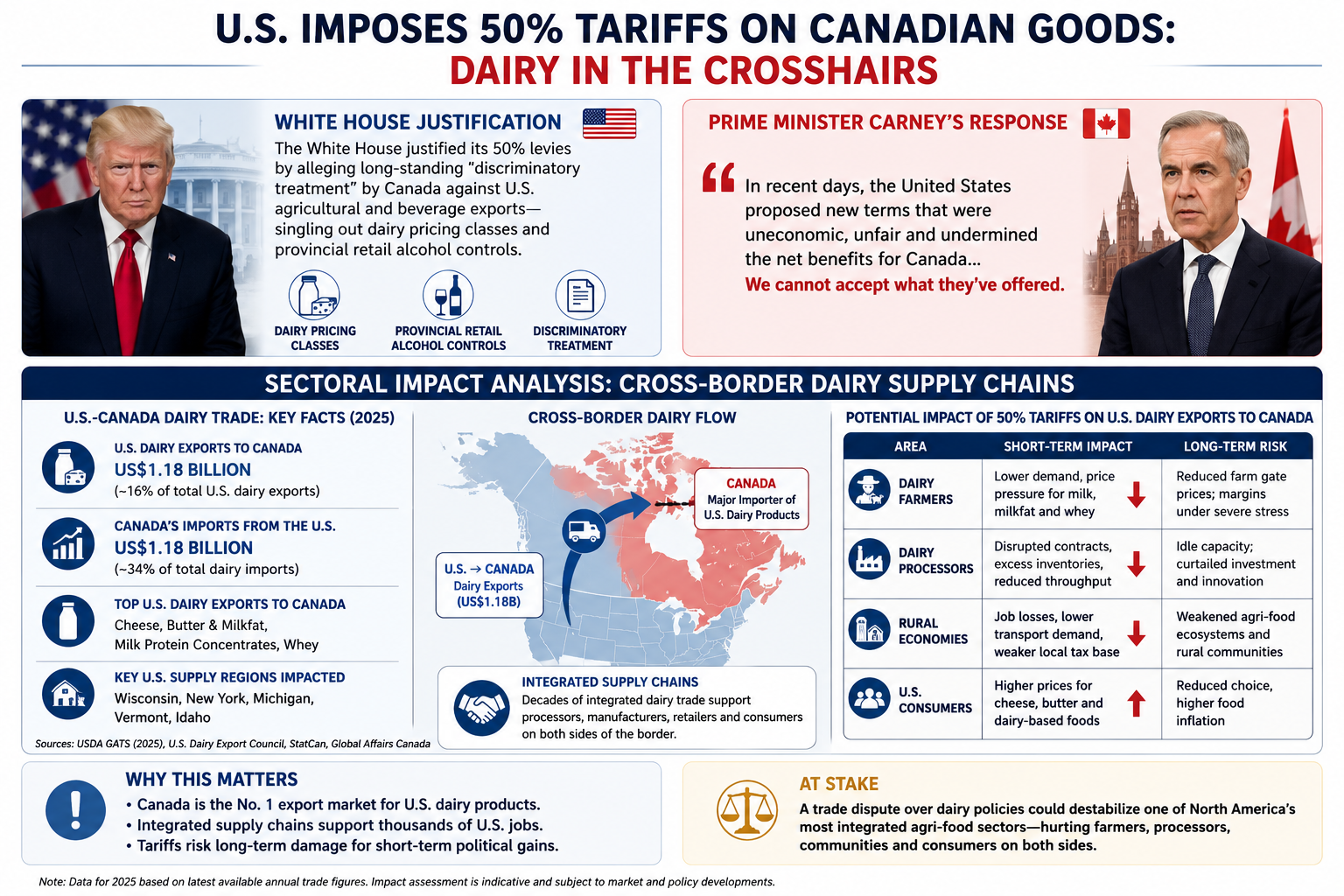
The White House justified its 50% levies by alleging long-standing “discriminatory treatment” by Canada against U.S. agricultural and beverage exports—singling out dairy pricing classes and provincial retail alcohol controls.
Prime Minister Carney rejected new 11th-hour demands from Washington, stating: “In recent days, the United States proposed new terms that were uneconomic, unfair and undermined the net benefits for Canada… We cannot accept what they’ve offered.”
Sectoral Impact Analysis: Cross-Border Dairy Supply Chains
The targeting of U.S. dairy carries acute economic consequences for regional agricultural hubs:
-
Regional Concentration: Dairy processing co-operatives across the Upper Midwest (Wisconsin, Minnesota) and Northeast (New York, Vermont) are disproportionately exposed. Canada remains a major close-proximity destination for specialized ultra-filtered milk proteins and high-fat solids.
-
Co-Op Disruption: Export-oriented cooperatives that rely on predictable northern trade routes face sudden inventory backlogs, forcing product re-routing into already saturated domestic markets or lower-margin global channels.
-
USMCA Review Implications: Coming ahead of the scheduled joint review of the United States-Mexico-Canada Agreement (USMCA), the dynamic threatens the broader North American free-trade architecture.
References & Background Data
-
The Hindu News Service. (2026, August 23). Canada retaliates as trade war with U.S. escalates: Prime Minister Mark Carney announces counter-tariffs targeting U.S. steel and dairy sectors.
-
Global Affairs Canada. (2026, August 22). Statement on Trade Measures and Counter-Tariff Schedule Effective September 8, 2026.
-
Office of the United States Trade Representative (USTR). (2026, August 22). Actions Pursuant to Section 338 Regarding Canadian Trade Practices.

