



MUNICH, Germany — October 11, 2026 — Researchers at Ludwig Maximilian University of Munich (LMU) have upended a decades-old cornerstone of ruminant reproductive physiology. A study published in Nature Communications demonstrates that cattle embryos completely lacking embryonic interferon tau (IFNT) can successfully signal maternal recognition of pregnancy, implant, and carry to term—culminating in the birth of healthy, functional calves.
Challenging a Paradigm in Ruminant Reproduction
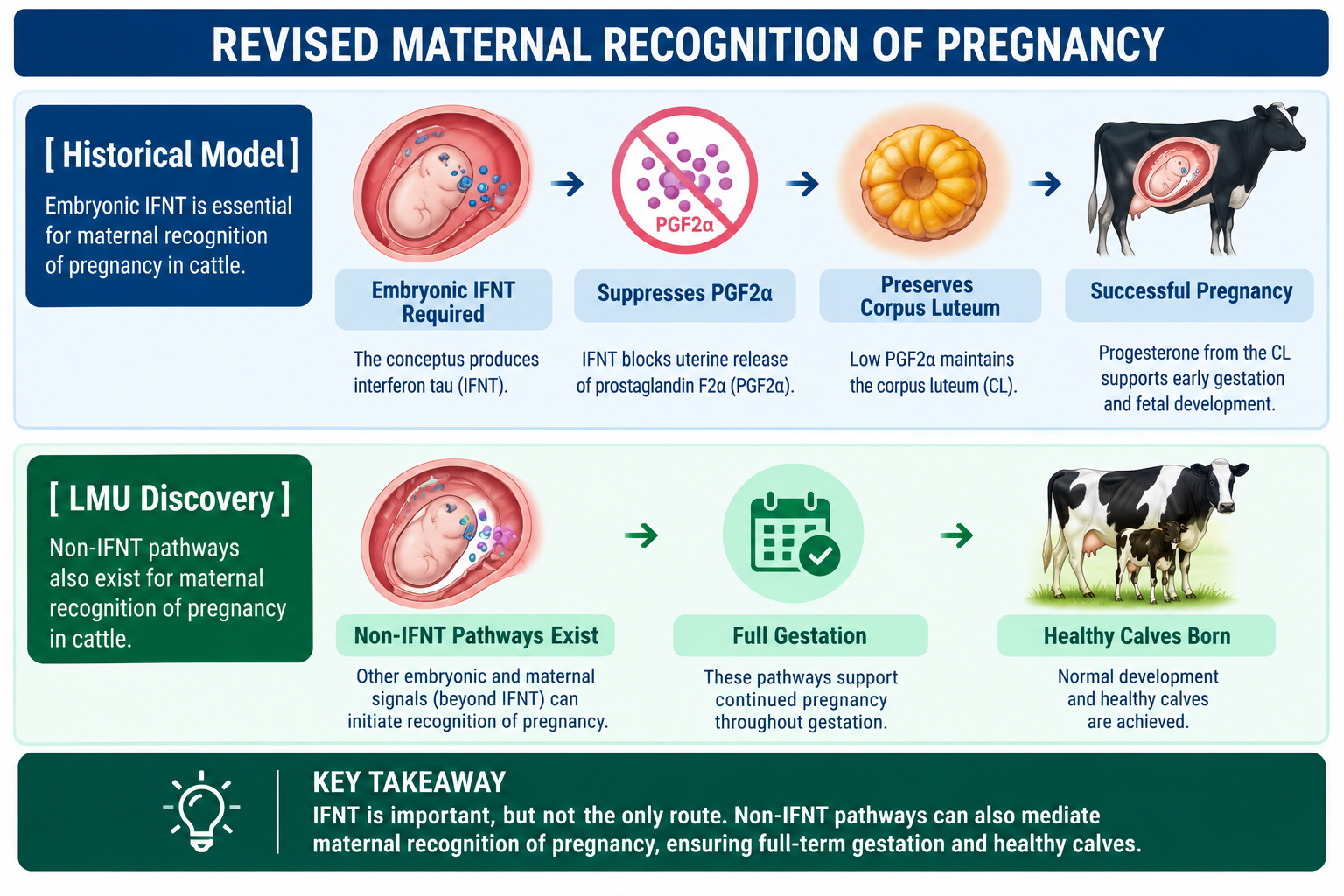
For over thirty years, textbook reproductive biology dictated that IFNT—a specialized type I interferon secreted by the embryonic trophectoderm—was indispensable for pregnancy establishment in cattle, sheep, and other ruminants. Under the established model, IFNT acts on the maternal endometrium to suppress luteolytic prostaglandin PGF2-alpha (PGF2-alpha) pulses, preserving the corpus luteum and sustaining progesterone production required for gestating life.
Experimental Findings & Commercial Implications
The interdisciplinary research team, led by Dr. Asghar Ali and Prof. Eckhard Wolf at LMU’s Gene Center and Department of Veterinary Sciences, utilized gene-editing technologies to generate double-knockout embryos lacking functional IFNT genes.
-
Successful Gestation & Birth: Gene-edited embryos established pregnancy without the characteristic uterine interferon response, producing two healthy, fully developed calves.
-
Alternative Maternal Signaling: The findings confirm the existence of previously unknown, parallel embryo-maternal signaling pathways capable of overriding luteolysis.
-
Impact on Commercial Assisted Reproductive Technologies (ART): Identifying these secondary pregnancy recognition pathways offers direct applications for dairy and beef integration networks. Optimizing non-IFNT embryonic signaling mechanisms can improve early embryo survival rates in commercial in vitro fertilization (IVF), embryo transfer (ET), and synchronization protocols.


)