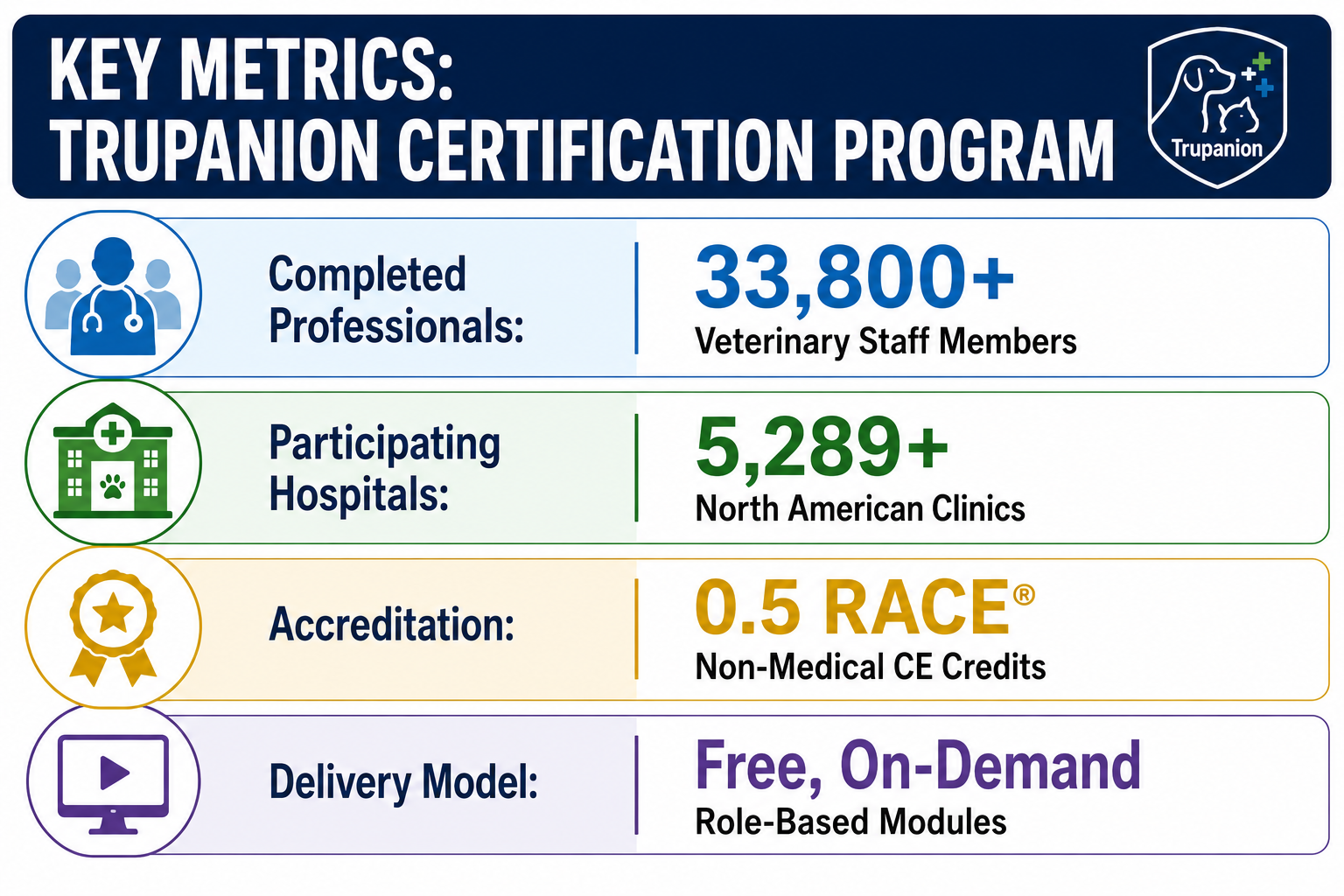



Seattle-based medical pet insurer Trupanion has announced major enhancements to its free, on-demand educational course, Trupanion Certification. The refreshed program is designed to equip North American veterinary hospital teams with practical communication strategies and role-based training to navigate proactive “cost-of-care” conversations with pet parents.
By helping families understand their financial options before an emergency occurs, the program aims to reduce exam-room financial stress, minimize economic euthanasia, and eliminate delays in critical treatment.
Bridging the Financial Gap in the Exam Room
Financial friction remains one of the primary barriers to veterinary care across North America. When unexpected illnesses or trauma strike, pet owners often face emotional distress compounded by sudden financial decisions.
Originally introduced in 2023, Trupanion’s training program has already been completed by more than 33,800 veterinary professionals across 5,289 hospitals in the U.S. and Canada. The 2026 course update transitions the curriculum from basic insurance concepts into actionable, team-wide workflow integration
“Access to care doesn’t begin when a pet becomes sick or injured—it begins with proactive conversations that help pet parents prepare before the unexpected happens. Veterinary professionals have an incredible opportunity to influence those moments, and we’re proud to continue investing in free educational resources that help hospital teams build confidence, strengthen client relationships, and support more pets getting the care they deserve.”
— MJ Hewitt, Senior Vice President at Trupanion
Curriculum Features & Team-Wide Integration
The refreshed course awards 0.5 RACE® (Registry of Approved Continuing Education) non-medical credits upon completion and provides tailored learning tracks for every role in the clinic:
-
Role-Based Customization: Modules designed specifically for veterinarians, credentialed technicians, client service representatives (CSRs), and practice managers.
-
Real-World Practice Scenarios: Interactive exercises and reflection prompts based on everyday clinical encounters to build staff confidence when addressing financial questions.
-
Direct-Pay Model Education: In-depth guidance explaining how direct software integration at checkout—which pays the clinic directly at the time of service—differs from traditional reimbursement models, eliminating large out-of-pocket client burdens.
-
Workflow Optimization: Protocols to streamline administrative tasks so clinical teams spend less time handling claims paperwork and more time focusing on patient care