


India’s animal-agriculture industry is entering a phase in which feed availability, genetics, veterinary capacity, technology and value-chain integration are becoming increasingly interconnected.
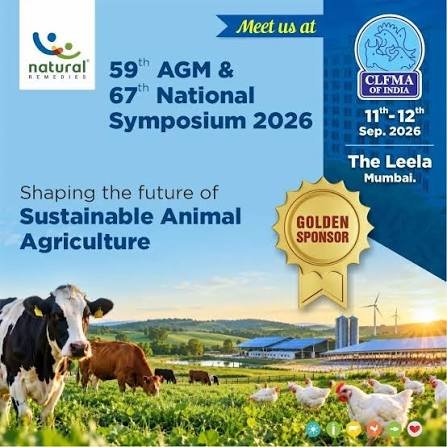
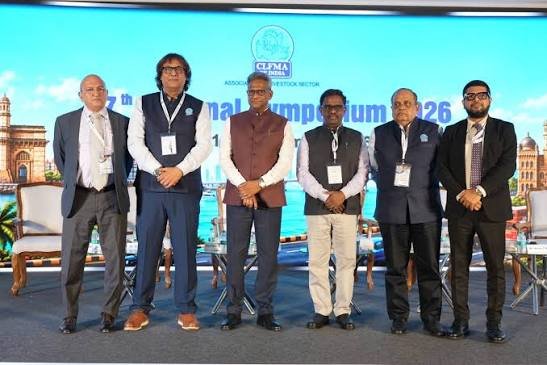
The Compound Livestock Feed Manufacturers Association of India (CLFMA) concluded its 59th Annual General Meeting and 67th National Symposium in Mumbai on September 11–12, 2026, placing feed security, livestock productivity, veterinary capacity and supply-chain resilience at the centre of industry discussions.
Held at The Leela Mumbai under the theme “Animal Agriculture – The Backbone of Sustainable Development,” the event brought together policymakers, industry leaders, researchers, farmers and allied-sector stakeholders.
Feed security emerges as a strategic issue
One of the strongest messages from the symposium was the need to strengthen domestic feed security. The industry highlighted growing competition for maize and soybean from other sectors.
This is strategically important because feed costs directly influence the economics of dairy, poultry, swine and other intensive animal-production systems. CLFMA discussions indicated that India’s poultry-feed requirement is approximately 30 million tonnes, with demand increasing by around 3–3.5 million tonnes annually.
Maize reportedly accounts for approximately 55% of poultry feed, making maize productivity and availability an important determinant of poultry-sector expansion.
Beyond feed: the productivity equation
The symposium also emphasized that animal productivity cannot be improved through feed alone. Participants highlighted the combined importance of:
-
genetics;
-
animal health;
-
nutrition;
-
veterinary services;
-
farmer capability;
-
technology adoption;
-
market access; and
-
processing infrastructure.
This integrated approach is increasingly important as India’s livestock sector moves toward more enterprise-oriented production systems.
Veterinary capacity becomes a bottleneck
A particularly relevant issue for the animal-health industry was the discussion around veterinary capacity. CLFMA highlighted the need to expand veterinary capacity alongside livestock-sector growth and called attention to the shortage of trained professionals.
The association also pointed to greater private-sector participation in veterinary education as one possible component of the response. For animal-health companies, this has commercial implications.
A growing livestock population cannot fully benefit from better vaccines, diagnostics, therapeutics or nutrition products if there is insufficient veterinary capacity to diagnose disease, prescribe interventions and monitor outcomes.
Technology and AI enter the mainstream discussion
The symposium also addressed artificial intelligence and technology adoption. Discussions considered how AI could support productivity, decision-making and operational efficiency across the animal-agriculture value chain.
This signals a broader transition in Indian animal agriculture from conventional input-driven growth toward data-enabled livestock production. Potential applications include:
-
disease surveillance;
-
precision feeding;
-
reproductive management;
-
early disease detection;
-
herd monitoring;
-
feed formulation;
-
farm benchmarking; and
-
supply-chain optimisation.

