HomeCorporateEU Sets New Environmental Rules for Large Pig and Poultry Farms

EU Sets New Environmental Rules for Large Pig and Poultry Farms

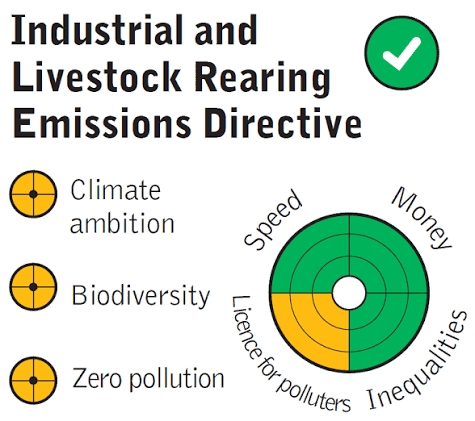
Revised European law will cover around 30% of EU pig and poultry farms, with new operating rules focused on reducing pollution and improving the use of farm resources

BRUSSELS: The European Union is moving ahead with a new environmental system for large pig and poultry farms, bringing more intensive livestock units under revised industrial emissions law.

The European Commission says the revised Industrial and Livestock Rearing Emissions Directive, known as IED 2.0, will cover the largest and most polluting intensive pig and poultry farms in the EU. These represent around 30% of EU pig and poultry farms.

Small and medium-sized pig and poultry farms, which account for about 70% of farms in these sectors, are outside the new livestock requirements. Organic pig farming is also excluded.

Why is the EU changing rules for pig and poultry farms?

The main concern is pollution from intensive livestock production.

Large pig and poultry farms can release nitrogen compounds into the air, water and soil. Ammonia emissions, manure management and the use of water, feed and energy are increasingly important issues for European agriculture.

The European Commission says the revised law is intended to reduce pollution while improving the efficient use of resources on farms.

New operating rules will apply to larger farms

Under the revised law, the European Commission is developing specific Operating Rules for the pig and poultry farms covered by the directive.

These rules are expected to set practical requirements aimed at reducing emissions and improving resource efficiency.

The Commission says the rules will be developed with input from livestock sectors, EU member state experts and environmental organisations.

For farmers, this could affect how larger pig and poultry units manage manure, monitor emissions and use farm resources.

Simpler registration system planned for livestock farms

Importantly, the EU is not proposing to treat livestock farms in exactly the same way as major industrial plants. A simplified registration and reporting system is being introduced for farms covered by the revised rules.

Instead of requiring every farm to go through a full individual permit process, farms may be registered under a simpler system. EU countries will also be able to report emissions on behalf of farmers, reducing the reporting burden on individual livestock businesses.

Covered farms will not be required to prepare the same environmental management system demanded from large industrial installations.

Farmers will have years to prepare

The new requirements will not immediately take effect on farms. According to the European Commission, the new Operating Rules will become applicable at the earliest between 2030 and 2032, depending on farm size.

This gives pig and poultry producers a long period to understand the requirements and make changes where needed.

The transition period is important because investment in manure handling, housing, air management and farm equipment can involve significant costs.

Why are smaller farms excluded?

The EU has deliberately kept smaller and medium-sized pig and poultry farms outside the new livestock requirements. These farms represent around 70% of EU pig and poultry farms.

The decision reflects continuing concern about the cost and paperwork created by environmental rules for smaller agricultural businesses.

The revised system therefore focuses on larger intensive farms considered more important sources of pollution.

What about cattle farms?

Cattle farms are not currently covered by the new pig and poultry farm rules. However, the European Commission says cattle account for about 50% of total EU methane emissions and around 25% of EU ammonia emissions.

The Commission is due to publish a report by the end of 2026 examining wider ways to address livestock emissions, particularly from cattle farming.

This means the environmental regulation of European livestock production is likely to remain a major policy issue.

What do the new EU farm rules mean for the animal health industry?

The changes are primarily environmental rules, but they could also influence the wider livestock and animal health market. Changes in housing, ventilation, manure handling and farm management can affect animal health, respiratory conditions and disease pressure.

For animal health, feed and livestock technology companies, the new rules may increase interest in practical products and services that help farms reduce emissions, improve feed efficiency and monitor farm conditions.

Europe puts large pig and poultry farms under greater environmental pressure

The direction of EU policy is becoming clearer. Large livestock farms are being asked to show greater control over pollution and resource use. At the same time, European policymakers are trying to protect smaller farms from excessive administrative costs.

For Europe’s pig and poultry industries, the next major issue will be the detail of the Operating Rules and the cost of meeting them.

The rules may not begin to apply until 2030–2032, but investment decisions on livestock housing, manure management and farm technology are likely to start much earlier.

Animal Health India Editorial Team
Animal Health India Editorial Teamhttps://animalhealthindia.com
Animal Health India (AHI) is an independent news and intelligence platform covering the global animal health, veterinary, livestock, poultry, companion animal and pet food sectors. Our editorial team comprises veterinary journalists, animal health professionals, regulatory affairs specialists and industry analysts with over 30 years of combined experience covering India, Asia, Europe and North America. AHI publishes news, regulatory updates, market intelligence and company news drawn from primary sources including DAHD, EMA, USDA, AVMA and leading veterinary publications worldwide.

RELATED ARTICLES