


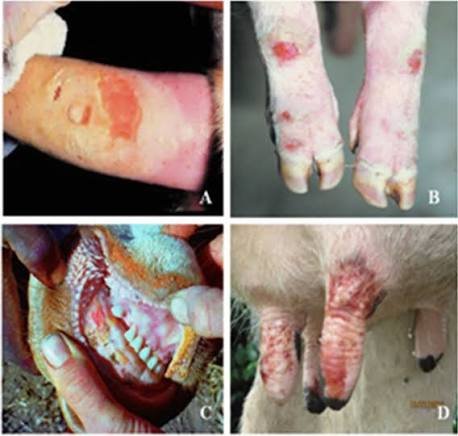
VIENNA, AUSTRIA — Concurrent Foot-and-Mouth Disease (FMD) outbreaks reported across Cyprus, Türkiye, South Africa, and Namibia have forced agricultural authorities to enforce mass culling protocols, localized quarantine zones, and strict livestock movement bans.
The global surge in Foot-and-Mouth Disease (FMD) outbreaks throughout 2025 and 2026 has exposed critical vulnerabilities in international ring-vaccination strategies and vaccine supply chains.
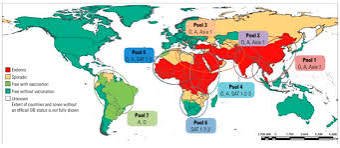
The primary catalyst for this livestock crisis is the rapid, cross-continental expansion of FMD virus serotype SAT1—a strain historically confined to sub-Saharan Africa—into regions across the Middle East, East Asia, and parts of Europe like Cyprus and Greece.
Because immunity against FMD is strictly serotype-specific, existing regional vaccination programs and emergency stockpiles have been caught completely unprepared.
Core Vulnerabilities Exposed
- Lack of Heterologous Cross-Protection: Standard preventative vaccines deployed in newly affected areas typically only target serotypes O, A, and Asia-1. When SAT1 breaches a border, livestock populations have zero baseline immunity, rendering standard stockpiles entirely ineffective.
- Strained Ring-Vaccination Logistical Infrastructure: Controlling sudden incursions relies on rapid “ring vaccination”—vaccinating all susceptible animals within a specific radius around an outbreak zone to form a biosecurity barrier. However, recent outbreaks in locations like Lesvos, Greece and Cyprus have been severely hampered by delayed strain matching, rural resistance, and a lack of readily available, formulated products for emergency distribution.
- The “Free Without Vaccination” Dilemma: Many high-value export nations—such as Namibia or European states—historically maintain an official status of “FMD-free without vaccination”. When an outbreak occurs, these nations face an agonizing trade-off: deploy rapid ring vaccination and lose their lucrative disease-free export status for an extended period, or rely strictly on mass culling (stamping out), which devastates local agricultural economies and risks further viral escape.
- Global Supply Chain Deficits: The Food and Agriculture Organization (FAO) and the World Organisation for Animal Health (WOAH) have warned that global vaccine manufacturing capability for exotic strains like SAT1 cannot scale quickly enough during a multi-region emergency, leaving developing livestock economies highly exposed.
Summary of Regional Impacts (2025–2026)
Region |
Primary Serotype Involved |
Management Strategy & Issues |
Impact & Status |
|---|---|---|---|
East & Southeast Asia (e.g., China, Mongolia) |
SAT1 |
Emergency vaccine approval; movement restrictions. |
High alert across South/Southeast Asia due to lack of herd immunity. |
Eastern Mediterranean (e.g., Cyprus, Greece) |
SAT1 |
Culling (stamping out) mixed with localized ring vaccination. |
Suspension of WOAH FMD-free status; major losses to the dairy sector. |
Middle East (e.g., Iraq, Israel, Jordan) |
SAT1 & SAT2 |
Surveillance drives and quarantine enforcement. |
Major transboundary spread across commercial cattle holdings. |
Southern Africa (e.g., South Africa, Namibia) |
SAT1 & SAT2 |
Patchy routine vaccination, border fencing, and local movement controls. |
Extended export restrictions and severe economic threats to communal livestock. |

