



UK government and UK Research and Innovation (UKRI) have launched a major £54 million biosecurity research initiative. A significant focus of this funding is directed toward shifting the battle against Antimicrobial Resistance (AMR) from mere tracking to implementation and behavior change at the farm level.
The program tackles the underlying behavioral and operational drivers of antibiotic use in agriculture rather than relying solely on top-down restriction mandates.
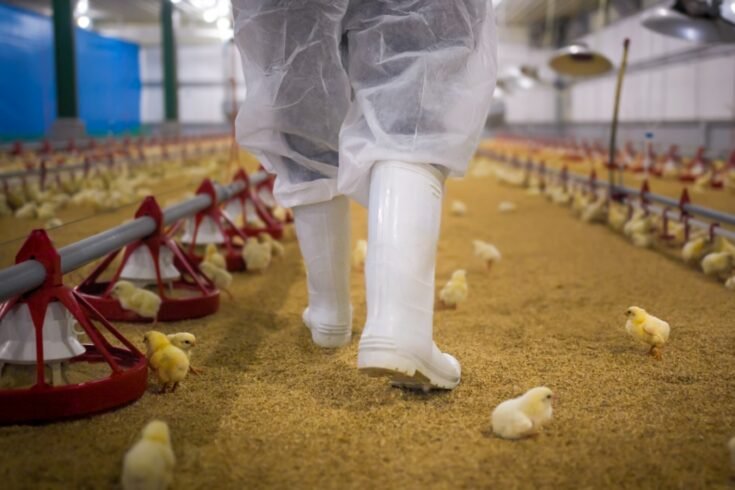
Shifting from “Use Less” to Better Decisions
While the UK agricultural sector has already achieved substantial reductions in raw antibiotic use, experts note that further gains depend on solving real-world, everyday complexities. The initiative funds projects designed to look closely at behavioral obstacles, economics, and decision-making systems.
Key pillars of this farm-level approach include:
-
- Overcoming Practical Hurdles: The research targets the specific everyday factors that drive antibiotic dependency, such as disease pressures, diagnostic uncertainty, data gaps, lack of alternative treatments, and financial constraints
- The AMAST Network: One of the core projects receiving a share of this investment is the AMAST Network (Antimicrobial Resistance in Agrifood Systems Transdisciplinary). Co-led by institutions like the Royal Veterinary College (RVC) and the Quadram Institute, this 250+ member network brings together farmers, vets, and scientists to test what actually works on the ground
- Ruminant Stewardship & Data Tracking: A major component involves putting the UK Ruminant Antibiotic Stewardship Roadmap into action. It builds trusted, standardized frameworks for veterinarians and farmers to easily collect and benchmark antibiotic-use data, turning abstract data into practical stewardship choices
Broader £54M Biosecurity Context
The funding supports 18 interconnected research and innovation projects using a “One Health” approach, acknowledging that human, animal, and environmental safety are bound together. Alongside farm-level AMR interventions, the funding covers:
-
Next-Generation Vaccines: Building mRNA vaccine platforms for livestock at the Pirbright Institute to limit disease outbreaks before antibiotics are even required
-
Environmental AMR Mapping: Tracking how environmental pollutants (like sewage and heavy metals in rivers) accelerate the evolution of superbugs, through collaborations like the CARMA project

