



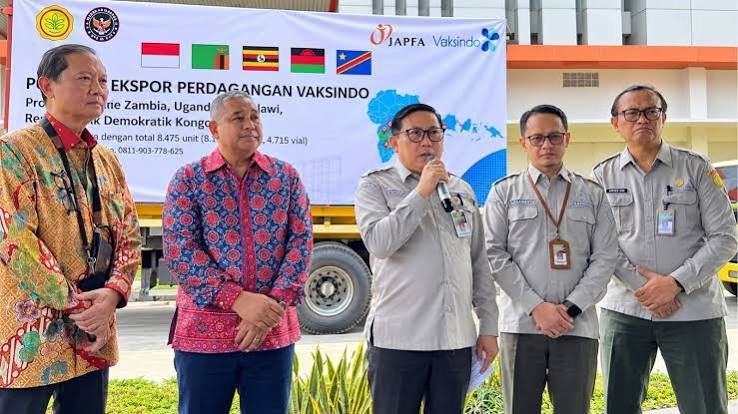
Indonesia has taken another step toward becoming a more significant international veterinary-biologics supplier, exporting 8.475 million poultry-vaccine doses to Zambia, Uganda, Malawi and the Democratic Republic of Congo.
The shipment, released in Bogor on 24 September 2026, was produced by PT Vaksindo Satwa Nusantara and was valued at approximately US$106,875.80.
The Indonesian Ministry of Agriculture described the shipment as an important demonstration that locally manufactured veterinary products can meet international market requirements.
The development is significant because Africa’s rapidly expanding poultry industry requires large-scale access to affordable vaccines against endemic and production-limiting diseases.
Why vaccine exports matter
Poultry production across Africa continues to face substantial disease pressure, particularly from:
-
Newcastle disease
-
Infectious bronchitis
-
Infectious bursal disease
-
Avian influenza
-
Other regionally important infectious diseases
Locally and regionally adapted vaccine supply can reduce dependence on a small number of global manufacturers and improve availability.
Indonesia’s government says its veterinary-biologics exports have expanded internationally, while Vaksindo has developed an export footprint across multiple countries.
Strategic significance for Asia
The development is relevant beyond Indonesia. Asia has increasingly developed sophisticated pharmaceutical and veterinary-manufacturing capabilities, including vaccine production, diagnostics and feed additives.
The commercial model is evolving from:
Domestic production → domestic consumption
toward:
Domestic R&D/manufacturing → regulatory qualification → international registration → export markets
Africa provides an attractive destination because of rising poultry consumption and the need for disease-control infrastructure.
Animal-health industry implications
The competitive landscape in veterinary vaccines is therefore broadening. Future competition may increasingly come from manufacturers that combine:
-
Lower manufacturing costs
-
Regional disease knowledge
-
Flexible formulation
-
Local regulatory expertise
-
Distributor networks
-
Technical veterinary support

