


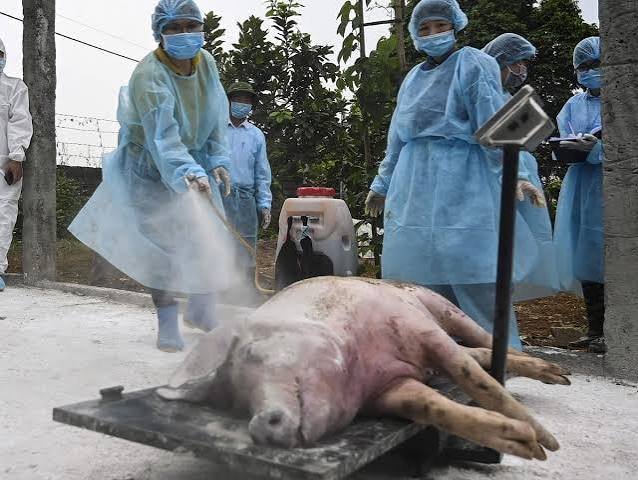
Japan has confirmed classical swine fever at a commercial pig farm in Tochigi Prefecture, where approximately 1,300 of the 4,900 pigs are expected to be culled under the country’s selective-culling framework. The case highlights the continuing importance of vaccination, piglet surveillance and farm biosecurity.
CSF confirmed in Nasu-Karasuyama
Japan’s Ministry of Agriculture, Forestry and Fisheries (MAFF) confirmed classical swine fever (CSF) at a pig farm in Nasu-Karasuyama City, Tochigi Prefecture, on 20 November 2026. The farm housed approximately 4,900 pigs. The case was recorded as Japan’s 109th domestic CSF case.
According to the prefectural notification, the farm reported abnormal conditions on 19 November. Samples were examined by the prefectural authorities and subsequently underwent confirmatory testing at the national animal-health research institute. The national government confirmed the infection on 20 November.
Selective culling planned for approximately 1,300 pigs
Tochigi Prefecture announced that it would implement selective culling, targeting approximately 1,300 pigs. The reported target group includes pigs that had not been vaccinated and animals showing clinical signs or other risk factors.
The approach differs from the previous system, under which all pigs at an infected premises were generally subject to culling. Japan’s revised legal framework, introduced in May 2026, allows selective culling under specified conditions. The Tochigi operation is reported to be the fifth use of this approach nationwide and the first in the prefecture.
The aim is to remove animals considered at higher risk while avoiding unnecessary destruction of animals considered to have acquired protective immunity through vaccination. Selective culling is not an automatic exemption from disease-control requirements. It is a veterinary and regulatory decision made under the applicable national framework.
Reported mortality preceded confirmation
The farm reportedly notified authorities after observing increased piglet mortality. Media reports described 20 piglet deaths on 17 November, 15 on 18 November and four additional deaths on 19 November. The increasing mortality prompted investigation and sampling, leading to laboratory confirmation.
The precise clinical and epidemiological circumstances will be important in understanding the outbreak, particularly the vaccination status of affected piglets and the timing of exposure.
Why this case matters to Japan’s pig industry
The case is significant because of the size of the affected farm and the selective-culling decision. Under the earlier whole-herd approach, the potential scale of destruction at a 4,900-head farm would have been substantially larger.
The revised framework may reduce economic losses in eligible circumstances, but its effectiveness will depend on accurate identification of risk groups, timely laboratory confirmation and strict implementation of the control plan. For producers, the outbreak reinforces the need to:
-
Maintain accurate vaccination records
-
Monitor piglet mortality and clinical signs
-
Control access by people and vehicles
-
Maintain effective cleaning and disinfection
-
Prevent wild boar and other wildlife from entering farm premises
-
Report unusual mortality without delay
Human-health clarification
Classical swine fever affects pigs and wild boar. It is not a human infection. The Japanese Ministry of Agriculture has explicitly advised against misinformation and unnecessary concern among consumers.
What to watch next
Key developments include completion of the selective culling operation, results of epidemiological investigations, any additional CSF confirmations in the surrounding area and the implications for vaccination and regional surveillance.
The Tochigi case is an important test of Japan’s revised CSF management framework and its ability to balance disease containment with more targeted herd depopulation.

