


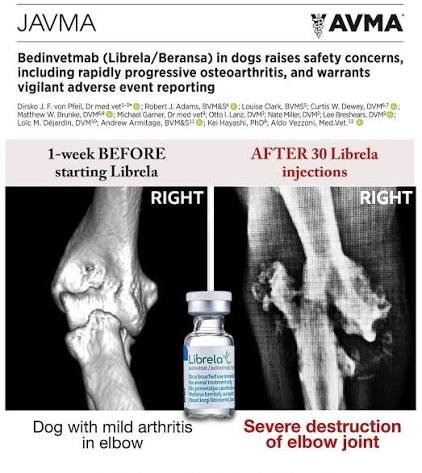
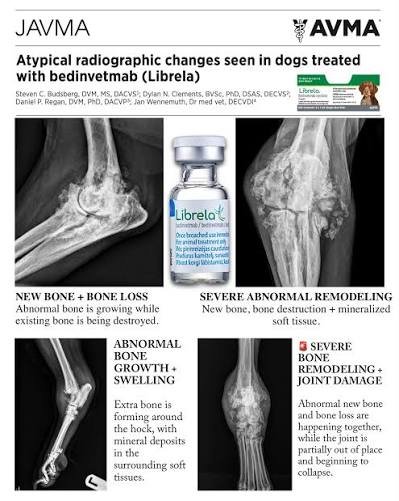
A newly published study in the Journal of the American Veterinary Medical Association (JAVMA) has described and named a rare radiographic condition—abnormal periarticular bone remodeling (APBR)—identified in a small number of dogs reported after treatment with Librela (bedinvetmab), Zoetis’ anti-nerve growth factor (NGF) monoclonal antibody for canine osteoarthritis (OA) pain.
Researchers led by Steven C. Budsberg, DVM, MS, DACVS, reviewed five years of global pharmacovigilance data. The analysis identified 186 dogs with reported APBR, against more than 34 million Librela doses distributed globally during the period reviewed. Zoetis’ publication summary reports 7,205 musculoskeletal adverse-event reports overall, with APBR the most common atypical radiographic finding within the cases reviewed.
A rare signal requiring clinical interpretation
The scale of exposure is important: the 186 reports represent a very small fraction of the more than 34 million doses distributed. However, pharmacovigilance data are designed to identify safety signals rather than establish incidence or causality. Because the database contains dogs receiving Librela, it does not provide an untreated comparison population.
The finding therefore should not be interpreted as evidence that Librela causes APBR in all or most treated dogs. Rather, the study identifies a previously uncharacterized radiographic pattern that warrants recognition, investigation and continued monitoring.
Librela is approved for control of pain associated with canine OA and works by neutralizing nerve growth factor (NGF), a key mediator of OA pain.
Why the study matters
The report is significant for the rapidly expanding canine monoclonal-antibody market, where long-term real-world safety surveillance becomes increasingly important as exposure grows.
For veterinary medicine, the case highlights three priorities:
-
Long-term pharmacovigilance as biological therapies scale;
-
Better differentiation between drug-associated findings, underlying disease and coincidental pathology;
-
Continued integration of clinical examination, imaging and adverse-event reporting.

