

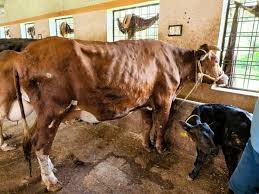
India’s livestock health surveillance system has issued a renewed warning over Lumpy Skin Disease (LSD), with the ICAR-NIVEDI’s National Animal Disease Referral Expert System (NADRES) identifying about 220 districts as being at risk. The alert comes amid reports of suspected and affected cattle in several states, reviving concerns over milk production, cattle productivity and farmer losses following India’s severe 2022 LSD epidemic.
Lumpy Skin Disease is again emerging as a significant animal-health concern in India, with the country’s national disease-forecasting system showing elevated risk across a wide geographic area.
The National Animal Disease Referral Expert System (NADRES), operated by the ICAR–National Institute of Veterinary Epidemiology and Disease Informatics, is an early-warning platform designed to forecast livestock disease risk using surveillance, epidemiological and environmental information. ICAR-NIVEDI describes NADRES as an AI-enabled livestock disease risk-forewarning system.
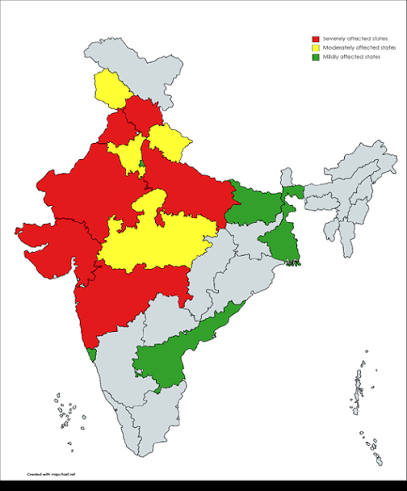
NADRES flags widespread LSD risk
The current ICAR-NIVEDI dashboard, is displaying 220 risk districts for LSD, with a reported 98.9% prediction accuracy.
The risk forecast extends across a broad group of states and Union Territories, underscoring the geographically dispersed nature of India’s LSD threat. ICAR-NIVEDI’s disease-forecasting system is designed to provide advance warning so that veterinarians, livestock departments and farmers can initiate preventive measures before disease incidence increases.
Importantly, an NADRES risk district should not be interpreted as a confirmed LSD outbreak district. The system forecasts disease risk; confirmation requires field investigation and laboratory diagnosis.
2022 outbreak remains the benchmark
The renewed warning is particularly significant because India experienced a major LSD epidemic in 2022. Government data reported at the time showed that by September 23, 2022, LSD had spread to 251 districts across 15 states and affected more than 20 lakh animals. Reported cattle deaths had already reached 97,435 by that date.
The 2022 epidemic demonstrated that LSD can create consequences well beyond animal morbidity. Infection can reduce milk production, impair body condition and reproductive performance, increase veterinary costs and create substantial financial pressure for dairy-dependent households.
What causes Lumpy Skin Disease?
Lumpy Skin Disease is caused by Lumpy Skin Disease Virus (LSDV), a member of the Capripoxvirus genus of the Poxviridae family.
The virus is closely related to the viruses responsible for sheep pox and goat pox. LSD primarily affects cattle and buffaloes and is transmitted predominantly by blood-feeding arthropods, including biting flies, mosquitoes and ticks. Scientific literature indicates that vector activity is an important driver of LSD transmission and seasonality. Typical clinical signs include:
-
Fever
-
Firm skin nodules
-
Swollen lymph nodes
-
Limb and body swelling
-
Nasal and ocular discharge
-
Reduced appetite and body condition
-
Sharp declines in milk production in affected dairy animals
-
Reproductive problems in some affected animals
Why the 2026 warning matters
The significance of the current NADRES alert lies less in the absolute number of forecast districts than in the breadth of the risk footprint. India has one of the world’s largest cattle and dairy sectors, meaning that widespread livestock disease can have implications for:
Animal health → milk yield → farmer income → dairy supply chains → rural livelihoods
The recurrence of elevated LSD risk also highlights the importance of maintaining vaccination coverage, vector control, livestock-movement surveillance and rapid veterinary investigation rather than relying solely on response after clinical disease becomes widespread.
ICAR-NIVEDI’s NADRES platform itself is designed around this principle: using disease surveillance and epidemiological information to provide advance warning and support earlier intervention.
Risk alert is not yet a national outbreak declaration
The distinction between forecast risk and confirmed disease is important. The current NADRES data indicate that LSD risk remains geographically significant, but the 220-district figure should not be reported as 220 confirmed outbreaks.
For animal-health companies, dairy cooperatives, state veterinary departments and livestock producers, the immediate priority is therefore to treat high-risk districts as surveillance and preparedness zones, while confirmed cases should be established through veterinary examination and appropriate laboratory testing.
India’s experience in 2022 shows why early action matters. A disease that initially appears as scattered livestock infections can generate much larger economic consequences when vector transmission, animal movement and insufficient herd protection combine.
Animal-health market implications
The renewed LSD risk also has implications for India’s animal-health industry. Potential demand areas include:
-
LSD vaccination and revaccination programmes
-
Veterinary diagnostics
-
Vector-control products
-
Farm biosecurity
-
Supportive veterinary medicines
-
Disease surveillance and digital epidemiology
-
Farmer education and early-warning systems

