


China’s Muyuan Foods is strengthening its presence in Vietnam’s livestock sector with a planned US$137.5 million integrated pig farm and feedmill in Gia Lai province. The project, developed by Thinh Phat–Muyuan Gia Lai, broke ground on last week in Po To commune and forms part of the company’s five-year ambition to establish production capacity for 2 million pigs in the province.
The project combines a high-technology pig farm valued at approximately US$118 million with a US$19.5 million feedmill. Provincial authorities report total registered investment of VND3.615 trillion, comprising VND3.1 trillion for the farm and VND515 billion for the feed facility.
The investment is designed to integrate pig production with feed manufacturing and potentially downstream meat processing, positioning the project as a significant addition to Vietnam’s industrial livestock infrastructure.
Project capacity and investment
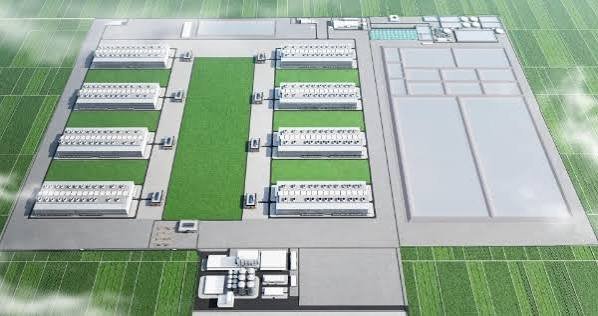
The initial development covers more than 106 hectares and includes breeding and finishing facilities alongside a dedicated feedmill.
Project metric |
Reported details |
|---|---|
Total investment |
Approximately US$137.5 million |
Pig farm investment |
Approximately US$118 million |
Feedmill investment |
Approximately US$19.5 million |
Farm area |
More than 106 hectares |
Breeding capacity |
16,200 sows |
Finishing capacity |
209,000 pigs per batch |
Feedmill capacity |
360,000 tonnes annually |
Groundbreaking |
11 October 2026 |
Target construction period |
Approximately 12 months |
Longer-term target |
Capacity for 2 million pigs over five years |
Location |
Po To commune, Gia Lai province, Vietnam |
The initial farm’s breeding and finishing capacities represent substantial production infrastructure, while the feedmill provides a dedicated supply platform for animal nutrition. The two-million-pig target is a longer-term development ambition and should not be interpreted as the initial project’s operating capacity.
Gia Lai emerges as a strategic livestock-production hub
The investment aligns with Gia Lai’s efforts to expand commercial, technology-intensive livestock production. Provincial officials have reported that the province had more than 1.68 million pigs in 2025, making it Vietnam’s second-largest provincial pig herd.
By 2030, Gia Lai aims for approximately 75% of its pig population to be raised in commercial farming systems, with more than 66% of the herd using high-technology production methods. Po To is among the province’s designated priority areas for livestock development.
Local authorities have emphasised integrated production chains, productivity improvements, environmental management, waste treatment and biosecurity. These priorities provide the policy context for investments that combine large-scale animal production with feed manufacturing and modern farm infrastructure.
Feedmill adds scale to the integrated model
The feedmill’s planned annual capacity of 360,000 tonnes is an important component of the project. At full nameplate capacity, this equates to approximately 30,000 tonnes per month, or an annualised average of about 986 tonnes per calendar day.
These are calculated capacity equivalents, not forecasts of actual production. The project’s feed requirements, utilisation rate and sales to third-party farms have not been disclosed.
An integrated model can improve coordination between feed formulation, pig genetics, herd management and production scheduling. Its commercial performance, however, will depend on feed ingredient costs, plant utilisation, logistics, animal performance and the ability to match production with market demand.
Implications for the animal-health industry
The project could create opportunities for animal-health and livestock-technology suppliers as the facilities are commissioned and herd capacity expands. The most relevant areas include:
-
Veterinary vaccines and herd-health programmes: A breeding population of 16,200 sows creates potential recurring demand for reproductive-health management, vaccination and veterinary services.
-
Diagnostics and disease surveillance: Large-scale production requires effective monitoring, early detection, isolation procedures and outbreak-response planning.
-
Biosecurity systems: Farm access controls, vehicle and equipment hygiene, quarantine and movement management are important components of intensive pig production.
-
Feed additives and precision nutrition: The feedmill could provide a platform for amino acids, enzymes, probiotics, mycotoxin-management products and other nutritional technologies, subject to formulation choices and procurement decisions.
-
Environmental-management technologies: Manure handling, wastewater treatment, odour control and environmental monitoring will be important operational considerations.

