


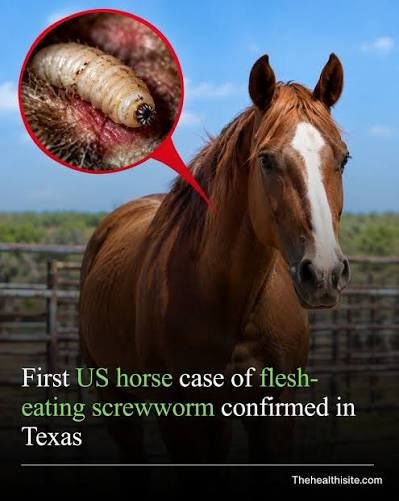
The detection of New World screwworm in a Texas ranch horse represents an important escalation in the 2026 US incursion, expanding the species affected beyond cattle and increasing pressure on equine biosecurity.
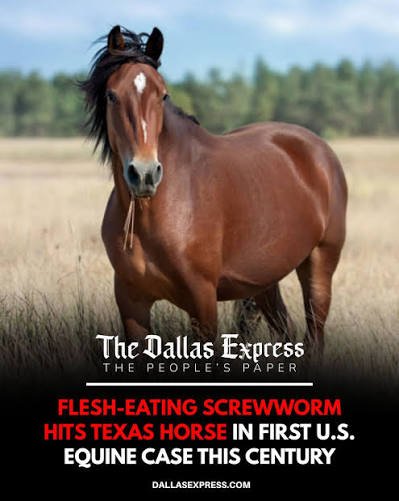
The United States has confirmed its first equine case of New World screwworm (NWS) in the current outbreak, with the infestation detected in a working ranch horse in Presidio County, Texas, near the Mexican border. The case was confirmed on September 9, according to USDA-linked information reported by Reuters.
Why the horse case matters
New World screwworm is caused by the larvae of Cochliomyia hominivorax, a parasitic fly whose larvae feed on living tissue. The parasite typically gains entry through wounds.
The new Texas case is particularly significant because horses can move between farms, ranches, events and geographic areas, potentially creating additional pathways for parasite dispersal.
The US horse population also has a highly developed movement and trade ecosystem, making surveillance and movement controls particularly important.
Location and movement controls
The infected horse was located in Presidio County. Following confirmation, the Texas Animal Health Commission restricted movement of warm-blooded animals outside a designated infested zone covering areas of Presidio and Jeff Davis counties.
The United States had previously eradicated New World screwworm, with the pest declared eradicated domestically in the 1960s. Its return therefore represents a major animal-health and biosecurity concern.
The livestock threat is broader
The horse detection does not replace the existing livestock threat. The 2026 US incursion initially involved cattle and subsequently expanded across affected animal species.
Because screwworm larvae can infest wounds in many warm-blooded animals, cattle, horses, goats, sheep, dogs and wildlife can potentially become involved in transmission.
Biosecurity becomes critical
The US Equestrian Federation has urged horse owners to inspect animals regularly and maintain wound care, fly control and biosecurity. For horse owners, early detection is particularly important because apparently minor wounds can provide an entry point for larvae.
Recommended risk-management measures include:
-
daily animal inspection;
-
prompt veterinary attention to wounds;
-
keeping wounds clean and protected;
-
appropriate fly-control measures;
-
minimising unnecessary animal movement; and
-
reporting suspicious infestations.
Sterile insect technology
The main strategic tool for controlling New World screwworm at population level remains the release of sterile flies. Sterile-male release reduces successful reproduction and can suppress the wild population.
USDA continues to use sterile-insect technology as part of its broader response and has established a dedicated national NWS response programme. This creates an important technology opportunity for the animal-health sector.
Economic implications
Reuters reported estimates that a widespread outbreak could cost the Texas economy up to $1.8 billion. The economic risk extends beyond direct animal mortality. Potential impacts include:
-
restrictions on livestock movement;
-
trade disruption;
-
veterinary treatment costs;
-
surveillance;
-
inspection;
-
biosecurity;
-
livestock-market disruption;
-
equine-event restrictions; and
-
increased government expenditure.
AHI Analyst view
The Texas horse case changes the NWS story from primarily a livestock emergency into a multi-species animal-health challenge. It expands the potential market for:
-
wound-care products;
-
insect control;
-
diagnostics;
-
surveillance;
-
veterinary services;
-
animal-movement certification;
-
sterile-insect technology; and
-
biosecurity systems.

