


This is our Most Extensive and Elaborate Market Research Report on Size of Monoclonal Antibodies Market in Animal Health. This is 5 Part Series and we share Part 1 of 5, here.
Executive Summary
The companion animal pharmaceutical industry is undergoing one of the most significant scientific transformations since the introduction of vaccines and modern antibiotics. Monoclonal antibodies (mAbs), once largely confined to human medicine, are now emerging as one of the fastest-growing therapeutic classes in veterinary medicine.
Within just a few years, monoclonal antibody therapies have shifted from experimental research to commercial reality. Products targeting osteoarthritis pain and allergic skin disease have demonstrated that highly specific biologic therapies can provide effective, long-lasting treatment while avoiding some of the limitations associated with conventional small-molecule drugs.
Unlike traditional medicines that act on multiple biological pathways, monoclonal antibodies are engineered to recognize a single molecular target with remarkable specificity. This precision reduces off-target effects and allows for targeted modulation of disease pathways involved in chronic pain, inflammation and immune-mediated disorders.
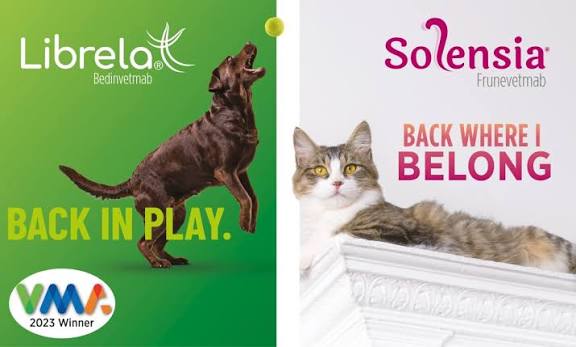
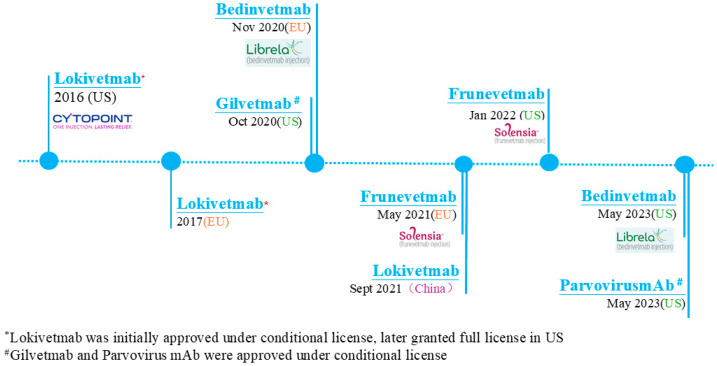
The commercial success of products such as Librela®, Solensia®, Cytopoint® and, more recently, Lenivia®, has reshaped industry expectations. Large multinational companies are increasing investment in biologics, while biotechnology startups are attracting substantial venture capital funding to develop the next generation of veterinary antibodies.
The market is no longer viewed as a niche segment. Instead, biologics are increasingly considered a core strategic pillar of the companion animal pharmaceutical industry.
Key Findings
-
Companion animal monoclonal antibodies are the fastest-growing segment of veterinary therapeutics.
-
Most commercial products today target chronic diseases rather than infectious diseases.
-
Osteoarthritis and dermatology account for the majority of commercial sales.
-
More than 30 veterinary monoclonal antibody programmes are believed to be in active discovery, preclinical development or clinical evaluation globally.
-
North America remains the largest commercial market, followed by Europe.
-
Oncology, chronic kidney disease, obesity, inflammatory bowel disease and diabetes represent major future opportunities.
-
Artificial intelligence is accelerating antibody discovery and optimization.
What Is Driving This Market?
Several structural trends are supporting rapid growth.
1. Pets Are Living Longer
Advances in nutrition, preventive medicine and veterinary care have increased the average lifespan of companion animals. As dogs and cats live longer, veterinarians are seeing more chronic conditions such as:
-
Osteoarthritis / Chronic pain / Atopic dermatitis / Kidney disease / Heart disease / Endocrine disorders
These conditions require long-term management, making them well suited to biologic therapies.
2. Pet Owners Are Spending More
Companion animals are increasingly regarded as family members. This “humanization of pets” has changed healthcare expectations. Owners are increasingly willing to pay for: advanced diagnostics, specialty referral care, biologic medicines, rehabilitation, long-term pain management and dermatology treatments. This willingness to invest supports premium-priced biologic products.
3. Veterinary Medicine Is Following Human Medicine
Many of the most successful human biologic approaches are now being adapted for veterinary medicine. Examples include:
-
nerve growth factor inhibition
-
cytokine blockade
-
immune modulation
-
targeted inflammatory pathways
This translation of scientific knowledge has shortened development timelines and reduced technical risk.
Estimated Market Size
Although exact figures vary because companies rarely disclose biologics separately, analysis of public financial reports and industry estimates indicates:
| Year | Estimated Global Companion Animal mAb Market |
|---|---|
| 2020 | US$350–450 million |
| 2022 | US$650–750 million |
| 2024 | US$1.1–1.3 billion |
| 2026 (estimated) | US$1.6–1.9 billion |
This represents one of the highest growth rates within the global animal health industry. The market is expected to continue expanding as new indications and products are introduced.
Geographic Distribution – Approximate market share:
North America — 48–52%
Europe — 30–35%
Japan — 5–7%
Australia/New Zealand — 3–4%
Latin America — 3–5%
Rest of Asia — rapidly expanding from a smaller base
North America remains the largest market because of:
-
high veterinary spending
-
strong insurance penetration
-
early regulatory approvals
-
widespread specialist referral practices
Disease Areas Driving Revenue
Current commercial revenue is concentrated in a small number of indications. Approximate distribution:
Osteoarthritis — largest segment
Dermatology (atopic dermatitis, pruritus) — second largest
Pain management — rapidly expanding
Chronic inflammatory disorders — emerging
Oncology — early pipeline
Kidney disease — early research
Diabetes — exploratory
Cardiology — exploratory
Why Monoclonal Antibodies Are Different
Traditional medicines: NSAIDs, corticosteroids and antibiotics often influence multiple biological pathways.
Monoclonal antibodies: recognize one molecular target, exhibit high specificity, have prolonged duration of action, generally require infrequent administration and are metabolized as proteins rather than through hepatic drug metabolis. These properties make them attractive for chronic disease management.
Commercial Success Has Changed Industry Strategy
Several years ago, monoclonal antibodies represented a small experimental field. Today they influence:
-
R&D budgets
-
acquisition strategies
-
licensing agreements
-
venture capital investment
-
manufacturing expansion
-
regulatory planning
Most leading multinational animal health companies now include biologics among their highest strategic priorities.
Market Drivers
The strongest growth drivers include:
-
ageing pet populations
-
increasing osteoarthritis prevalence
-
rising dermatology consultations
-
owner willingness to invest
-
biologics with long dosing intervals
-
improved diagnostics
-
veterinary specialization
-
AI-assisted antibody discovery
Challenges
Despite strong growth, the industry faces several challenges:
-
high development costs
-
complex manufacturing
-
cold-chain requirements
-
species-specific antibody engineering
-
regulatory complexity
-
premium pricing
-
reimbursement limitations in some markets
These barriers also make market entry difficult, which can benefit established companies.
Outlook
The companion animal monoclonal antibody market is expected to continue expanding faster than most other therapeutic segments over the next decade. Growth will be driven by an ageing pet population, advances in biologic engineering, increasing owner willingness to invest in premium care and a steadily expanding pipeline targeting chronic diseases.
Scientific Foundations of Veterinary Monoclonal Antibodies
Introduction – Understanding why monoclonal antibodies have transformed veterinary medicine requires an appreciation of both immunology and advances in biotechnology. Although antibodies occur naturally in all mammals, therapeutic monoclonal antibodies are carefully engineered proteins designed to recognize a single molecular target involved in disease.
Unlike traditional pharmaceuticals that often act on multiple receptors or enzymes, monoclonal antibodies are highly selective. This precision allows veterinarians to interrupt specific disease pathways while minimizing effects on unrelated biological systems.
What Is an Antibody?
Antibodies are Y-shaped proteins produced by B lymphocytes as part of the adaptive immune system. Their primary function is to recognize and bind to foreign molecules, known as antigens, such as viruses, bacteria and toxins. Each antibody contains:
-
two antigen-binding regions that recognize a specific target
-
a constant region that interacts with immune cells
-
structural domains that determine stability and half-life
This remarkable specificity inspired scientists to develop antibodies as therapeutic agents.
What Makes a Monoclonal Antibody Different?
A monoclonal antibody is produced from a single B-cell clone and therefore recognizes one specific epitope on one target molecule.
This contrasts with polyclonal antibodies, which consist of a mixture of antibodies recognizing multiple epitopes.
The high specificity of monoclonal antibodies allows them to block disease-mediating proteins with minimal interaction with unrelated targets.
Evolution of Veterinary Monoclonal Antibodies
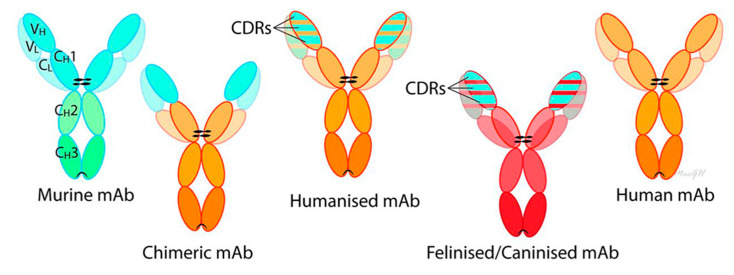
The first generation of monoclonal antibodies was developed for human medicine in the 1980s. Early products were derived from mouse cells and frequently induced anti-drug immune responses.
Advances in antibody engineering led to chimeric, humanized and fully human antibodies for human medicine. Veterinary biologics followed a similar path, but with an additional challenge: antibodies had to be engineered specifically for each target species, such as dogs or cats, to reduce immunogenicity and prolong activity.
Today, approved veterinary monoclonal antibodies are species-adapted proteins designed for optimal compatibility with canine or feline immune systems.
How Therapeutic Antibodies Work
Most veterinary monoclonal antibodies function by binding to soluble signaling molecules or receptors involved in disease.
Examples include:
-
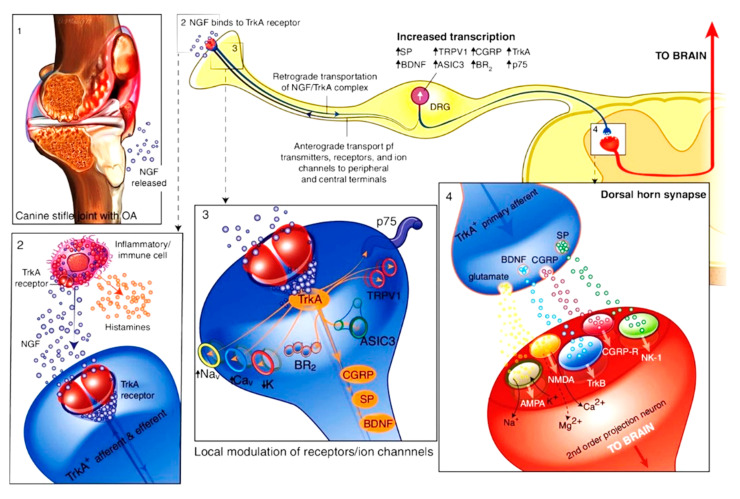
Neutralization of nerve growth factor (NGF) to reduce chronic osteoarthritis pain.
-
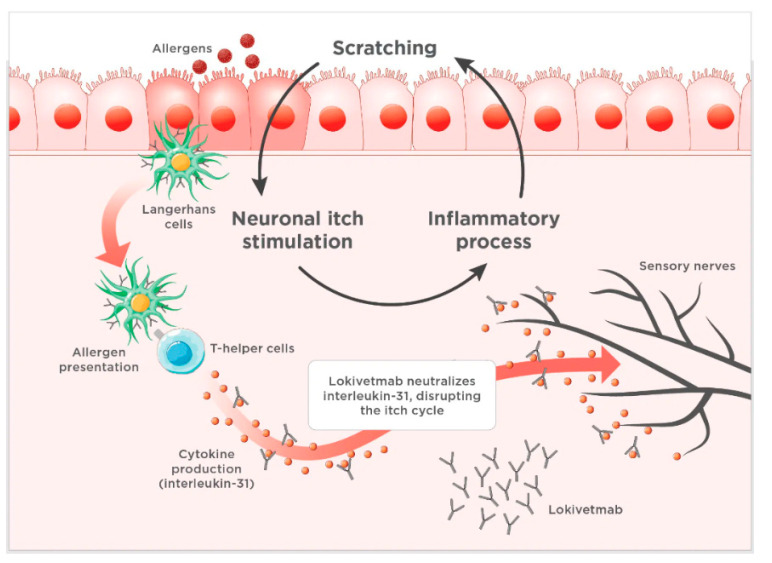
Binding interleukin-31 (IL-31) to interrupt itch signaling in canine atopic dermatitis.
By blocking these signaling molecules before they activate downstream pathways, monoclonal antibodies reduce clinical signs without broadly suppressing immune function.
Pharmacokinetic Advantages
Compared with conventional small-molecule drugs, monoclonal antibodies offer several pharmacokinetic benefits:
-
Long circulating half-life, often allowing monthly or longer dosing intervals.
-
Catabolism into amino acids rather than hepatic metabolism.
-
Minimal drug–drug interactions.
-
High target specificity.
These properties improve treatment adherence and reduce dosing frequency, an important consideration in companion animal practice.
Safety Considerations
Veterinary monoclonal antibodies are generally well tolerated because they are designed to resemble endogenous immunoglobulins of the target species. Nevertheless, clinicians must remain vigilant for:
-
Injection-site reactions.
-
Hypersensitivity responses.
-
Development of anti-drug antibodies in some animals.
-
Rare immune-mediated adverse events.
Long-term pharmacovigilance will remain essential as the number of approved biologics grows.
Therapeutic Targets Under Investigation
Beyond NGF and IL-31, researchers are evaluating numerous additional targets, including:
-
IL-5
-
IL-6
-
IL-17
-
IL-23
-
TNF-α
-
GM-CSF
-
PD-1/PD-L1
-
TGF-β
-
PCSK9-like pathways
-
Metabolic regulators
These targets span diseases including cancer, inflammatory bowel disease, chronic kidney disease, obesity, diabetes and immune-mediated disorders.
Antibody Discovery Is Becoming Faster
Modern veterinary antibody discovery increasingly uses:
-
phage display
-
single B-cell sequencing
-
recombinant antibody engineering
-
computational protein design
-
AI-assisted structure prediction
-
high-throughput screening

