


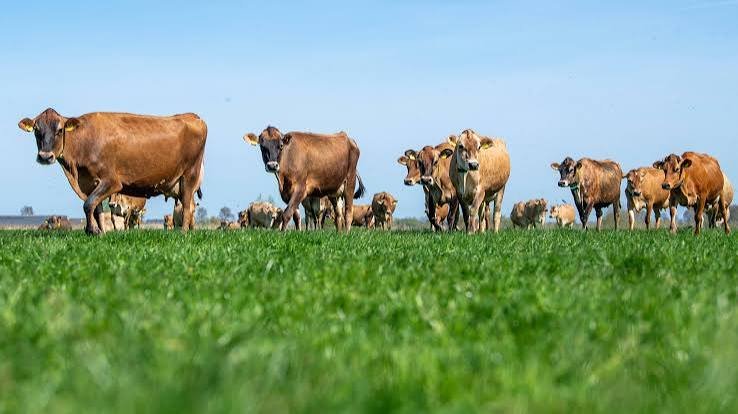
Ireland’s evolving Shamonda virus situation has drawn attention to a newly emerging midge-borne livestock disease in Europe. Six cattle herds have been identified as suspected or reported cases, with dairy producers concerned about acute milk-yield reductions, diarrhoea and lethargy.
Six Irish herds under scrutiny
Shamonda virus (SHAV), an emerging midge-borne virus affecting livestock, is attracting growing attention across Europe following reports involving six cattle herds in Ireland.
Department of Agriculture, Food and the Marine, said infection was suspected or had been reported by a private animal-health laboratory in six herds. Two were in County Cork, with one each in Kerry, Kildare, Wexford and Waterford.
The wording is important: the six herds should not be described as six independently confirmed official laboratory-positive outbreaks unless the Irish authorities subsequently publish that confirmation. The available report establishes a wider surveillance concern, not necessarily six definitive outbreak confirmations.
The Irish reports follow the identification of Shamonda virus in cattle at two dairy farms in Great Britain during October: one in Powys, Wales, and another in Shropshire, England. The UK Animal and Plant Health Agency (APHA) announced the findings on 2 November after samples were tested at its Weybridge laboratories.
The developing picture points to a wider European distribution of a virus that has been detected in several countries during 2026.
A midge-borne orthobunyavirus
Shamonda virus is an orthobunyavirus belonging to the Simbu serogroup. It is genetically related to other livestock pathogens, including Schmallenberg virus and Akabane virus.
Transmission is understood to occur primarily through bites from infected Culicoides midges. These small biting insects are also important vectors for bluetongue virus and other livestock pathogens.
The epidemiology is therefore influenced by vector distribution, temperature, rainfall, humidity and seasonal patterns. In suitable conditions, infected midges can transmit the virus between susceptible animals and contribute to geographically dispersed outbreaks.
The possibility of transplacental transmission has also been raised in official disease information, making reproductive outcomes an important area for surveillance. However, the full epidemiological behaviour and disease burden associated with this emerging virus remain under investigation.
Clinical signs: milk production, diarrhoea and lethargy
Reports from affected European cattle populations describe an acute clinical presentation that may include:
-
Fever.
-
Reduced milk production.
-
Diarrhoea.
-
Lethargy and reduced activity.
-
Mild respiratory signs in some animals.
For dairy producers, a sudden decline in milk yield across several animals within a short period is particularly concerning. Such a pattern can have immediate economic consequences through reduced saleable milk, veterinary investigation costs and disruption to normal herd management.
However, these signs are not specific to Shamonda virus. They overlap with several infectious and non-infectious cattle conditions. Clinical suspicion alone is therefore insufficient for diagnosis; veterinary assessment and appropriate laboratory testing are necessary.
The Irish report also indicates that suspected cases have been identified across multiple counties, suggesting that surveillance should not be confined to a single localised cluster.
Great Britain detections add to the European picture
The UK APHA confirmed in October 2026 that Shamonda virus had been detected in cattle at two dairy farms, one in Powys and one in Shropshire.
The agency stated that the clinical signs were consistent with descriptions of acute disease elsewhere in Europe. It also noted that the detection was not unexpected given the wider European reports and demonstrated the importance of surveillance and diagnostic capability.
UK authorities have stated that Shamonda virus is not currently a notifiable or reportable disease in Great Britain and that there is no evidence requiring additional disease-control measures at the time of the announcement.
This regulatory position should not be confused with a declaration that the virus is unimportant. Surveillance and scientific assessment remain necessary as the geographical distribution and clinical significance become clearer.
Implications for the dairy and livestock industry
The emerging situation creates several operational challenges.
First, diagnostic awareness must improve. Because clinical signs overlap with other cattle diseases, veterinarians need access to appropriate testing and updated case definitions.
Second, vector surveillance is important. The involvement of Culicoides midges means that disease risk may persist where environmental conditions support vector activity.
Third, dairy producers should monitor herd-level patterns. Sudden milk-yield reductions, fever, diarrhoea and lethargy affecting multiple animals should trigger veterinary investigation rather than assumptions about a single diagnosis.
Fourth, reproductive outcomes need monitoring. Given the possible relevance of infection during pregnancy, further evidence on congenital effects and reproductive losses will be important.
For animal-health companies, the developing situation may increase demand for diagnostic services, vector-control advice and veterinary surveillance. It is too early, however, to quantify commercial demand or assume that a licensed vaccine or specific antiviral treatment is available.
One Health perspective
Shamonda virus belongs to a group of viruses with complex animal and vector epidemiology. The UK disease guidance notes that one human case was reported in France in an immunocompromised person who died while being treated for a serious underlying illness. There is no evidence of human-to-human transmission or a general population risk established by that report.
This isolated report warrants careful scientific communication, not alarmist conclusions. The principal current concern for livestock operators remains animal health and production.
Conclusion
The report of six Irish cattle herds with suspected or reported Shamonda virus infection, alongside confirmed detections in Great Britain and other European countries, illustrates the growing importance of emerging vector-borne livestock diseases.
For dairy farmers, the immediate concern is the potential for acute milk-yield reductions and clinical illness. For veterinary authorities, the priorities are diagnostic confirmation, surveillance and a better understanding of the virus’s epidemiology.
The next critical developments will be official clarification of the Irish herd status, further laboratory findings, evidence on reproductive effects and monitoring of the role of Culicoides vectors as seasonal conditions change.
Shamonda virus is an emerging surveillance challenge for Europe’s cattle sector; the priority now is to distinguish suspected reports from confirmed infection while strengthening field diagnosis and herd-level monitoring.

