



Three cattle-farm detections across Cádiz, Badajoz and Ciudad Real mark the first identification of EHD virus serotype 7 in the European Union. Existing vaccines authorised against serotype 8 are not expected to protect cattle against the newly detected variant.
A new EHD serotype enters the European Union
Spain has reported the first-ever detection of Epizootic Haemorrhagic Disease (EHD) virus serotype 7 in the European Union, following confirmation of three outbreaks on cattle farms in the provinces of Cádiz, Badajoz and Ciudad Real.
The detections were confirmed on 6 November 2026 by Spain’s veterinary authorities, with laboratory identification undertaken by the Central Veterinary Laboratory in Algete, the national reference laboratory for the disease. The affected animals presented with fever and lesions affecting the mucous membranes, prompting sampling under the country’s surveillance programme for bluetongue and EHD.
The discovery represents a significant epidemiological development for European cattle production. Spain had previously reported circulation of EHD serotype 8, with the first cases recorded in November 2022. The identification of serotype 7 introduces a new viral variant into a region where veterinary authorities and producers have primarily been managing the established serotype.
The detections were reported by veterinary authorities in Andalucía, Extremadura and Castilla-La Mancha. The three affected provinces span these regions, highlighting the importance of coordinated surveillance and rapid laboratory confirmation.
Existing serotype 8 vaccines do not provide protection against serotype 7
The most immediate concern for cattle producers is the lack of vaccine protection against the newly detected serotype.
Spain has two commercially available vaccines authorised against EHD serotype 8, which have been used in voluntary vaccination programmes in affected areas. However, reporting on the new detections states that these vaccines do not provide protection against serotype 7.
This is an important distinction for herd-health planning. Vaccination against one EHD serotype should not be assumed to provide protection against another. The emergence of serotype 7 therefore creates a potential immunity gap for cattle previously vaccinated against serotype 8.
The finding also raises questions for vaccine developers and veterinary regulators about the need for serotype-specific antigenic assessment, cross-protection studies and potential development of additional vaccine formulations.
No conclusion should be drawn that an existing serotype 8 vaccination programme is ineffective against serotype 8 itself. The concern is specifically the absence of demonstrated protection against the newly detected serotype 7.
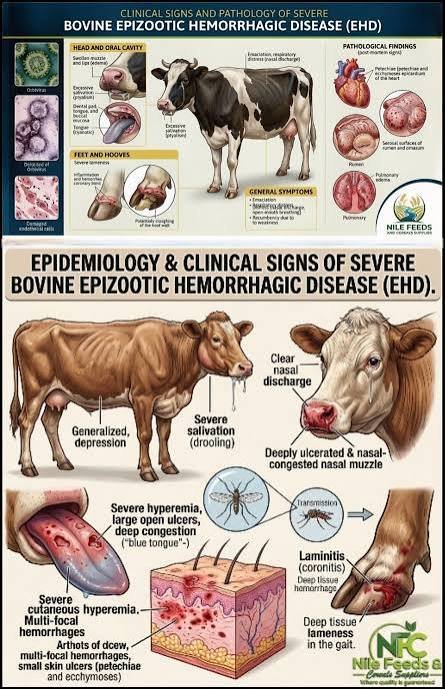
Culicoides midges remain central to disease transmission
EHD is a vector-borne viral disease transmitted primarily by biting midges of the genus Culicoides. These insects can spread infection between susceptible animals, making vector ecology, temperature and seasonal conditions important determinants of disease risk.
The disease primarily affects cattle and can also affect wild ruminants. Clinical severity varies, and infected animals may show fever, oral and nasal lesions, reduced appetite, lameness, swelling and a decline in production.
The November detections are particularly relevant because prolonged periods of suitable weather can extend the activity of biting midges beyond the traditional seasonal window. However, the contribution of unseasonably warm weather to the current Spanish detections has not been quantified in the available reports.
For producers, this reinforces the importance of maintaining surveillance beyond assumptions based solely on the calendar season.
Trade and movement implications
The initial Spanish reporting indicated that cattle movements within mainland Spain could continue under the usual conditions, for both live animals and slaughter, provided animals did not show clinical signs of disease.
This is an important distinction between disease detection and the introduction of blanket movement restrictions. Any subsequent restrictions will depend on official veterinary risk assessments, the geographical distribution of cases and applicable EU and trading-partner rules.
EHD is not considered a zoonotic disease. The current concern is animal health, cattle welfare, production losses and the potential trade consequences of further spread.
What the animal-health industry should monitor
The emergence of serotype 7 creates several immediate priorities:
-
Surveillance: further testing of clinically suspect cattle and monitoring of new geographical detections.
-
Vector monitoring: assessment of Culicoides activity and seasonal transmission risk.
-
Vaccine development: evaluation of serotype 7-specific vaccine candidates and the evidence required for authorisation.
-
Diagnostic readiness: ensuring laboratories can distinguish EHD serotypes and identify mixed or emerging infections.
-
Trade policy: monitoring whether importing countries introduce additional certification or regional restrictions.
-
Wildlife surveillance: assessing the possible role of wild ruminants in maintaining transmission.
For vaccine manufacturers, the appearance of a new serotype highlights the commercial and technical importance of rapid antigenic characterisation and scalable vaccine development. For cattle producers, it underlines the need to avoid assuming that protection against EHD-8 automatically covers EHD-7.
Conclusion
Spain’s first detection of EHD serotype 7 in the EU is a significant development in Europe’s vector-borne livestock disease landscape. The three cattle-farm detections in Cádiz, Badajoz and Ciudad Real introduce a new serotype into a country already managing EHD-8.
The absence of protection from existing serotype 8 vaccines is the immediate concern, while the potential for continued midge activity makes surveillance and vector-risk management particularly important.
The next critical indicators will be whether additional serotype 7 detections emerge, whether the virus spreads geographically and how quickly vaccine developers and regulators can respond.
For Europe’s cattle sector, the issue is no longer simply managing EHD circulation; it is preparing for a serotype landscape in which existing vaccine coverage may not be sufficient.

