

Public health departments across several North American municipalities—including Arlington and McKinney in North Texas—have initiated targeted ultra-low volume (ULV) ground-spraying operations through August 12 to suppress adult mosquito populations following a series of positive West Nile Virus (WNV) detections in regional monitoring traps.
The targeted vector suppression campaigns respond directly to positive pool samples verified by regional public health laboratories, including Tarrant County Public Health. The intervention aims to reduce the abundance of infected adult Culex mosquitoes as back-to-school outdoor activities, evening sports, and late-summer gatherings increase public exposure during peak biting hours.
Vector Suppression Strategy & Operational Execution
Ground-spraying protocols involve the application of a water-based permethrin product dispersed as a synthetic pyrethroid mist by truck-mounted ULV foggers. Ground fogging targets adult mosquitoes while they are actively flying during twilight and overnight hours (typically between 9:00 p.m. and 5:00 a.m.)
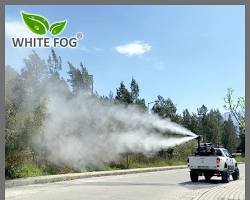
The ULV application method breaks the insecticide liquid into micro-droplets that drift through target foliage where adult mosquitoes rest and feed. Evaluated and registered by the U.S. Environmental Protection Agency (EPA), permethrin applied at vector-control rates degrades rapidly when exposed to sunlight and air, posing no unreasonable risk to humans, domestic pets, or the environment when used according to label directions.
Targeted Operational Zones (Arlington & Regional Grid)
In Arlington, municipal contractors activated a two-night spraying window covering a half-mile radius around multiple positive trap sites and bordering municipal jurisdictions:
-
West Sublett Road at South Bowen Road
-
Forestwood Drive at Arbor Oaks Drive
-
Caliente Drive at Commander Court
-
Shady Valley Drive at West Pioneer Parkway (Joint boundary response with the Town of Pantego)
“Targeted ground spraying is deployed when viral activity in mosquito populations exceeds safe thresholds or presents an immediate public health risk to surrounding neighborhoods. The objective is to rapidly disrupt the viral transmission cycle before human spillover occurs.”
— Tarrant County Public Health Vector Control Directive
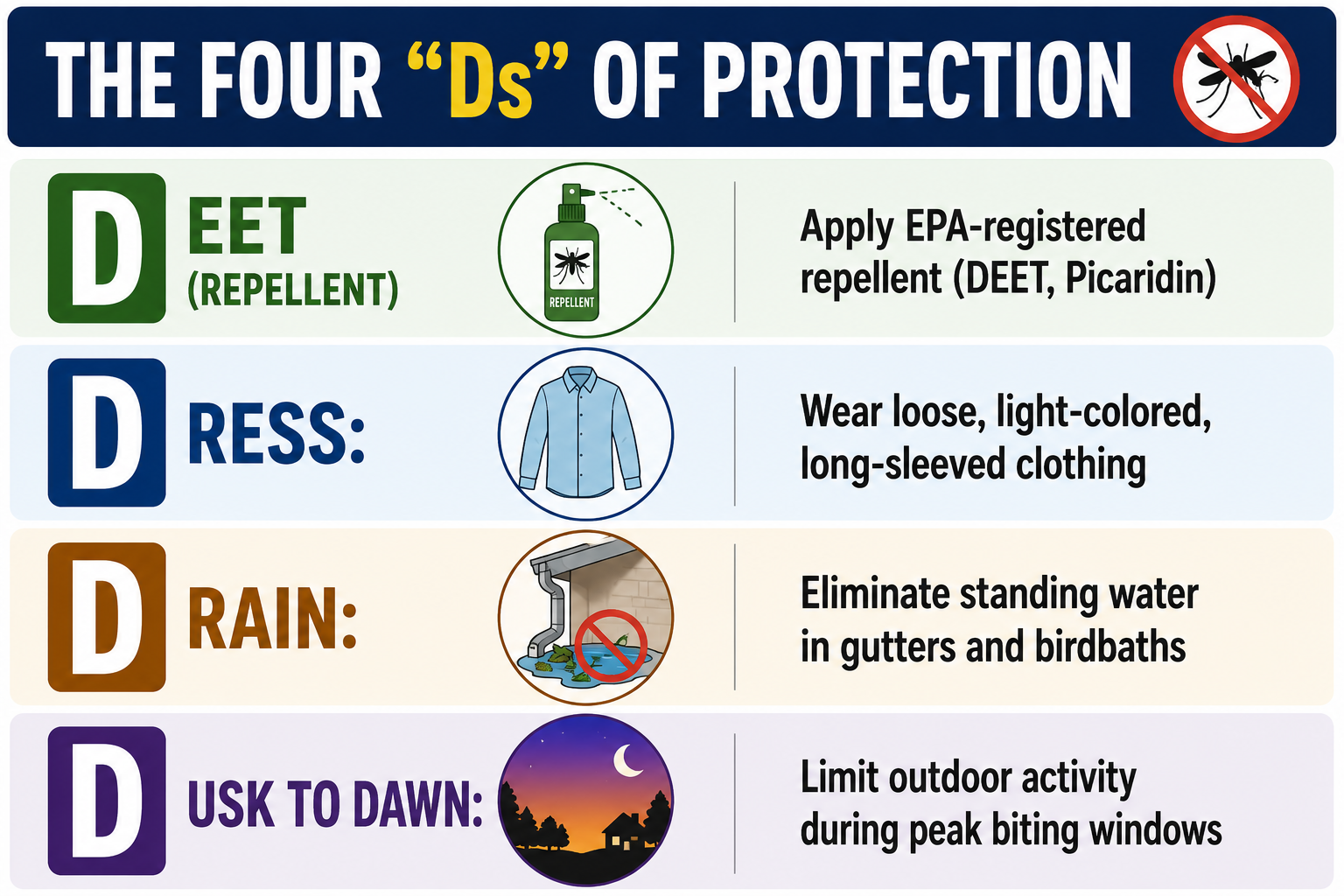
Public Health Advisory: The “Four Ds” of Mosquito Defense
While municipal ground spraying reduces adult flying vector populations, public health officials emphasize that source reduction and personal barrier protection remain the primary defense against West Nile Virus infection