


Animal Health Market Intelligence | Global Poultry Vaccines | Technology, Disease Prevention and Market Outlook | 2 November 2026
The global poultry sector is facing a strategic shift in disease prevention: vaccine performance is no longer judged solely by immunogenicity and protection under controlled conditions. Thermal stability, reliability during distribution, ease of administration and compatibility with farm-level biosecurity are becoming increasingly important purchasing and deployment considerations.
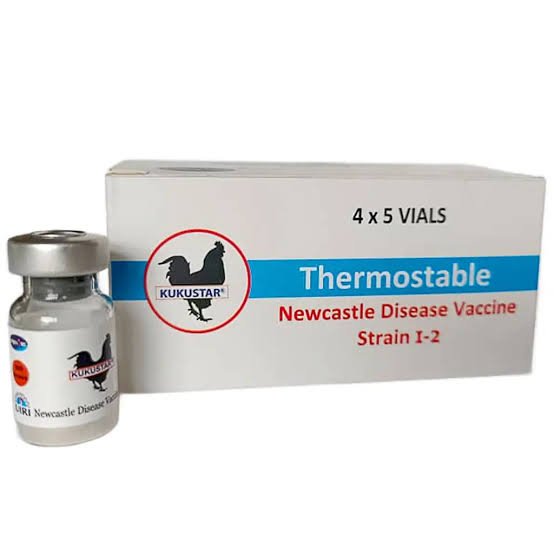
The strongest case for thermostable vaccines is in regions where refrigeration, transport and veterinary access are unreliable, particularly village poultry systems and remote production areas. Newcastle disease (ND) vaccines are an established example: the Food and Agriculture Organization of the United Nations (FAO) has documented the use of heat-resistant vaccine strains, including I-2, specifically developed to improve practical disease control in village chickens.
Recent research also illustrates continued formulation innovation. A study published in Veterinary Sciences in April 2026 reported a stabilised liquid Newcastle disease vaccine formulation that retained promising stability for 30 days at 25°C while maintaining immunogenicity in laboratory studies. This is an important research development, but it should not be interpreted as evidence that a universally cold-chain-independent commercial product has already been adopted across the industry.
At the same time, vaccination is increasingly being positioned as one component of an integrated prevention system—not a substitute for controlled farm access, cleaning and disinfection, flock monitoring, movement management and rapid disease reporting. A 2026 review of poultry autogenous vaccines likewise describes vaccination and biosecurity as complementary disease-control measures.
Market thesis: thermostability is emerging as a potentially valuable product and distribution advantage, particularly in underserved poultry markets. However, the evidence supports a shift in priorities and continued technical development—not a verified, uniform global migration away from conventional refrigerated vaccines.
Global poultry vaccine market: a growing preventive-health opportunity
The commercial opportunity is significant even though public data do not yet quantify the thermostable-vaccine segment separately.
Poultry Market Size Estimates – Source 1
2026 global market estimate – $1.38 billion
2034 forecast – $ 2.38 Billion
6.99% forecast CAGR, 2026–2034
Poultry Market Size Estimates – Source 2
2026 global market estimate – $2.49 billion
2031 global market estimate – $3.82 billion
8.92% forecast CAGR, 2026–2031
Sources: Fortune Business Insights, updated 12 October 2026; Mordor Intelligence, 2026 market report.
The two estimates differ substantially because market-research firms use different definitions, datasets and modelling assumptions. They should be treated as independent commercial estimates, not combined into a single market size.
A third estimate from Grand View Research places the market at US$2.7 billion in 2026, forecasting US$3.7 billion by 2030, with a 7.6% CAGR for 2025–2030. The spread reinforces the need to avoid false precision when assessing the addressable market.
The figures describe the entire poultry vaccine market, including conventional live and inactivated vaccines, recombinant platforms and vaccines for multiple diseases. They are not estimates of thermostable vaccines alone.
What the market numbers mean for manufacturers
The opportunity for thermostable formulations is best understood as a product-differentiation and market-access thesis within the wider poultry vaccine industry.
-
Access-led growth: Products that tolerate defined temperature excursions could be particularly useful where refrigeration and last-mile distribution are difficult.
-
Lower wastage potential: Improved thermal stability may reduce losses caused by accidental temperature excursions, provided the product’s validated storage conditions are respected.
-
New distribution models: Regional manufacturing, decentralised supply and vaccination campaigns could become easier where product characteristics permit less restrictive transport conditions.
-
Differentiation beyond price: Manufacturers may compete on validated stability, potency retention, ease of administration, field performance and reliable supply—not only cost per dose.
These are plausible commercial advantages. Realised savings will depend on the vaccine’s validated stability profile, packaging, distribution conditions, labour costs and local disease burden.
Thermostable Vaccines: what the technology actually changes
A thermostable vaccine is designed to retain acceptable potency under specified temperature conditions for a defined period. The term does not mean that the product can withstand unlimited heat, be stored indefinitely at ambient temperature, or be transported without regard to its approved instructions.
FAO’s technical material on Newcastle disease vaccines makes this distinction explicit. The I-2 strain was selected for its antigenicity and relative heat resistance. Nevertheless, the vaccine still requires appropriate longer-term storage; thermostability improves resilience during field transport rather than eliminating all cold-chain requirements.
Established and emerging approaches
Technology or approach |
Strategic value |
Important limitation |
|---|---|---|
Thermostable live strains, such as Newcastle disease I-2 |
Improved tolerance of temperature exposure during field distribution |
Stability, dose, administration and storage requirements remain product-specific |
Lyophilised or freeze-dried formulations |
Can improve shelf stability and facilitate distribution when properly packaged |
Many products still require refrigeration for storage |
Liquid formulations with stabilisers |
Potentially simpler preparation and application; formulation can improve temperature resilience |
Stability must be demonstrated for the exact formulation and storage conditions |
Recombinant or vector vaccines |
Can combine antigens and simplify certain vaccination programmes |
Vector technology does not automatically confer thermostability |
Improved packaging and cold-chain monitoring |
Helps preserve potency through distribution |
Monitors and packaging cannot compensate for a vaccine that has exceeded its validated limits |
The main technical distinction is between strain-level thermostability, formulation-level stability and distribution-system reliability. These are related but separate attributes.
For example, a naturally heat-resistant viral strain may retain infectivity better than a conventional strain, while a formulation can protect viral particles against physical or chemical degradation. Packaging and transport controls address a further layer of risk. A commercially useful product needs the complete system to perform reliably.
New research signal: a thermostable liquid Newcastle disease vaccine
A particularly relevant peer-reviewed study was published on 7 April 2026 in Veterinary Sciences under the title Development and Characterization of a Thermostable Liquid Formulation of Live Newcastle Disease Vaccine.
Study findings at a glance – 30 days; Promising stability at 25°C
12 months -Stable infectivity reported under 4°C storage
100% – Protection in the reported virulent-virus challenge experiment
4 components – The study’s optimised stabiliser mixture
Source: Li et al., Veterinary Sciences, 2026;13(4):359, DOI: 10.3390/vetsci13040359.
What did the researchers investigate?
The research team evaluated stabiliser formulations for a live Newcastle disease vaccine, seeking to improve retention of viral infectivity while preserving immunogenicity. The reported optimised mixture contained:
-
0.5% gelatin
-
4% trehalose
-
0.1% L-glutamic acid
-
0.5% thiourea
The formulation showed promising stability at 25°C for 30 days and retained immunogenicity after 12 months at 4°C. In the reported laboratory challenge experiment, vaccinated specific-pathogen-free chickens were protected against virulent Newcastle disease virus challenge.
Commercial significance—and the limitations
The study is relevant because liquid vaccines could simplify some manufacturing, preparation and administration processes. Demonstrating temperature resilience could also make distribution more robust in hot climates.
However, the findings should be interpreted carefully:
-
Experimental performance is not commercial validation. A laboratory study does not establish that the formulation is licensed, commercially available or adopted at scale.
- Thirty days at 25°C is a specific test condition. It does not establish equivalent stability at 35–40°C, under repeated temperature cycling or in direct sunlight.
- Challenge protection is not sterilising immunity. The reported result does not establish that every vaccinated bird would resist infection or prevent viral shedding under all field conditions.
-
Field validation remains essential. Commercial assessment would require product-specific potency studies, safety testing, manufacturing consistency, regulatory review and evaluation under real distribution and farm conditions.
The finding is therefore best described as a promising formulation advance, rather than proof that the poultry industry has already transitioned to fully ambient-stable vaccines.
Newcastle disease remains the clearest use case
Newcastle disease is a highly contagious viral disease of birds and a major concern for both commercial and village poultry production. The World Organisation for Animal Health (WOAH) identifies virulent Newcastle disease as a listed disease requiring reporting under its applicable standards. The organisation also stresses that vaccination and biosecurity must be combined with surveillance and appropriate disease-control procedures.
Thermostable vaccination is particularly relevant to ND control because some of the populations most in need of reliable vaccination are also those least well served by conventional cold-chain infrastructure.
FAO’s documented I-2 approach illustrates this application. The strain was selected for heat resistance and suitability for village-chicken programmes. FAO reports its use in multiple countries and describes evidence of protection in laboratory and village trials.
Where the advantage may be greatest

Village and smallholder poultry
Limited refrigeration, long travel distances and the practical difficulty of handling individual birds make stability and simple administration especially valuable. Affordability and dependable local supply remain decisive.

Commercial broiler and layer operations
The opportunity is more conditional. Large integrated farms may already have controlled cold chains and established hatchery vaccination systems, so stability must deliver measurable savings or operational benefits to justify switching.

Greater tolerance of defined temperature excursions may improve last-mile reliability, especially where roads, power supply and storage facilities are inconsistent.
The commercial lesson is that thermostability may have a higher relative value in poorly served distribution channels than in highly integrated production systems where refrigeration is already dependable.
Biosecurity is evolving from a farm protocol into an integrated operating system
The other half of the market story is biosecurity. Vaccination protects susceptible birds and can reduce disease impact, but it cannot independently prevent every pathogen from entering a poultry complex.
The 2026 review in npj Vaccines on autogenous poultry vaccines emphasises the complementary roles of vaccination and biosecurity in preventing disease, reducing environmental pathogen loads and supporting animal welfare and production performance. It also discusses the limitations of tailored vaccines, including variability in efficacy and incomplete standardisation of safety data.
In practical terms, a more robust poultry health programme integrates:
-
Farm access control: managing people, vehicles, equipment and visitor movements
- Cleaning and disinfection: reducing pathogen contamination between flocks and production cycles
- Flock surveillance: monitoring mortality, feed and water consumption, production performance and clinical signs
- Vaccination quality assurance: maintaining the correct storage, preparation, dose, route and timing
- Movement management: controlling contact between commercial flocks, backyard birds, live-bird markets and other potential sources of infection
-
Laboratory confirmation: distinguishing Newcastle disease from avian influenza and other conditions with overlapping clinical signs.
WOAH highlights the importance of preventing introduction and spread through farm access controls, hygiene, pest management and appropriate disease response. Its Newcastle disease guidance also notes that the disease can resemble avian influenza clinically, making laboratory testing important.
Why this matters commercially
A vaccine that is easier to distribute is useful only if the vaccination programme itself is effective. Incorrect dilution, unsuitable water quality, poor administration, inadequate coverage or failure to follow the prescribed schedule can compromise outcomes even when the vaccine retains potency.
For manufacturers, this creates an opportunity to sell a more complete proposition: the vaccine, validated handling instructions, distributor training, cold-chain or temperature-excursion documentation, administration support and post-vaccination monitoring.
That is a strategic interpretation of the technical evidence—not a claim that all vaccine suppliers currently offer these services or that thermostable products automatically improve field efficacy.
Market Map: where the competitive opportunity lies
The wider poultry vaccine industry includes global animal-health companies, specialist vaccine manufacturers, regional producers and public-sector vaccine-development programmes. Market reports identify companies including Boehringer Ingelheim, Zoetis, MSD Animal Health, Ceva Santé Animale, Elanco, Phibro Animal Health, Vaxxinova, Hester Biosciences and other regional suppliers as participants in the broader poultry vaccine market.
The presence of these companies in the overall market does not establish that each has a commercially marketed thermostable product. Product-level claims need to be checked against current labels, registrations and company announcements.
Competitive dimension |
What buyers should evaluate |
Potential source of differentiation |
|---|---|---|
Thermal stability |
Validated potency at specified temperatures and durations |
Demonstrated stability under realistic transport conditions |
Protection |
Target disease, strain, bird age and efficacy evidence |
Reliable field outcomes and appropriate antigen selection |
Administration |
Drinking water, eye drop, spray, injection or other authorised route |
Reduced labour or simpler coverage, where appropriate |
Distribution |
Storage, transport and handling requirements |
Lower risk of temperature-related wastage |
Regulatory status |
Country-specific authorisation and approved label |
Broad registration footprint and compliant claims |
Supply reliability |
Manufacturing capacity, batch consistency and availability |
Local production, dependable distributors and shorter replenishment times |
Total cost |
Dose price, wastage, labour, transport and outbreak risk |
Lower total cost per effectively vaccinated bird |
The likely competitive battleground
Over time, competitive advantage may shift towards suppliers that can demonstrate the strongest combination of:
-
Consistent potency and validated stability.
- Competitive delivered cost per dose.
- Practical administration at the required scale.
- Field evidence under local production conditions.
- Strong technical support and reliable supply.
-
Regulatory compliance and transparent product claims.
The key metric should not simply be the cheapest vial. For producers, the relevant metric is the total cost of achieving reliable flock protection.
Regional Outlook: where adoption may be most attractive
The evidence supports differentiated regional opportunities rather than a single worldwide adoption curve.
Region or production setting |
Principal opportunity |
Main constraint |
|---|---|---|
Sub-Saharan Africa |
Village poultry vaccination, decentralised distribution and improved access to ND vaccines |
Affordability, local manufacturing capacity and veterinary reach |
South Asia, including India |
Large poultry production base, regional distribution and smallholder access |
Price sensitivity, disease diversity and the need for product-specific regulatory approval |
Southeast Asia |
Tropical distribution, mixed production systems and persistent ND-control requirements |
Highly variable farm biosecurity and disease epidemiology |
Latin America |
Commercial poultry integration and selected remote distribution channels |
Existing infrastructure may reduce the incremental value of thermostability in some operations |
North America and Europe |
Specialist products, formulation innovation and resilience during distribution |
Established cold chains may limit the economic case for switching conventional products |
This is a qualitative market assessment, not a ranking derived from verified regional thermostable-vaccine sales. No robust public dataset identified in this research isolates thermostable poultry vaccines by regional revenue, market share or annual dose volume.
India Market Outlook: a relevant opportunity, but not an automatic replacement market
India is an important market to assess because of its combination of commercial poultry production, regional vaccine manufacturing and diverse distribution conditions. Grand View Research identifies India as a country expected to register the highest CAGR among the markets it covers for poultry vaccines during 2025–2030. That is a forecast from a commercial market-research provider, not a government forecast or a measurement of thermostable vaccine demand specifically.
-
Village and backyard poultry: prioritise low cost, practical administration and reliable local availability.
- Commercial farms: quantify whether stability reduces wastage, transport costs or operational interruptions enough to justify a product change.
-
Regional export markets: assess country-specific registration, validated shelf-life conditions and distributor capabilities before making market-entry claims.

