


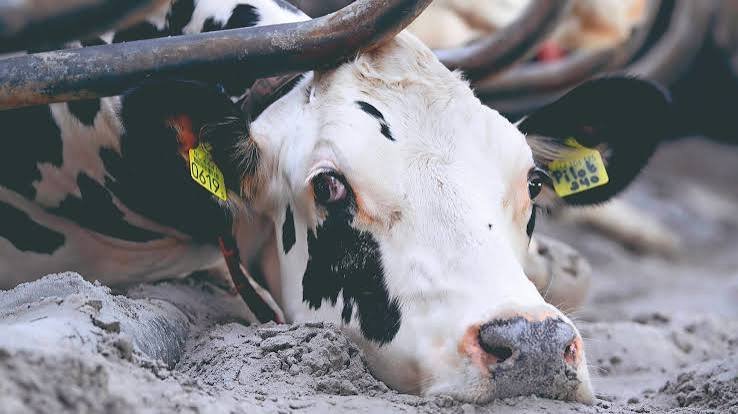
UK APHA Confirms Shamonda Orthobunyavirus Across Seven Cattle Premises in England and Wales Amid Heightened Vector Surveillance
The United Kingdom’s Animal and Plant Health Agency (APHA) has confirmed Shamonda virus (SHAV)—a Culicoides biting-midge-transmitted orthobunyavirus—across seven livestock premises spanning five counties in England and Wales following intensified national arbovirus surveillance. Identified primarily in adult dairy cattle and aborted bovine fetuses, the detections highlight expanding late-autumn vector-borne viral circulation across Great Britain.
Belonging to the Simbu serogroup of the family Peribunyaviridae—closely related to Schmallenberg virus (SBV)—Shamonda virus primarily affects cattle while also capable of infecting sheep, goats, alpacas, and horses. In adult dairy and beef cattle, acute SHAV infection typically manifests with transient fever, watery diarrhea, anorexia, reduced rumination, lethargy, and an abrupt drop in milk yield, alongside reproductive complications including mid-to-late-term abortion, retained fetal membranes, and metritis. When infection occurs during critical windows of fetal gestation, transplacental vertical transmission can trigger severe congenital musculoskeletal malformations (arthrogryposis-hydranencephaly syndrome) in newborn calves, lambs, goat kids, and alpaca cria.
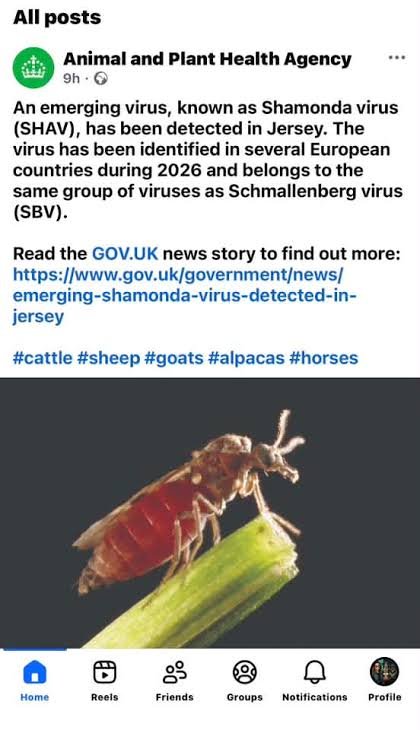
BTV and Shamonda Virus Outbreaks Keeping Dairy Farmers on Toes
Crucially, the SHAV confirmations coincide with Great Britain’s ongoing Bluetongue virus serotype 3 (BTV-3) epizootic, which shares identical Culicoides midge vectors and has already impacted more than 3,500 livestock premises during the 2026 transmission season.
Both the Department for Environment, Food and Rural Affairs (Defra) and the Welsh Government confirmed that Shamonda virus is not classified as a statutorily notifiable animal disease, meaning infected farms face no compulsory culling zones, movement standstills, or trade bans. UK health authorities and the Food Standards Agency further emphasized that SHAV poses no generalized public health risk and no threat to milk or meat food safety.
Vaccination Not Possible
With no commercial vaccine currently available against Shamonda virus, APHA and SRUC Veterinary Services in Scotland have urged veterinary diagnostic laboratories to update multiplex PCR panels and maintain Droplet Digital PCR (ddPCR) screening on aborted fetuses and deformed neonates ahead of the 2026–27 winter calving and lambing season, while advising farmers to house susceptible stock during peak dawn and dusk midge-feeding windows.
UK Arbovirus Surveillance Metric |
Summary |
Pathogen & Vector |
Shamonda virus (SHAV), Simbu serogroup orthobunyavirus; transmitted by Culicoides biting midges |
Confirmed Footprint |
7 livestock premises across 5 counties in England and Wales (adult cattle & aborted fetuses) |
Regulatory & Food Safety Status |
Non-notifiable (no culling or movement bans); zero food safety or general public health risk |
Co-Circulating Vector Context |
Concurrent with UK Bluetongue BTV-3 epizootic (>3,500 affected premises in 2026) |
Diagnostic & Control Measures |
APHA & SRUC multiplex/ddPCR screening of deformed newborns; no commercial SHAV vaccine available |

