


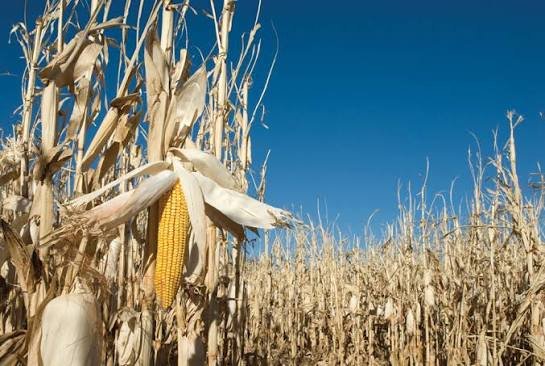
India’s maize market is entering a significantly tighter phase as weather cuts production prospects just as ethanol, poultry feed, livestock feed, starch and food demand continue to compete for the same grain.
The latest USDA/FAS New Delhi forecast puts MY 2026/27 corn production at 50 million tonnes, down from 55.09 million tonnes in 2025/26. The approximately 5.09-million-tonne decline comes as Kharif planting has fallen 4%, crop establishment has been delayed and moisture stress is developing across major producing areas. At the same time, India’s ethanol programme has transformed maize from primarily a feed and industrial crop into a strategic energy feedstock.
Immediate Shock: Weather
The immediate trigger for the downgrade is weather.
According to the latest USDA Foreign Agricultural Service assessment, India’s MY 2026/27 maize production is forecast at 50 million tonnes, based on approximately 14 million hectares of harvested area and an average yield of 3.57 tonnes per hectare.
The comparison with the previous crop is revealing:
India maize indicator |
MY 2025/26 |
MY 2026/27 USDA/FAS New Delhi |
Change |
|---|---|---|---|
Harvested area |
14.41 Mha |
14.00 Mha |
−2.8% |
Production |
55.09 MT |
50.00 MT |
−9.2% |
Yield |
3.823 t/ha |
3.571 t/ha |
−6.6% |
Total consumption |
48 MT |
51 MT |
+6.3% |
Feed & residual use |
28 MT |
30 MT |
+7.1% |
Food/seed/industrial consumption* |
20 MT |
22 MT |
+10% |
Exports |
2.5 MT |
1.5 MT |
−40% |
Ending stocks |
7.52 MT |
4.12 MT |
−45.2% |
USDA category is FSI — food, seed and industrial consumption.
The important point is that the production problem is not occurring in isolation. The USDA expects total consumption to increase from 48 million tonnes to 51 million tonnes, even while production falls by more than 5 million tonnes. Feed and residual demand alone is projected to rise from 28 million tonnes to 30 million tonnes.
That combination is what makes the current situation more serious than a simple weather-related production downgrade.
Monsoon Failure Is Hitting Maize at the Wrong Time
The USDA says Kharif maize planting was delayed by approximately two weeks because of weak early monsoon rainfall. As of August 14, 2026, Kharif maize planting was estimated at 8.8 million hectares, around 4% below the previous year.
More importantly, the USDA reports moisture stress in standing Kharif maize across major southern and peninsular producing states. It also warns that continued rainfall weakness during August and September could reduce residual soil moisture available for subsequent Rabi and summer maize.
This creates a second-order risk. The problem is not only: less Kharif maize
but potentially: less Kharif maize → weaker soil moisture → weaker Rabi planting conditions → lower subsequent supply → tighter 2027 balance sheet.
The USDA also warns that excessive rain, floods or cyclones around September harvest could damage the crop even if the current moisture deficit improves.
India’s Weather Signal Has Deteriorated
The broader monsoon picture is also unfavorable. India’s August rainfall was approximately 16% below normal, while the India Meteorological Department has warned that September rainfall could remain below normal. Recent reporting based on IMD data put the cumulative monsoon deficit at roughly 14% by the end of August.
The agricultural impact is amplified because maize is particularly sensitive to moisture availability during key vegetative and reproductive stages.
The USDA explicitly links the current production downgrade to the weak 2026 monsoon and says the standing crop is already experiencing moisture stress.
But Weather Alone Does Not Explain India’s Corn Problem
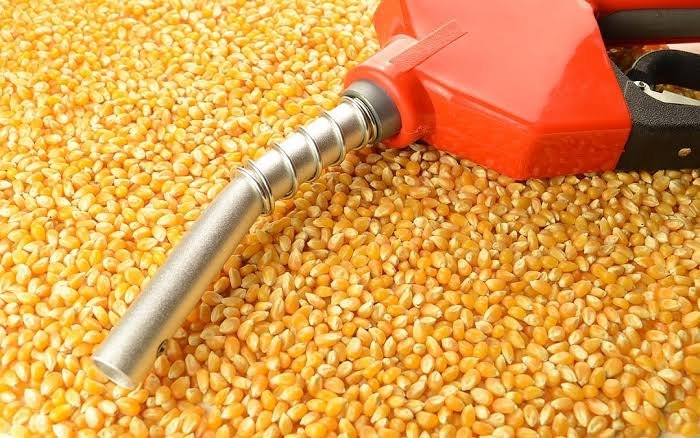
India’s maize market is experiencing a structural demand transformation at exactly the time that climate variability is making supply less predictable. Three major demand pools are competing for the crop:
1. Animal feed
2. Ethanol
3. Food and industrial processing
The poultry industry is particularly exposed because maize is one of its major energy ingredients. The livestock and poultry industries therefore compete directly with ethanol producers for domestic maize.
And this competition has intensified dramatically over the last three years.
Ethanol Has Changed the Economics of Indian Maize
India’s ethanol policy is arguably the biggest structural change to the maize market. The government’s Ethanol Blended Petrol programme targets 20% ethanol blending with petrol in ESY 2025/26.
By the end of 2024/25, India had already achieved 19.24% blending, while total ethanol production capacity had reached 1,953 crore litres as of October 31, 2025. Of that capacity:
-
980 crore litres was grain-based;
-
973 crore litres was molasses/dual-feed based.
The government says the ethanol programme has generated more than ₹1.29 lakh crore of revenue for sugar mills over 2014/15–2024/25 and attracted more than ₹42,000 crore of investment in new distilleries.
This has created a powerful and relatively predictable demand source for agricultural commodities. For maize farmers, ethanol therefore represents something fundamentally different from traditional spot demand.
Feed demand fluctuates with poultry economics.
Ethanol demand is supported by government policy and contracted procurement.
Maize Has Become India’s Largest Individual Ethanol Feedstock
Data from the All India Distillers’ Association reported by The Economic Times show the scale of the transformation. By June 2026, cumulative ethanol supplies in ESY 2025/26 had reached 717 crore litres against contracted volumes of 1,048 crore litres, or approximately 68% of contracted supply.
Grain-based ethanol represented approximately: 480 crore litres — 67% of total supply.
Sugarcane-based feedstocks contributed approximately: 238 crore litres — 33%.
Within the overall feedstock mix, maize was the largest individual feedstock, accounting for 258 crore litres of ethanol supplied by that point. This is the structural change at the heart of the maize market.
Maize is no longer simply competing with poultry feed and starch. It is competing with a rapidly expanding fuel market.
Government Data Show the Scale of Maize Allocation to Ethanol
The government has previously indicated that approximately 125.78 lakh tonnes — 12.578 million tonnes — of maize would be utilised for ethanol production during ESY 2025/26. That figure provides useful perspective.
Against India’s previous production base, ethanol alone can absorb a substantial proportion of annual maize availability. And this demand is not necessarily disappearing simply because production falls. That creates the central market tension:
Production is weather-dependent.
Ethanol demand is policy-supported.
Feed demand is livestock-driven.
Food demand continues to grow.
The Corn alone, unfortunately, has to satisfy all four.
“Fuel Versus Feed” Conflict Is Now Real
The ethanol debate should therefore not be framed simply as food versus fuel. For India’s agricultural economy, the more immediate conflict is: Fuel versus feed versus food versus industrial demand.
This is particularly important for poultry. Feed represents a major component of poultry production costs. When maize prices rise, the impact moves quickly through: maize → feed formulation → poultry production cost → chicken/egg prices → consumer inflation.
Recent industry reporting indicates that maize prices have risen sharply over the past three years as ethanol demand expanded, while poultry producers have experienced substantial feed-cost pressure.
This means the maize market is becoming increasingly important to India’s animal-protein inflation equation.
DDGS Changes the Equation — But Does Not Solve It
There is an important counterargument to the feed-supply concern. Corn-based ethanol generates Distillers Dried Grains with Solubles (DDGS), a protein-rich feed coproduct. As ethanol production expanded, India’s DDGS production increased dramatically.
Reuters reported that Indian DDGS output had risen approximately 13-fold over two years to an estimated 5.5 million tonnes in 2025.
DDGS can replace part of the protein component of livestock and poultry feed. This creates an important economic loop: Maize → ethanol → DDGS → animal feed
Therefore, diverting maize into ethanol does not remove the entire feed value of the grain from the animal-feed system. However, DDGS is not a one-for-one replacement for maize. Maize primarily supplies energy/starch.
DDGS supplies substantially more protein and other nutrients. Feed manufacturers can reformulate rations, but DDGS cannot simply replace every tonne of maize removed from the feed market. The result is therefore a partial offset rather than a complete solution.
Ethanol Has Also Created an Unexpected Oilseed Problem
The maize story is connected to India’s edible-oil strategy. Reuters found that the rapid expansion of ethanol and DDGS has affected the economics of oilseed production. As DDGS entered the feed market, it competed with soybean meal and other oilmeals. Lower demand for traditional oilmeals weakened oilseed economics and encouraged some farmers to shift from soybean and groundnut toward maize and rice.
In August 2025:
-
oilseed acreage was down 4%;
-
corn acreage was up 10.5%.
Reuters also reported that DDGS output had reached approximately 5.5 million tonnes and that domestic feed manufacturers were substituting cheaper DDGS for oilmeal. This creates an unusual policy feedback loop:
Ethanol expansion → more maize/rice processing → more DDGS → lower oilmeal demand → weaker oilseed economics → farmer acreage shift → greater maize/rice acreage.
The result may improve ethanol feedstock availability while making India’s edible-oil self-sufficiency objective more difficult.
India’s Corn Market Has Already Experienced Import Pressure
The structural shift toward ethanol has already altered India’s trade position. India was historically a significant maize exporter. But the combination of rising domestic ethanol demand and feed consumption contributed to a move toward imports.
Reuters reported in 2024 that India’s maize exports were expected to fall sharply while imports increased, with domestic poultry and starch industries competing with ethanol distilleries for supplies. The latest USDA data show that the trade balance is again moving in the opposite direction as domestic supply tightens.
For MY 2026/27, USDA/FAS New Delhi forecasts:
-
Imports: 100,000 tonnes
-
Exports: 1.5 million tonnes
-
Ending stocks: 4.117 million tonnes
The export forecast is already down substantially from 2.5 million tonnes in 2025/26. In other words, India may reduce exports substantially before imports become the primary balancing mechanism.
Inventory Cushion Is Shrinking
This may be the most important number in the USDA balance sheet. India’s estimated maize ending stocks:
2025/26: 7.517 MT
↓
2026/27: 4.117 MT
That is a decline of approximately:
3.4 million tonnes, or 45%.
Stocks are effectively the buffer between a normal harvest and a supply shock. A 45% reduction in ending stocks means India has less room to absorb another production disappointment. If the monsoon weakens further, or September harvest weather causes additional losses, the market has a smaller inventory cushion available.
Prices Have Already Responded
The USDA reports that Indian maize prices began strengthening from April 2026 as El Niño concerns affected production expectations. During the first half of August, prices across major producing and consuming states ranged from approximately:
₹19,750–₹24,900 per tonne
with the national average around: ₹21,800 per tonne.
Interestingly, USDA notes that this average was still approximately 2% below August 2025 levels. This is important because it indicates that the current market is not yet in an outright price-supply panic.
Large carry-in stocks from the record 2025/26 crop have provided some protection. But that cushion is being consumed. The risk is therefore more forward-looking:
If 2026/27 production falls further, the market could move from comfortable supply to structural tightness relatively quickly.
Record 2025/26 Crop Is Masking the Problem
India’s 2025/26 maize crop was estimated by USDA/FAS at a record 55.09 million tonnes. That bumper harvest generated approximately 7.52 million tonnes of ending stocks.
It is those stocks that currently prevent the market from being significantly tighter. But the 2026/27 forecast reduces production to 50 million tonnes and ending stocks to only 4.12 million tonnes.
This creates a classic agricultural-market situation:
Record production → inventory accumulation → stronger industrial demand → weather shock → inventory drawdown.
The market can absorb the first year of disruption. The second year becomes much more difficult.
Demand Is Growing Faster Than the Production Base Can Reliably Support
The FICCI–YES Bank report on India’s maize sector provides another warning. It projects domestic maize demand to increase from approximately 50 million tonnes in 2025/26 to nearly 72 million tonnes by 2030/31 — roughly a 44% increase. The principal demand engines are:
-
ethanol;
-
poultry and animal feed;
-
starch;
-
industrial processing; and
-
food use.
This creates an enormous production challenge. If demand reaches 72 million tonnes, India cannot depend simply on expanding acreage.
It will need to increase: yield per hectare + crop intensity + irrigation resilience + post-harvest efficiency + storage + supply-chain productivity.
India’s Yield Problem Is Becoming More Important
The latest USDA forecast puts MY 2026/27 maize yield at approximately: 3.57 tonnes/hectare.
That is down from: 3.82 tonnes/hectare in 2025/26.
The decline is approximately 6.6%. That matters because India’s maize challenge is increasingly about productivity rather than simply acreage. Expanding cultivated area can help, but it competes with:
-
soybean;
-
pulses;
-
cotton;
-
sugarcane;
-
other cereals; and
-
land required for livestock and rural development.
Higher yields offer a more sustainable route to closing the supply gap.
MSP Is Rising — But Only Marginally
The government raised the 2026/27 maize Minimum Support Price from:
₹2,400 → ₹2,410 per quintal.
That is only a ₹10/quintal increase, or approximately 0.4%. By comparison, several competing crops received significantly larger absolute MSP increases.
This creates an interesting contradiction. Market demand is rapidly increasing maize’s economic importance, but the official MSP adjustment is modest. For farmers, actual planting decisions will therefore continue to depend heavily on:
market prices + procurement access + ethanol demand + feed demand + expected yield + input costs.
Poultry Is Probably the First Sector to Feel the Pressure
Among agricultural users, poultry is especially sensitive to maize price changes. India’s poultry sector has expanded substantially over the past decade. Government data show egg production reaching 149.11 billion eggs in 2024/25, up from 78.48 billion in 2014/15.
As poultry production grows, maize demand grows with it. Therefore:
higher poultry production + higher ethanol demand + weaker maize production = intensified feed competition.
This is why the maize issue is not merely an agricultural commodity story. It is also an:
animal-feed story
poultry-cost story
egg-price story
protein-inflation story.
Recent reporting has already linked maize diversion to ethanol with significant increases in egg prices and poultry feed costs.
Starch and Industrial Users Are Also Exposed
The third major demand block is starch and industrial processing. Maize is used for:
-
starch;
-
glucose;
-
sweeteners;
-
food ingredients;
-
industrial products;
-
brewing;
-
pharmaceuticals; and
-
other processing applications.
These users compete with ethanol distilleries for the same physical grain. Unlike ethanol, many industrial users cannot necessarily pass higher maize prices through immediately.
That makes the downstream impact asymmetric. Ethanol has policy-backed procurement economics. Feed and starch industries must manage commercial margins.
Government of India Faces a Three-Way Balancing Act
India’s policy challenge can be represented as:
ENERGY SECURITY
20% ethanol blending
↓
Reduced petroleum dependence
↓
Foreign-exchange savings
FARMER INCOME
Strong maize demand
↓
Higher market opportunities
↓
Investment in maize production
FOOD & FEED SECURITY
Maize diverted to ethanol
↓
Less physical grain available
↓
Higher feed and food-processing costs
The policy challenge is therefore not whether ethanol is beneficial.
It is: How much maize can India divert to ethanol while simultaneously expanding livestock production and maintaining affordable food and feed?
Import Question Will Become More Difficult
India has traditionally protected domestic maize farmers through relatively high import barriers. But when domestic supplies become tight, the policy equation changes.
Imports can: reduce feed costs + increase ethanol feedstock availability + cool domestic prices.
But they can also: reduce farmer prices + weaken maize acreage incentives + expose the market to global prices and freight + create food/feed policy concerns.
The GM issue adds another complication.
Most US maize is genetically modified, while India’s regulatory position around GM maize remains restrictive, particularly for food and feed applications. Therefore, the theoretical availability of global maize does not automatically translate into practical import availability.
This was already visible during India’s earlier maize supply squeeze, when poultry organizations called for duty-free imports and greater access to imported corn.
DDGS Export Market Could Become Strategically Important
There is another underappreciated opportunity. As ethanol production expands, India generates increasing volumes of DDGS. Reuters reported that India’s DDGS exports rose to 354,110 tonnes, compared with only 16,556 tonnes in 2022.
If domestic feed markets cannot absorb the entire DDGS output, India will need to develop export channels. That could turn ethanol into a broader agri-industrial complex:
Maize → ethanol + DDGS + CO₂
with:
-
fuel as the primary product;
-
DDGS as animal-feed coproduct;
-
CO₂ as an industrial coproduct.
This improves the economics of maize processing. But it also means that India’s maize market is increasingly linked to global feed markets, not only domestic fuel demand.
India’s Ethanol Policy Is Now Colliding With Climate Risk
This is perhaps the most important strategic development. Ethanol demand is relatively predictable. Weather is not.
That creates a mismatch: Policy creates structural demand. Climate creates volatile supply.
When production is normal, the system works. When production falls, demand does not automatically fall with it. This makes the domestic maize balance more vulnerable to weather shocks.
What Happens If Production Falls Below 50 MT?
The USDA’s 50-million-tonne forecast should not be interpreted as a final number. It is a forecast. The USDA explicitly warns that:
-
prolonged dry spells could reduce Kharif output;
-
excessive rain/flooding at harvest could cause additional losses;
-
weaker August/September rainfall could affect Rabi and summer maize;
-
moisture stress is already visible in major producing regions.
Therefore, the downside risk remains open. A further 5% production reduction from 50 MT would imply approximately: 47.5 MT
A 10% reduction would imply: 45 MT
Against projected consumption of approximately 51 MT, that would materially increase pressure on: stocks + imports + reduced exports + price rationing.
Scenario Analysis
Scenario |
Production |
Likely market effect |
|---|---|---|
USDA base case |
50 MT |
Tighter balance; stocks decline |
Mild additional weather loss |
47.5 MT |
Higher prices; feed margins pressured |
Severe additional loss |
45 MT |
Import pressure and major feed competition |
Recovery in late monsoon |
>50 MT |
Reduces immediate price pressure |
Strong Rabi recovery |
Higher total supply |
Helps rebuild stocks |
The most important variable is therefore not today’s maize price. It is September rainfall and the resulting final Kharif yield.
Animal Feed: The Critical Transmission Channel
For India’s livestock sector, the maize crisis can move through five stages.
Stage 1 — Production – Weak monsoon reduces maize yield.
Stage 2 — Commodity market – Available maize declines.
Stage 3 — Feed formulation – Feed mills pay more or increase substitution with:
-
wheat;
-
broken rice;
-
sorghum;
-
barley;
-
DDGS;
-
other alternative energy/protein ingredients.
Stage 4 — Farm economics – Poultry, dairy and livestock production costs increase.
Stage 5 — Consumer market – Higher costs eventually move into:
-
eggs;
-
chicken;
-
meat;
-
dairy products; and
-
processed foods.
This is why maize should increasingly be viewed as a strategic livestock input, not simply a crop.
Implications for Poultry and Livestock Feed Manufacturers
Feed companies should closely monitor four indicators:
1. Maize-to-wheat price spread – If wheat becomes substantially cheaper relative to maize, formulation substitution becomes more attractive.
2. DDGS availability and quality – Increasing ethanol production can provide additional protein and amino-acid sources.
3. Broken rice availability – Rice inventories may become increasingly important as an alternative energy ingredient.
4. Regional maize prices – India does not have a single uniform maize market. Freight can create major differences between producing states and consuming centres.
Feed mills closer to ethanol-producing regions may also have different DDGS economics from mills farther away.
Implications for Ethanol Producers
The current situation is more complicated for ethanol producers than simply “higher maize prices are bad.” Higher maize prices raise feedstock costs.
But ethanol demand remains structurally supported by India’s E20 programme. This means distilleries may continue buying maize even when prices rise, particularly when procurement economics remain attractive.
The critical question is therefore: At what maize price does grain-based ethanol remain economically competitive with alternative feedstocks?
That threshold will determine whether maize remains the dominant grain feedstock or whether ethanol producers increasingly switch among:
-
maize;
-
surplus rice;
-
damaged grains;
-
other cereals;
-
sugar-derived feedstocks; and
-
advanced biofuel feedstocks.

