


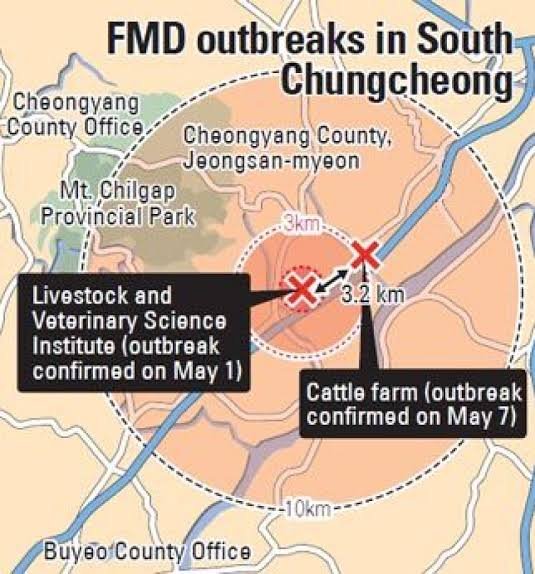
South Korea has confirmed a new foot-and-mouth disease (FMD) outbreak at two cattle farms in Yecheon County, North Gyeongsang Province, just two months after a six-farm outbreak in the same area. Thirty-two cattle tested positive for FMD antigen during surveillance of farms previously found to have non-structural protein (NSP) antibodies. The government has raised Yecheon’s FMD crisis level to “serious,” imposed a 24-hour livestock movement standstill across seven counties and launched emergency vaccination and clinical examinations covering more than 435,000 animals in Yecheon and neighbouring areas.
Key Numbers
Indicator |
September 3, 2026 response |
|---|---|
Newly affected farms |
2 cattle farms |
FMD-positive cattle |
32 |
2026 FMD outbreaks |
11 |
January–February outbreaks |
3 |
July Yecheon outbreaks |
6 |
September Yecheon outbreaks |
2 |
Yecheon farms under emergency vaccination/clinical examination |
1,515 |
Animals in Yecheon |
117,253 |
Neighbouring farms under action |
6,330 |
Animals in neighbouring counties |
318,489 |
Combined animals targeted |
435,742 |
Movement standstill |
24 hours |
Counties covered by standstill |
7 |
Disinfection resources deployed |
69 vehicles/equipment units |
Source: South Korean Ministry of Agriculture, Food and Rural Affairs.
FMD Detected During Surveillance — Not a New Clinical Cluster
The latest detections were made on September 3 during surveillance testing of farms where FMD NSP antibodies had previously been detected. This is an important epidemiological detail.
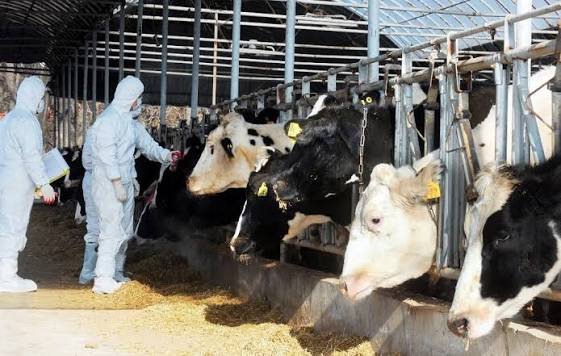
The two cattle farms had already been under management measures, including movement restrictions, because of evidence of previous infection. Authorities were conducting additional surveillance specifically to determine whether FMD virus was continuing to circulate. That surveillance detected 32 antigen-positive cattle across the two farms.
MAFRA reported that the animals had a high vaccine-antibody positivity rate and no clinical signs. Consequently, the government said it would dispose only of the confirmed positive animals rather than automatically culling entire herds.
The distinction matters: this is not being reported as a large clinically apparent outbreak. It is a surveillance-detected recurrence of FMD infection in a previously monitored area.
Yecheon Re-enters the FMD Emergency Zone
The September detection comes approximately two months after the previous Yecheon outbreak. On July 3, South Korean authorities confirmed FMD at one pig farm and five nearby cattle farms in Yecheon. Fourteen pigs and 24 cattle were antigen-positive, giving a total of 38 positive animals across six farms.
The July episode triggered emergency vaccination, movement controls and intensive surveillance. By July 21, MAFRA reported that emergency vaccination and clinical examinations had been completed across 8,122 cloven-hoofed livestock farms involving approximately 850,000 animals in Yecheon and the six neighbouring municipalities. No additional suspected cases had been identified through July 17 at that point.
On August 27, the government moved the country back to a normal FMD-control system because no additional outbreaks had been detected after July and surveillance testing in the control area had found no abnormalities. At that point, 2026 had recorded nine outbreaks.
Only one week later, the September detections forced the government to reinstate heightened controls.
2026 FMD Count Reaches 11
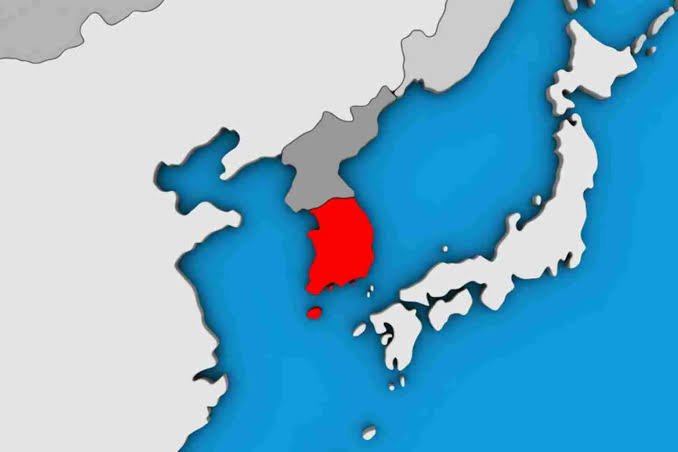
The new cases bring South Korea’s officially reported 2026 FMD outbreak count to 11. 2026 outbreak timeline
Period |
Location |
Outbreaks |
|---|---|---|
January |
Incheon/Ganghwa |
1 |
February |
Goyang, Gyeonggi |
2 |
July |
Yecheon, Gyeongbuk |
6 |
September |
Yecheon, Gyeongbuk |
2 |
Total |
11 |
MAFRA’s official comparison shows 11 outbreaks in 2023, 19 in 2025 and 11 through September 3, 2026. The absolute number remains below the 2025 total, but the geographic concentration and recurrence in Yecheon are strategically important.
The latest outbreak is not simply another geographically isolated detection. It is occurring in a county that experienced a substantial FMD episode only two months earlier and in farms already identified through NSP-antibody surveillance.
Crisis Level: Serious in Yecheon, Caution Nationwide
MAFRA has raised Yecheon’s FMD crisis warning from “interest” to “serious.” For the rest of South Korea, the warning has been raised from “interest” to “caution.” This distinction is important because the national level has not been raised directly to “alert” according to the official September 3 announcement.
The decision reflects the government’s assessment that the immediate epidemiological risk is concentrated around Yecheon and neighbouring livestock areas, while the nationwide risk warrants strengthened surveillance and preparedness.
Seven-County Movement Standstill
A 24-hour standstill order took effect at 10:00 a.m. September 3 and runs until 10:00 a.m. September 4. It covers cloven-hoofed livestock farms, slaughterhouses, feed factories and related personnel and vehicles in:
-
Yecheon
-
Andong
-
Uiseong
-
Sangju
-
Mungyeong
-
Yeongju
-
Danyang, North Chungcheong Province
The geographical footprint extends beyond North Gyeongsang Province because livestock, vehicles, personnel and supply chains do not respect administrative boundaries. During the standstill, authorities are conducting comprehensive cleaning and disinfection of relevant facilities and vehicles while central inspection teams from MAFRA and the Animal and Plant Quarantine Agency check implementation.
Emergency Vaccination Targets More Than 435,000 Animals
The scale of the preventive response is substantial. In Yecheon, emergency vaccination and clinical examinations cover:
-
1,515 cloven-hoofed livestock farms
-
117,253 animals
In the six neighbouring municipalities, authorities are targeting:
-
6,330 cattle and goat farms
-
318,489 animals
Combined, the programme covers 7,845 farms and 435,742 animals. That represents a rapid expansion from farm-level outbreak control to regional population-level risk management. Authorities are also conducting telephone surveillance across livestock farms nationwide.
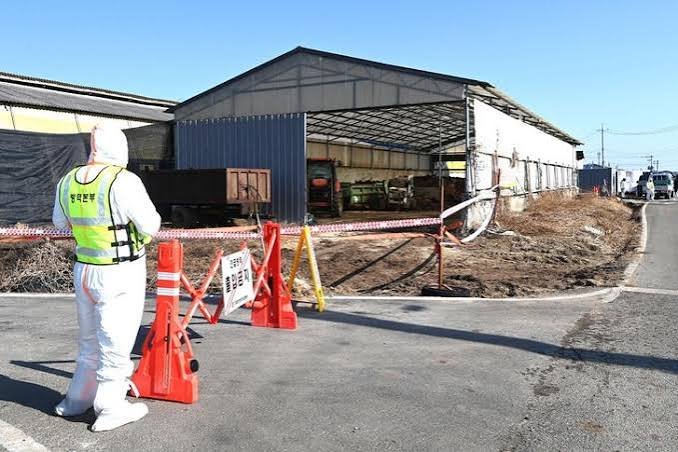
69 Disinfection Units Deployed
MAFRA said 69 available disinfection resources, including large-scale disinfection equipment and specialised vehicles, are being deployed around farms, livestock facilities and roads in Yecheon and the six neighbouring municipalities. This is designed to reduce the risk of mechanical transmission through:
-
livestock transport vehicles;
-
farm vehicles;
-
personnel;
-
livestock facilities;
-
slaughterhouse connections;
-
feed supply routes; and
-
contaminated farm surroundings.
FMD is particularly challenging because of its extreme transmissibility and ability to move through infected animals and contaminated materials and equipment. WOAH classifies FMD as a highly contagious transboundary animal disease affecting cattle, pigs, sheep, goats and other cloven-hoofed animals, with major consequences for livestock production and trade.
Why the NSP-Antibody Finding Matters
The epidemiological feature that deserves the closest attention is the sequence: NSP antibody detection → movement restriction → surveillance → antigen-positive animals
NSP antibodies are associated with infection rather than simply vaccination, because conventional FMD vaccines are designed around structural viral proteins and do not normally produce NSP antibodies.
That makes the government’s decision to continue surveillance after the July episode particularly significant. The September outbreak demonstrates why absence of clinical signs cannot by itself be treated as evidence that viral circulation has ended.
In this case, authorities specifically report that the positive cattle had no clinical signs and that vaccine-antibody positivity was high. The infection was identified through surveillance rather than through obvious disease presentation.
South Korea’s Vaccination Strategy Is Becoming More Targeted
South Korea has already expanded its FMD vaccine strategy during 2026. In July, MAFRA reported completion of SAT1 vaccination for approximately 170,000 cattle and goats in high-risk border areas, while stating that the country routinely vaccinates against O and A FMD types. The government also planned to secure a stockpile of approximately 10 million doses by year-end.
This is occurring against a changing regional FMD environment. MAFRA noted that SAT1 FMD was detected in China on March 28, 2026, and subsequently in Mongolia on May 21, raising concern about regional viral movement.
Therefore, South Korea’s 2026 FMD response has two dimensions: Domestic recurrence control
plus – regional preparedness against changing FMD virus threats.
The July-to-September Pattern Is the Bigger Story
The most important signal from the latest outbreak is not the number 32 by itself. It is the recurrence in the same geographical area.
July – 6 farms → 38 positive animals → emergency vaccination → approximately 850,000 animals targeted
August – No additional outbreak detected → national risk level reduced → normal control system restored
September – 2 farms → 32 antigen-positive cattle → Yecheon returns to “serious” → 435,742 animals targeted
This sequence suggests that FMD control cannot be judged solely by the absence of detected clinical outbreaks during a short post-outbreak period. For regions with previous infection and NSP-positive animals, sustained surveillance becomes critical.
Limited Culling Reflects a Risk-Based Approach
Another notable feature is the decision to dispose of only the 32 confirmed positive animals. MAFRA stated that detailed and clinical examinations found high vaccine-antibody positivity and no clinical signs. On that basis, only the infected positive animals were to be removed.
This contrasts with blanket depopulation strategies sometimes associated with FMD control. The approach indicates a more risk-based, laboratory-supported containment strategy, where:
surveillance → laboratory confirmation → clinical assessment → antibody profile → targeted removal is used to determine the response.
The July outbreak also used targeted disposal: MAFRA reported that only 38 positive animals—24 cattle and 14 pigs—were disposed of following detailed testing.
Implications for South Korea’s Beef and Livestock Sector
The immediate production impact of 32 positive cattle is relatively small compared with South Korea’s national cattle population. The larger concern is movement disruption. A standstill affecting seven municipalities can temporarily interfere with:
-
cattle movement;
-
slaughter scheduling;
-
feed deliveries;
-
livestock markets;
-
farm-to-farm movements;
-
veterinary services;
-
transport logistics; and
-
regional livestock trade.

