


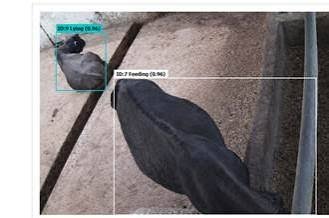
NAGALAND, India — Researchers at the Indian Council of Agricultural Research (ICAR) – National Research Centre on Mithun (NRC on Mithun) in Nagaland have introduced a real-time, non-contact artificial intelligence and computer vision framework to automatically track the behavior, health, and physiological parameters of Mithun cattle (Bos frontalis).
Developed in collaboration with NIT Nagaland, Nagaland University, and CHRIST (Deemed to be University), the milestone research—published in Engineering Research Express—introduces precision livestock farming to the semi-domesticated bovine species native to Northeast India’s hilly regions.
1. Automated Surveillance Architecture
Traditional herd management of Mithun—popularly known as the “Cattle of the Hills”—relies on manual observation, which is labor-intensive and virtually impossible during night hours. To eliminate this bottleneck, researchers established a continuous 24/7 vision setup:
-
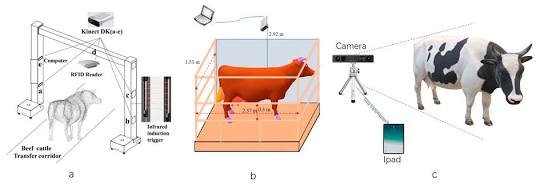
Camera Network: 12 high-definition CCTV cameras equipped with infrared night vision were installed across farm sheds, providing continuous optical monitoring under variable lighting, wet ground, and shadowed conditions.
-
Neural Network Pipeline: The vision framework pairs the YOLOv8n object detection algorithm with DeepSORT multi-object tracking software.
-
Individual Identity Tracking: The system detects specific behaviors while assigning persistent ID tags to individual animals across frames, ensuring continuous tracking even when cattle cross paths or move behind obstacles.
2. High-Precision Behavioral Analytics
Trained on a specialized dataset of 3,000 manually annotated frames captured in natural farm settings, the AI framework demonstrated exceptional accuracy:
Performance Metric |
System Benchmark |
Clinical Relevance |
Detection Accuracy (mAP@0.5) |
99.5% |
Reliable classification of lying, standing, feeding, and mounting behaviors. |
Recall Rate |
99.6% |
High sensitivity in identifying subtle behavioral changes. |
Inference Speed |
~31 FPS (NVIDIA RTX 3060) |
Real-time analysis suitable for edge-device integration. |
Single-Frame Confidence |
Up to 96% |
Precise multi-animal detection (e.g., simultaneous feeding and lying). |
3. Early Disease & Estrus Detection
By establishing automated baseline behaviors for each animal, the system acts as a continuous diagnostic tool:
-
Disease & Distress Alerts: Deviations in daily feeding duration or prolonged periods of lying down serve as immediate indicators of physical distress, metabolic imbalance, or infectious illness—enabling intervention before severe clinical onset.
-
Reproductive Management: The real-time identification of mounting behavior provides accurate estrus (heat) detection. Automated heat detection is critical for improving artificial insemination success rates and breeding program management in indigenous Mithun herds.
4. Scalability & Next Steps
While the initial trial validated the technology under farm conditions, the research team plans to expand the AI model’s capabilities.
-
Expanded Action Recognition: Updating the network to detect social interaction, aggression, grooming, and specific disease-related lethargy.
-
Edge Computing Integration: Optimizing the model to run on lightweight, low-power hardware deployed directly in remote semi-intensive Mithun rearing systems across Northeast India.

