


China’s Ministry of Agriculture and Rural Affairs has reported 25 major animal diseases during August 2026, affecting approximately 85,316 animals and resulting in 9,650 reported deaths.
The official monthly report provides a useful snapshot of China’s livestock-health burden across Class II and Class III notifiable animal diseases.
Swine diseases dominate Class II reports
Eighteen Class II diseases were reported, involving approximately 23,812 animals and 4,030 deaths.
Three diseases accounted for 95.04% of reported Class II cases:
-
Porcine epidemic diarrhoea
-
Porcine reproductive and respiratory syndrome
-
Brucellosis
The concentration is notable because PED and PRRS remain major productivity constraints for China’s highly industrialised swine sector.
PED affects young pigs primarily through severe enteric disease and mortality, while PRRS can produce substantial reproductive and respiratory losses across breeding and growing populations.
Poultry and swine diseases dominate Class III reporting
Seven Class III diseases accounted for approximately 61,504 reported cases and 5,620 deaths.
The three largest categories were:
-
Chicken coccidiosis
-
Swine influenza
-
Pasteurellosis
Together these represented 97.07% of reported Class III cases.
The figures reinforce the importance of intestinal health, respiratory-disease control and bacterial-disease prevention within China’s commercial livestock systems.
Industry implications
China’s monthly surveillance data demonstrate why the country’s animal-health market extends far beyond high-profile transboundary diseases.
The recurring commercial disease burden creates demand for:
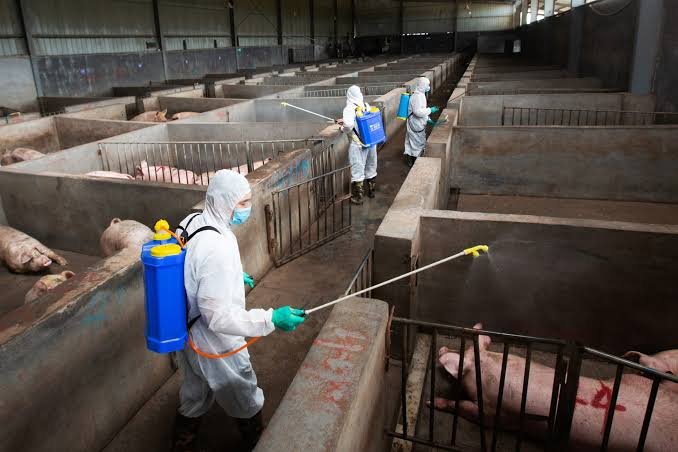
Vaccines + diagnostics + probiotics/postbiotics + feed additives + farm biosecurity + epidemiological surveillance
For swine producers, disease prevention directly influences:
-
Piglet survival
-
Average daily gain
-
Feed conversion
-
Reproductive performance
-
Antibiotic use
-
Production cost

