

HomeLivestockUK Bluetongue Update: 70 New Cases Across Great Britain

UK Bluetongue Update: 70 New Cases Across Great Britain

England records 64 new bluetongue cases, while Wales and Scotland report six additional BTV-3 cases combined, according to the UK government’s 10 October update.

Bluetongue virus (BTV) activity continued across Great Britain in the latest official surveillance update, with 70 new cases reported across England, Wales and Scotland for 9 October 2026. England accounted for 64 new cases, while Wales confirmed five additional BTV-3 cases and Scotland reported one. The figures were published by the UK Department for Environment, Food & Rural Affairs (Defra) and the Animal and Plant Health Agency (APHA) on 10 October.

The continuing detections underline the importance of surveillance, veterinary reporting, vector-risk management and compliance with animal-movement requirements for cattle and sheep producers.

England accounts for 64 new cases

Of the 64 new cases recorded in England on 9 October, the official update identified:

  • 40 cases of BTV-3, comprising 22 sheep-related and 18 cattle-related cases

  • 23 cases of unknown BTV serotype, comprising 12 sheep-related and 11 cattle-related cases

  • One clinically confirmed case involving cattle

The new cases were reported across Cornwall, Cumbria, Derbyshire, Devon, Dorset, Gloucestershire, the Isle of Wight, Lancashire, North Yorkshire, Somerset, Wiltshire and Worcestershire.
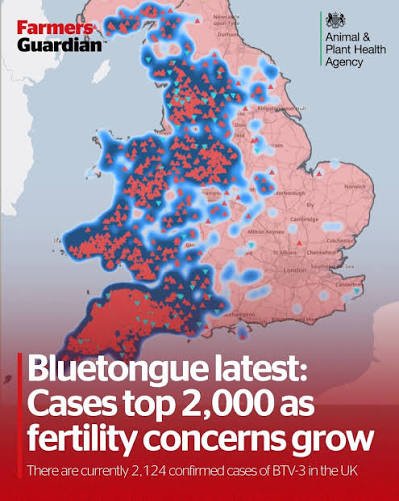
These figures refer to confirmed cases on premises, not the total number of individual animals infected. The distinction is important when interpreting disease-surveillance statistics.

Wales and Scotland also report new BTV-3 detections

Wales reported five new BTV-3 cases on 9 October, in Gwynedd, Denbighshire, Carmarthenshire and Wrexham. Scotland reported one additional BTV-3 case in Dumfries and Galloway.

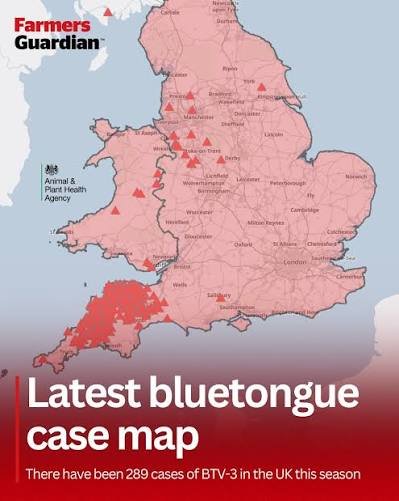
Across the 2026–27 bluetongue season, the UK government’s update recorded 3,235 confirmed premises cases: 2,709 in England, 478 in Wales and 48 in Scotland. No cases were reported in Northern Ireland in the published season totals. The same update recorded 545 potential cases under investigation across Great Britain.

The seasonal total should not be interpreted as a count of infected animals or as a measure of disease severity. It represents premises with confirmed disease under the government’s reporting definition.
uk-bluetongue-update-october-2026

Why bluetongue matters to cattle and sheep producers

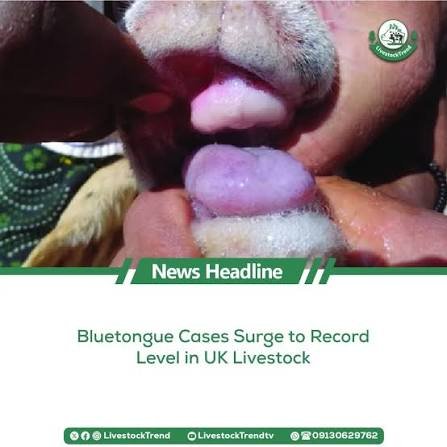
Bluetongue is a viral disease of ruminants, particularly sheep and cattle, transmitted primarily by infected biting midges. Clinical effects vary by species, animal and viral serotype. Sheep may develop fever, swelling, oral lesions and lameness, while cattle can show clinical signs or experience production and reproductive impacts.

The disease also creates commercial risks. Depending on the affected area and applicable rules, detections can influence livestock movements, breeding and trading decisions, surveillance requirements and access to markets.

Because transmission involves insect vectors, risk management requires more than monitoring animal movements alone. Producers should work with their veterinarians and follow official guidance on surveillance, vaccination where appropriate, reporting suspected disease and movement controls.

Surveillance and veterinary reporting remain important

The latest update demonstrates that detections are continuing across multiple areas of Great Britain. The presence of unknown-serotype cases also highlights the importance of laboratory confirmation and accurate reporting to inform disease management.

Farmers should seek veterinary advice if they observe signs consistent with bluetongue and follow current APHA guidance. Vaccination decisions should be based on the relevant serotype, authorised products, local epidemiological circumstances and veterinary advice.

Industry outlook

Bluetongue remains a significant surveillance and livestock-management issue for the UK ruminant sector. The latest figures reinforce the need for timely reporting, coordinated veterinary action and careful attention to current movement requirements. The scale of the commercial impact will depend on the geographic distribution of cases, vector activity, the serotypes involved and the effectiveness of control measures.

Animal Health India Editorial Team
Animal Health India Editorial Teamhttps://animalhealthindia.com
Animal Health India (AHI) is an independent news and intelligence platform covering the global animal health, veterinary, livestock, poultry, companion animal and pet food sectors. Our editorial team comprises veterinary journalists, animal health professionals, regulatory affairs specialists and industry analysts with over 30 years of combined experience covering India, Asia, Europe and North America. AHI publishes news, regulatory updates, market intelligence and company news drawn from primary sources including DAHD, EMA, USDA, AVMA and leading veterinary publications worldwide.
RELATED ARTICLES