

The company’s 9 October communication calls for vaccination, biosecurity and coordinated One Health measures to strengthen Salmonella control and food safety.
Ceva Animal Health has highlighted the importance of integrated Salmonella prevention across the poultry supply chain, arguing that control programmes should connect farm-level disease management with food safety and public-health objectives.
In a company press release dated 9 October 2026, Ceva presented Salmonella prevention as both an animal-health priority and a risk-management issue for food producers, particularly in poultry and egg production. The communication emphasises vaccination, biosecurity, hygiene and coordinated action across the food chain.
The announcement is a corporate communication about prevention strategy; it does not announce a new vaccine launch or provide new clinical-trial results.
Why Salmonella remains a poultry-sector priority
Salmonella is a bacterial pathogen associated with foodborne illness in humans. Poultry and eggs are important routes of exposure for certain serotypes, including Salmonella Enteritidis and Salmonella Typhimurium. Infected birds may show few or no obvious clinical signs, allowing contamination risks to persist without routine monitoring and appropriate control measures.
For producers, a Salmonella incident can have consequences beyond animal health. Depending on the circumstances, contamination can lead to investigations, product recalls, operational disruption, trade restrictions and reputational damage.
Ceva’s release also highlights the wider economic and public-health burden of salmonellosis. It cites the European Food Safety Authority’s estimate that the annual economic burden of human salmonellosis could reach €3 billion. This is an estimate cited by the company, rather than a new economic analysis conducted as part of the announcement.
Ceva highlights vaccination alongside biosecurity
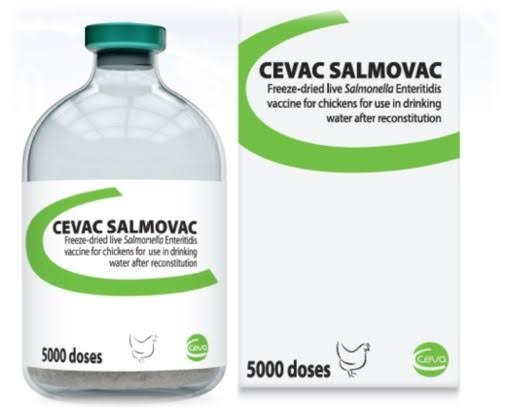
The company describes vaccination as one component of a broader Salmonella-control programme. It notes that different vaccination approaches may be used according to production requirements, including inactivated vaccines administered by injection and live vaccines delivered through drinking water.
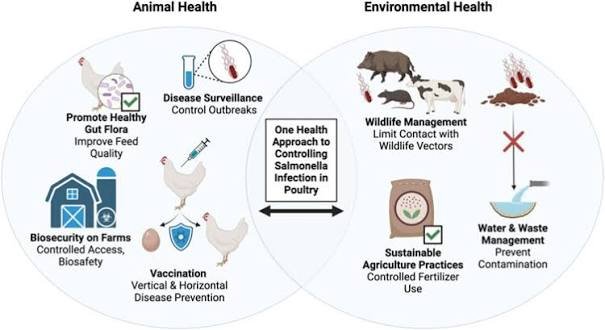
Ceva also stresses that vaccination should be integrated with robust farm hygiene and biosecurity. Measures such as cleaning and disinfection, pest management, safe feed and water practices, appropriate flock management and monitoring can help reduce opportunities for bacterial introduction and spread.
The company’s release highlights the importance of appropriate vaccine timing and administration. However, specific vaccination schedules must be determined using the product label, local regulatory requirements, veterinary advice and the production system concerned. A single schedule should not be assumed to apply to every flock or vaccine.
The central message is that vaccination is not a substitute for hygiene, surveillance or biosecurity. Salmonella management requires a coordinated programme tailored to the farm’s risks and production objectives.
A One Health approach links poultry production and public health
The One Health framework recognises that human health, animal health and the environment are interconnected. For Salmonella, this means that control efforts cannot stop at the poultry house door.
Farm-level prevention, veterinary oversight, food-processing controls, testing and traceability all contribute to reducing the likelihood that contaminated products reach consumers. Coordination between farmers, veterinarians, integrators, food processors, laboratories and public-health authorities can help identify risks and improve responses to contamination events.
For poultry businesses operating in regulated markets, documented prevention programmes can also support assurance systems, customer confidence and supply-chain resilience. The precise benefits depend on implementation quality, pathogen prevalence, monitoring and the regulatory framework.