



Veterinary Consensus Reclassifies Pet Obesity as a Primary Chronic Disease Protocol
NEW DELHI, India — October 15, 2026 — Leading veterinary internal medicine specialists and global clinical associations have issued updated diagnostic guidance formally reclassifying pet obesity as a primary chronic inflammatory disease rather than a passive aesthetic condition.
Released on National Pet Obesity Awareness Day, the guidelines emphasize that reducing body weight by as little as 6% to 9% delivers measurable biological improvements in companion animal lifespan, respiratory capacity, and joint mobility
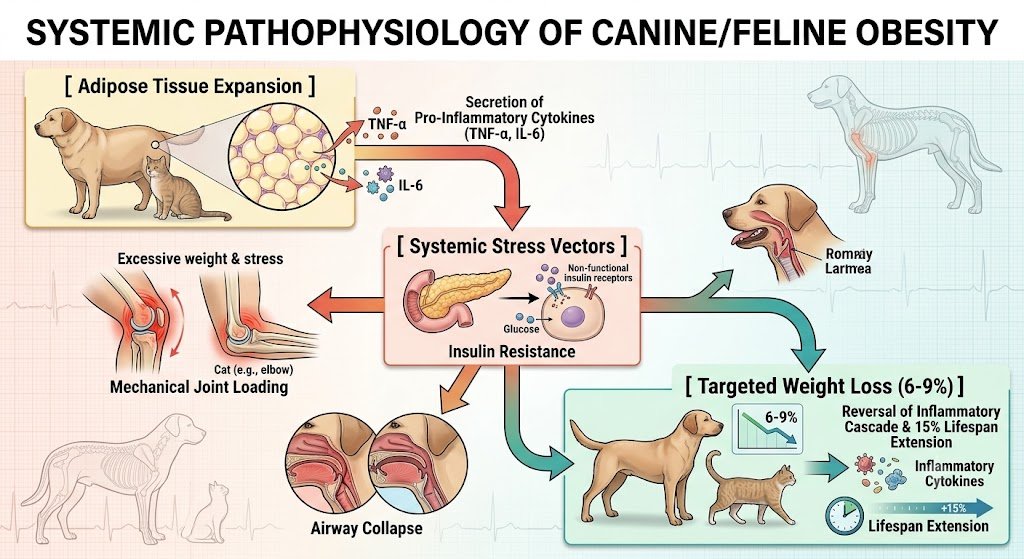
Clinical Pathophysiology and Weight Management Data
Veterinary guidelines shift the focus from simple body weight metrics toward comprehensive metabolic staging:
-
Endocrine Adipose Dysfunction: Excess white adipose tissue functions as an active endocrine organ, continually releasing pro-inflammatory cytokines (including Tumor Necrosis Factor-alpha and Interleukin-6) that accelerate systemic cartilage degradation and renal strain.
-
Measurable Therapeutic Benefits: Clinical data published by the British Small Animal Veterinary Association (BSAVA) confirms that achieving a 6% to 9% weight loss reduces osteoarthritis pain scores in hip and elbow joints, enhances thoracic respiratory volume, and delays chronic kidney disease onset.
-
Prescription Caloric Restriction: Practitioners are urged to utilize specialized high-protein, high-fiber veterinary therapeutic diets formulated to preserve lean muscle mass while promoting satiety, avoiding the dangerous hepatic lipidosis risks associated with unmonitored starvation in felines.

