


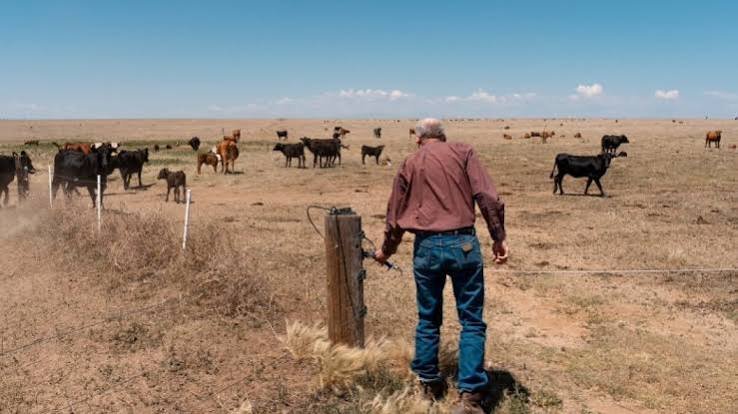
Drought and restricted irrigation water are forcing cattle producers in parts of Colorado to make difficult herd-management decisions, including selling animals to avoid the escalating cost and logistical challenge of maintaining them through feed shortages.
A report published by KUNC in partnership with The Water Desk on 25 October describes ranchers in the North Fork Valley selling cattle as pasture conditions deteriorate and hay becomes more expensive. The report identifies Paonia Reservoir as a critical pressure point: its water level had fallen below 2% of capacity, reaching the reservoir’s inactive pool zone.
The same report describes hay production in the upper North Fork of the Gunnison drainage as no better than half of a typical crop, according to a local rancher interviewed for the story. Elsewhere in Colorado, water users in the Uncompahgre Valley experienced substantial allocation reductions, while the Ute Mountain Ute Tribe’s large farm-and-ranch operation reportedly received only 10% of its agricultural water allocation.
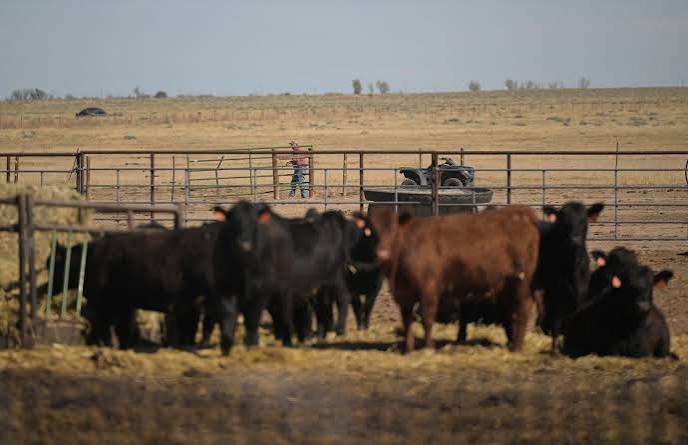
These are significant regional warning signals, but they should not be interpreted as statewide estimates of cattle liquidation or as evidence of a uniform drought impact across all Colorado livestock operations.
Primary source: KUNC / The Water Desk, 25 October 2026.
Key Drought and Production Indicators
Indicator |
Reported finding |
|---|---|
Paonia Reservoir |
Below 2% of capacity, in its inactive pool zone |
Hay production in the upper North Fork of the Gunnison drainage |
A local rancher reported no better than 50% of a normal crop |
Uncompahgre Valley water allocations |
Reported cuts of 50% |
Ute Mountain Ute Tribe farm-and-ranch operation |
Reported agricultural allocation of 10% |
Primary management response |
Purchasing expensive hay, selling cattle or combining both strategies |
Geographic scope |
Regional observations; not a statewide livestock census |
The indicators show how water scarcity can affect livestock economics through several connected channels: lower forage availability, higher supplementary-feed expenditure, irrigation constraints and the need to reduce stocking levels.
Why Cattle Producers are Selling Animals
Cattle ranching depends on the relationship between herd size, available forage, water supply and the cost of purchased feed. When pasture production declines, ranchers may have to purchase hay to maintain animals, reduce herd numbers, or use a combination of both approaches.
The KUNC report describes ranchers facing this trade-off in Colorado’s North Fork Valley. Producers are dealing not only with reduced forage availability but also with the cost of growing, sourcing and transporting hay. Limited irrigation water constrains the ability of farms to restore production during the growing season.
For a rancher, the decision to sell cattle may be a way to reduce future feed liabilities and preserve the animals that can be maintained economically. However, liquidation also means giving up productive breeding stock and can make future herd rebuilding costly if replacement animals must be purchased at elevated prices.
The economic result varies by operation. Producers with sufficient stored feed, reliable water access, flexible stocking arrangements or stronger financial reserves may be better placed to withstand drought than those with fewer alternatives.
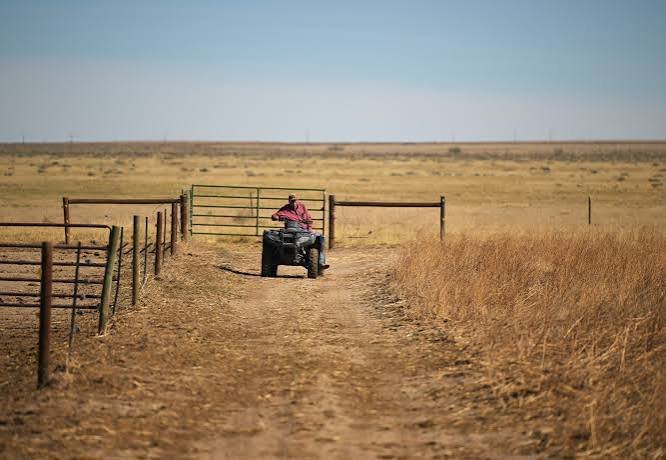
The Herd-Management Trade-Off
Drought-related sales can have two different effects on ranch profitability.
In the short term, selling animals may reduce the immediate need for expensive feed and release working capital. But a producer who sells breeding cows or replacement heifers may sacrifice future calf output and face additional costs when rebuilding the herd.
The timing of sales is also important. If many producers in the same region reduce herds, the local supply of animals for sale can change quickly. Yet drought-driven liquidation does not automatically mean cattle prices will decline: market prices are influenced by broader supply and demand, animal weights, regional conditions and buyer requirements.
The KUNC report does not quantify the total number of cattle sold across Colorado, the share of the state’s herd affected or a statewide estimate of rancher losses. It also does not establish a direct impact on dairy production.
Implications for Feed and Forage Markets
Lower hay yields and restricted irrigation can increase competition for available forage. Where local supply is inadequate, producers may need to source hay from other regions, adding transport costs and logistical uncertainty.
For feed suppliers, the effect is not necessarily a straightforward increase in sales. Some ranchers may buy more supplementary feed to maintain existing animals, while others may sell cattle to reduce consumption. Total demand therefore depends on the balance between additional feed purchased per animal and the number of animals remaining on farms.
The same uncertainty applies to forage seed, irrigation equipment and drought-management services. Demand may rise among financially resilient operators investing in adaptation, while other farms defer expenditure because cash flow is under pressure.
Animal-Health Implications: a Potential Secondary Effect
Drought can alter animal-health risk management, although the KUNC report does not document a specific outbreak or quantify veterinary losses.
Potential operational concerns include:
-
Nutritional management: Lower-quality or insufficient forage can require closer monitoring of body condition and ration adequacy
-
Water access: Restricted water availability can create additional management challenges, making reliable access and water quality important priorities
-
Transport and handling: Changes in herd size can increase the importance of planning cattle movements, handling and transport appropriately
-
Preventive veterinary care: Producers under financial pressure may review discretionary spending, making it important to protect essential preventive care and comply with veterinary recommendations
-
Herd rebuilding: After drought conditions ease, breeding and replacement decisions may affect future demand for veterinary services, reproductive management and animal identification

