


A wave of digital health misinformation spreading across social media channels claims that routine pet vaccines cause explosive cancer rates in domestic dogs and cats. The phenomenon—reported by Brazilian journalism platform MediaTalks/UOL—highlights how anti-vaccine rhetoric from human healthcare is increasingly spilling into veterinary medicine.
A comprehensive investigation published by NewsGuard found zero scientific evidence supporting claims that animal vaccines trigger cancer. Global veterinary leaders and oncologists are urging pet owners to ignore viral fearmongering and maintain core immunization protocols to protect pets from lethal, preventable infectious diseases.
1. Anatomy of the Misinformation Surge
According to reports by MediaTalks/UOL, social media posts across various platforms have been circulating videos and text claims alleging a sudden spike in animal tumors linked directly to core animal vaccines and newer mRNA technologies.
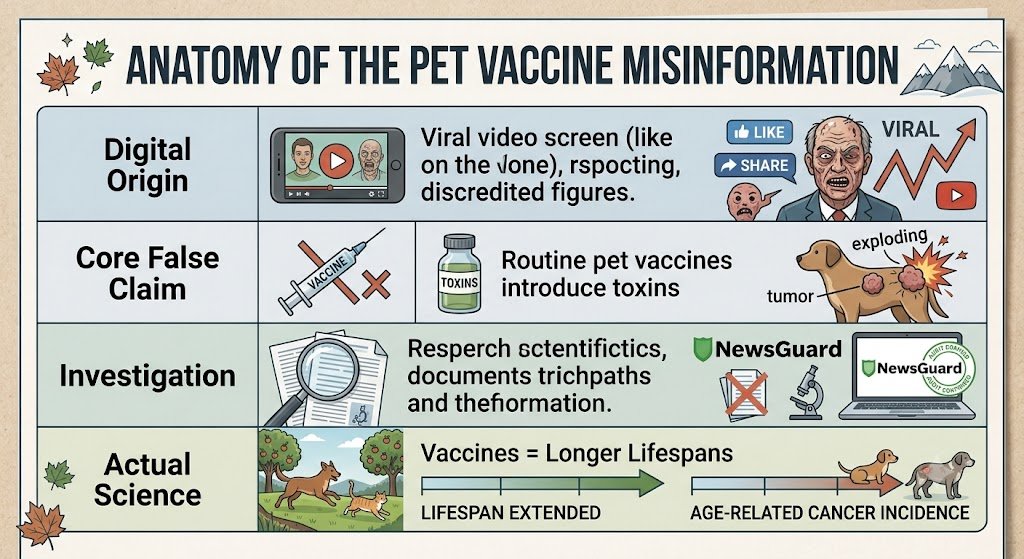
NewsGuard’s analysis revealed that much of the viral narrative relied on debunked figures, including former veterinary professionals whose licenses had previously been revoked due to serious infractions—including their outright refusal to vaccinate animals.
2. Scientific Verdict: Expert Consensus
Leading global veterinary bodies and cancer research organizations have issued clear statements refuting the false claims:
-
Animal Cancer Foundation (US): The organization clarified that “No carefully analyzed statistics show increasing cancer rates in animals” linked to vaccination protocols.
-
American Veterinary Medical Association (AVMA): The AVMA verified that while a minute fraction (~0.01%) of vaccinated animals may develop a small nodule or swelling at the injection site, these are mild, benign, and self-resolving inflammatory responses rather than malignant growths.
-
American Animal Hospital Association (AAHA): Dr. Jessica Vogelsang noted that the perceived rise in pet cancer rates is actually a byproduct of increased pet longevity. Because routine vaccines protect pets from early death caused by lethal viral infections, pets live long enough to reach senior ages where age-related conditions like cancer naturally occur.
3. Why Core Pet Vaccines Remain Vital
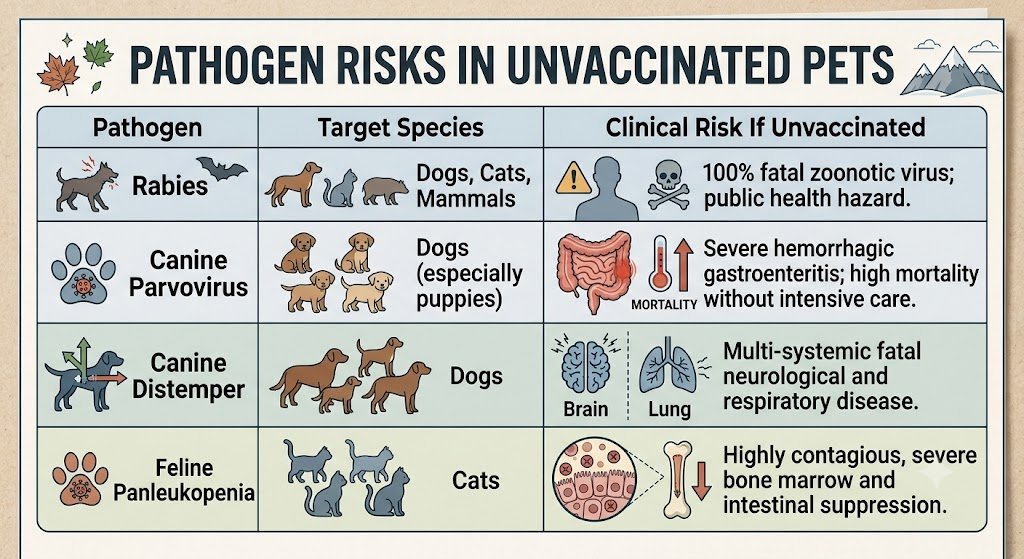
Veterinary medical associations across Brazil, the United States, and Europe are advising pet owners to adhere strictly to core vaccination schedules. Delaying or skipping routine vaccines reintroduces immediate, highly contagious, and fatal risks:
4. Guidance for Pet Owners
Veterinarians recommend the following actions when navigating pet health information online:
-
Verify the Source: Be cautious of claims originating from unverified social media figures, unaccredited blogs, or individuals with a history of professional disciplinary action.
-
Monitor Injection Sites Correctly: It is normal for a small, painless lump to form at a vaccine site as the immune system responds. If a bump persists longer than 3 weeks or grows larger than 2 cm, consult a licensed veterinarian for a routine check.
-
Discuss Individualized Schedules: Work directly with a licensed veterinarian to tailor a vaccination plan based on your pet’s specific age, lifestyle, geographic location, and exposure risk.

