


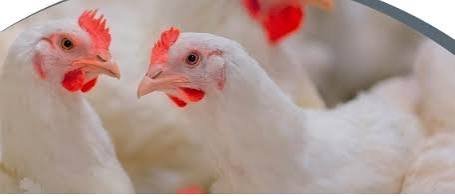
Senegalese poultry and agribusiness group Sedima is preparing a US$35 million (CFAF 20.47 billion) integrated poultry and grain complex at Nkouo in the Pool department of the Republic of Congo, marking the company’s largest foreign investment to date and extending the vertically integrated production model it has developed in Senegal.
The project is designed to integrate much of the poultry value chain—from maize and soybean production for feed through hatchery operations, poultry farming, slaughter and chicken packaging. Once fully operational, the complex is planned to produce approximately 10,800 tonnes of maize, 6,600 tonnes of soybeans and 2,200 tonnes of broiler chicken annually.
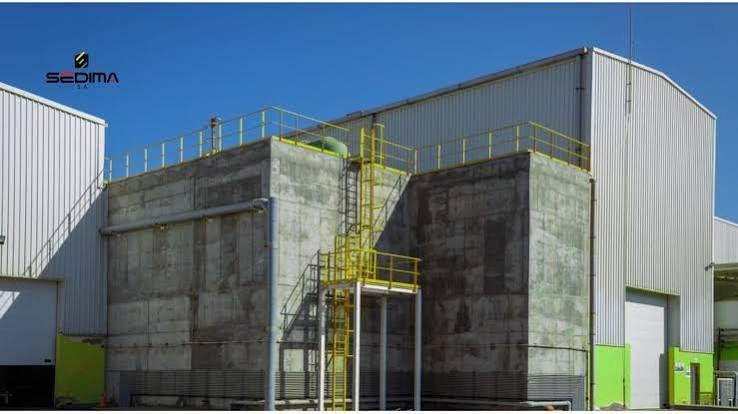
From feed crops to packaged chicken
The significance of the project lies in its vertical integration.
Rather than establishing a standalone broiler farm dependent on imported feed and chicks, Sedima is seeking to control multiple critical inputs:
maize + soybean production → feed manufacturing → hatchery → broiler production → slaughter → packaging.
A separate local report gives additional scale indicators for the planned complex: approximately 25,382 tonnes of poultry feed, 5.3 million hatching eggs, 3.3 million day-old chicks, 80,000 ready-to-lay pullets and 2,200 tonnes of broiler meat annually. This makes the project considerably broader than a conventional poultry farm. It is effectively a regional poultry-production platform.
Financing structure
The investment is expected to be financed through a combination of Sedima equity and regional development/commercial-bank funding. Reported financing includes:
Financing source |
CFAF |
|---|---|
BDEAC |
5.0bn |
BSCA Bank |
5.04bn |
BGFIBank |
4.0bn |
LCB Bank |
1.0bn |
Sedima Congo equity |
5.245bn |
Total |
≈20.3–20.5bn |
The Development Bank of Central African States (BDEAC) alone is reported to have approved CFAF 5 billion, approximately 24.4% of the announced project cost.
Why Congo?
The investment addresses a structural weakness in the Central African poultry value chain: significant dependence on imported chicken and animal-feed inputs.
Sedima’s strategy is therefore not simply to add domestic broiler capacity. It is to substitute imported inputs with locally produced feed grains and locally produced poultry. A conventional poultry producer remains exposed to:
imported maize/soy → foreign exchange → international commodity prices → freight → feed costs.
An integrated operator can potentially internalise part of that exposure.
Strategic animal-health implications
For the animal-health industry, the project creates a complete new demand stack. A complex of this scale requires:
-
breeder and hatchery biosecurity
-
vaccination programmes
-
hatchery sanitation
-
mycotoxin management
-
feed-quality testing
-
gut-health products
-
coccidiosis control
-
necrotic-enteritis management
-
water hygiene
-
antimicrobial stewardship
-
farm diagnostics
-
environmental monitoring
-
processing-plant hygiene

