


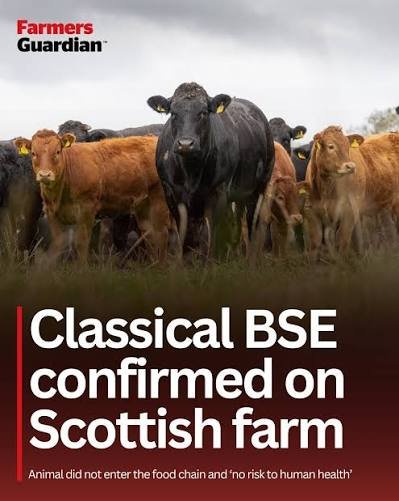
The Scottish Government and the Animal and Plant Health Agency (APHA) have confirmed an isolated case of classical Bovine Spongiform Encephalopathy (BSE) in a cow on a farm located in Dumfries and Galloway.
The disease was detected through routine national fallen stock surveillance after the dead animal was tested on-farm. Officials at Food Standards Scotland (FSS) confirmed that the infected carcass did not enter the human food chain or the animal feed supply, presenting zero risk to public health.
Precautionary quarantine and movement restrictions have been placed on the affected farm, targeting the index animal’s offspring and its designated “cohort”.
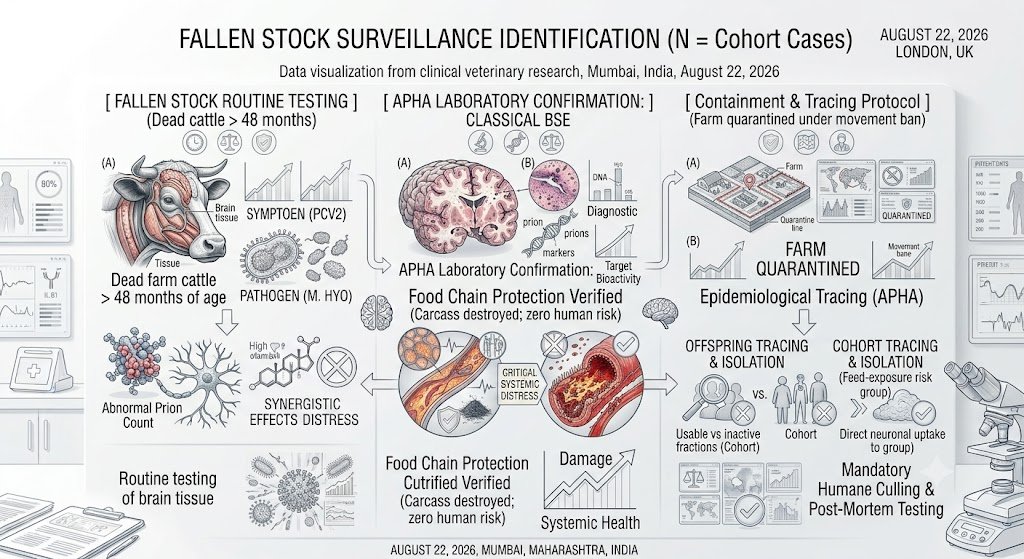
1. Classical vs. Atypical BSE: Biological Distinctions
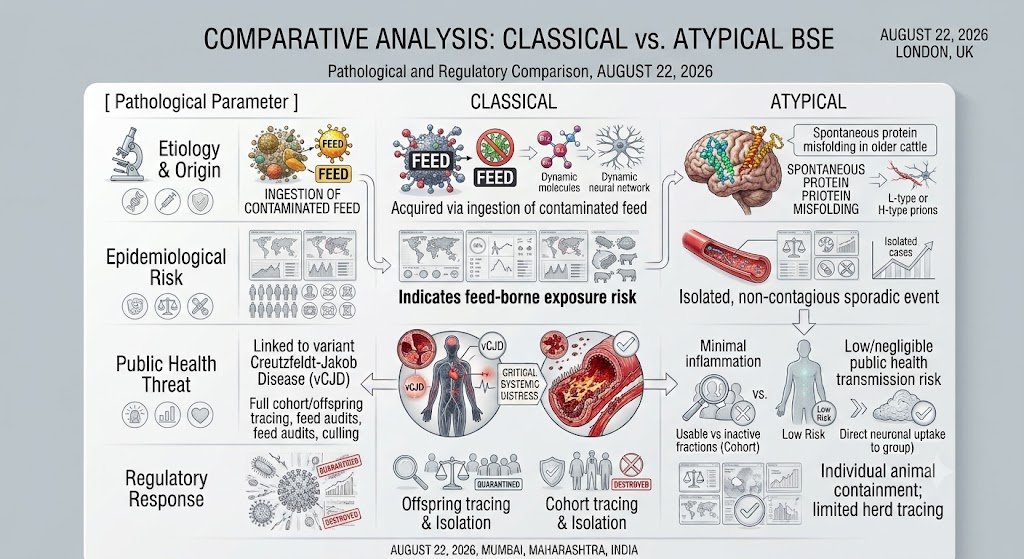
The confirmation of classical BSE is epidemiologically distinct from atypical BSE, carrying different biosecurity implications.
-
Prion Pathology: Classical BSE is caused by the accumulation of an abnormally folded infectious isoform ($PrP^{Sc}$) of the host-encoded cellular prion protein ($PrP^C$) in central nervous system tissues.
-
Transmission Vector: Classical BSE is not transmitted directly from cow to cow through casual contact. It occurs almost exclusively when cattle ingest feed containing mammalian Meat and Bone Meal (MBM) contaminated with the BSE prion agent.
2. Regulatory Control Measures and Tracing Protocols
Following the APHA laboratory confirmation, statutory animal health protocols were activated under Scottish biosecurity legislation:
-
Quarantine and Movement Controls: Movement restrictions were imposed on the index farm in Dumfries and Galloway to prevent susceptible livestock from leaving the site.
-
Cohort & Offspring Tracing: APHA epidemiologists are tracing all offspring born to the infected cow within its final two years of life, alongside its “cohort” group—defined as animals born in the same herd within 12 months before or after the birth of the affected cow, or raised with it during its first year of life.
-
Mandatory Culling: In compliance with legal standards, all identified cohort animals and traced offspring will be isolated, humanely culled, and submitted for neuropathological testing.
-
Specified Risk Material (SRM) Protocols: FSS confirmed that strict controls remain enforced across all commercial abattoirs, requiring the complete removal and destruction of Specified Risk Material (brain, spinal cord, and skull) from all slaughtered cattle.
3. Official Responses & Industry Implications
“Following confirmation of a case of classical BSE in Dumfries and Galloway, the Scottish Government and other agencies acted swiftly and decisively to protect the agriculture sector. The fact we identified this isolated case so quickly is clear proof that our surveillance system for detecting this type of disease is working effectively.”
— Jim Fairlie, Scottish Agriculture Minister
“While this is clearly concerning for everyone involved in the farming industry and the veterinary profession, it shows that the comprehensive and robust veterinary surveillance system is working effectively to detect potential risk, helping the authorities to put in place appropriate precautionary measures.”
— Dr. Rob Williams, British Veterinary Association (BVA) President
Trade and World Organisation for Animal Health (WOAH) Impact
The case comes as APHA investigates whether the animal was exposed to historic feed cross-contamination or an alternative environmental pathway. Trade specialists and agricultural economists are evaluating potential impacts on the UK’s international beef export agreements, particularly with trading partners that monitor BSE risk classification standards.
Executive & Evidence References
-
Scottish Government Communications Directorate. (2026, August 19). BSE Case Confirmed in Dumfries and Galloway. Official Public Health & Agricultural Statement.
-
Animal and Plant Health Agency (APHA). (2026). BSE Surveillance Protocols and National Disease Control Strategies in Great Britain. UK Department for Environment, Food & Rural Affairs (DEFRA).
-
British Veterinary Association (BVA). (2026, August 20). BVA Statement on Classical BSE Case Confirmation in Scotland.
-
Food Standards Scotland (FSS). (2026). Official Meat Controls and Specified Risk Material (SRM) Compliance Guidance.

