


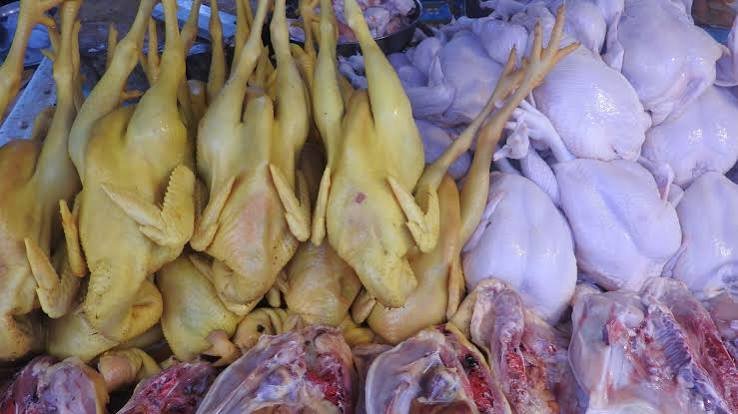
Hanoi has completed the closure of its remaining small-scale informal slaughterhouses, fundamentally restructuring the city’s livestock-slaughtering system around centralised and temporary centralised facilities.
The move eliminates 666 traditional slaughterhouses, which previously represented almost 95% of the city’s 701 slaughtering facilities, and shifts slaughtering activity to 71 qualified centralised facilities. The reform is designed to strengthen veterinary inspection, livestock traceability, food safety and disease prevention across one of Vietnam’s largest livestock-consumption markets.
From 701 facilities to a controlled network
Before implementation of Hanoi’s Plan No. 283, the city had approximately:
Indicator |
Position |
|---|---|
Total slaughtering facilities |
701 |
Traditional/informal facilities |
666 |
Share of traditional facilities |
~95% |
Current centralised/temporary facilities |
71 |
Pigs inspected daily |
~6,500 |
Poultry inspected daily |
~85,000 |
Cattle & buffalo inspected daily |
~300 |
Animals processed/controlled daily |
~91,800 |
The transition is significant because informal slaughtering had historically made it difficult for authorities to establish reliable information about where animals originated, whether they had passed veterinary inspection and where meat entered the food chain.
Veterinary control moves upstream
Under the new system, animals entering approved slaughter facilities must have appropriate quarantine documentation and undergo clinical veterinary inspection.
After slaughter, carcasses are inspected and receive veterinary inspection markings before entering the market. This creates multiple control points between the farm and consumer.
The objective is not simply improved hygiene. Centralisation also creates a more structured framework for controlling transboundary and endemic livestock diseases, including African swine fever and poultry diseases.
ASF enforcement illustrates the disease-control rationale
Hanoi has simultaneously increased inspections along transport routes, traditional markets and areas considered vulnerable to unregulated slaughter and livestock trading.
Since mid-2025, authorities reportedly detected three incidents involving pork contaminated with African swine fever virus. The affected products were destroyed, while 10 individuals involved in those cases were prosecuted. Two slaughter facilities were also fined for veterinary-hygiene violations.
At traditional markets, vendors are prohibited from slaughtering animals on site, while meat lacking veterinary inspection markings or traceable origin can be rejected.
28 new large-scale slaughterhouses planned
Hanoi is not treating the closure of informal slaughterhouses as an isolated enforcement exercise.
A longer-term infrastructure plan approved in August 2026 envisages 28 large-scale slaughterhouses across 25 suburban communes. The planned facilities are intended to support industrial or semi-industrial slaughtering, wastewater treatment, transport infrastructure and integration of smaller operators into a more formal meat-processing network.
This represents a broader shift from fragmented slaughtering toward formalised livestock supply chains.
Why this matters for the animal-health industry
The Hanoi model has implications beyond food safety. Centralised slaughter creates more opportunities for systematic collection of animal-health information at the point where animals from multiple farms and regions converge.
That can strengthen:
Traceability → Veterinary inspection → Disease detection → Outbreak investigation → Movement-control decisions → Food-safety assurance
It also creates a more addressable market for animal-health and agri-tech companies providing:
-
Digital livestock identification
-
Traceability software
-
Veterinary inspection platforms
-
Disease surveillance
-
Diagnostic testing
-
Cold-chain monitoring
-
Meat-supply-chain management
-
Biosecurity systems
-
Environmental monitoring
-
Waste-management technologies
Analyst / Animal-Health Industry View
Hanoi’s slaughterhouse reform is strategically important because it demonstrates that animal-health infrastructure increasingly extends beyond the farm. A fragmented slaughter network creates many points where disease surveillance can fail. Centralised slaughter creates fewer, more controlled nodes through which large volumes of livestock pass.
The model therefore effectively converts the slaughterhouse from a processing endpoint into a disease-surveillance and traceability node.
The scale is particularly relevant: approximately 91,800 pigs, poultry, cattle and buffaloes are subject to daily veterinary inspection across the reported centralised facilities.
For Asian livestock markets, the broader lesson is that disease control is increasingly being built into physical supply-chain infrastructure, rather than being treated solely as a veterinary response after an outbreak occurs.
Strategic equation:
Centralised Slaughter + Veterinary Inspection + Traceability + Digital Records = Stronger Disease Intelligence + Safer Meat Supply Chain

