HomeLivestockSouth Africa's Free State Records 798 FMD Cases as Vaccination Campaign Expands

South Africa’s Free State Records 798 FMD Cases as Vaccination Campaign Expands

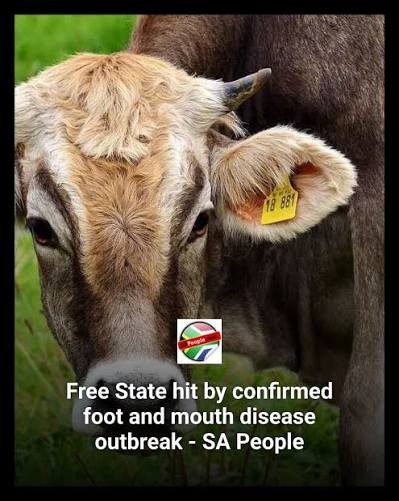
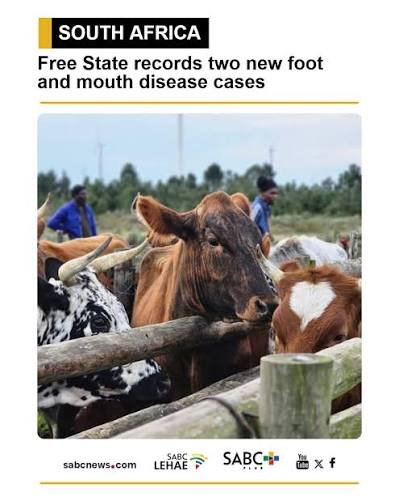
South Africa’s Free State province has recorded 798 confirmed foot-and-mouth disease (FMD) cases, according to the latest provincial update available as of 20 September 2026. Of these, 634 cases had been resolved, while 164 remained active and under quarantine. Two additional clinically confirmed cases were reported in the Bultfontein and Welkom State Veterinary areas.

The numbers illustrate both the scale of the Free State outbreak and the continuing importance of vaccination, quarantine and movement controls in containing transmission.

South Africa's Free State province has recorded 798 confirmed foot-and-mouth disease (FMD) cases
South Africa’s Free State province has recorded 798 confirmed foot-and-mouth disease (FMD) cases

798 confirmed cases across the province

The Free State has been one of the major focal points of South Africa’s prolonged FMD challenge. The latest reported tally shows that approximately 79% of the 798 cases had moved through the control process, while approximately 21% remained active or under quarantine.

Importantly, these figures represent reported epidemiological cases/sites rather than a direct count of individual infected cattle. A single epidemiological unit can involve a larger herd under veterinary restriction. The provincial response continues to combine:

  • Quarantine of affected holdings

  • Livestock movement controls

  • Veterinary surveillance

  • Vaccination

  • Farmer reporting

  • Biosecurity enforcement

More than one million cattle vaccinated

More than 1 million cattle in the Free State have been vaccinated as part of the broader South African FMD control programme, according to the provincial update.

The vaccination drive forms part of a much larger national response. Earlier in 2026, South Africa’s national Department of Agriculture reported procurement of 6 million FMD vaccine doses, with more than 5.2 million doses distributed nationally by April. More than 2.59 million animals had been vaccinated by 23 April at that stage of the campaign. The national programme has subsequently expanded considerably.

Vaccination is only one layer of disease control

South Africa’s experience illustrates an important principle in FMD management: vaccination does not replace movement control, quarantine, surveillance or biosecurity.

The objective is to reduce viral transmission while veterinary authorities identify and manage infected or exposed populations. Animals and farms must still comply with disease-control requirements even where vaccination coverage is increasing.

This is particularly important in a livestock economy characterised by extensive movement of cattle between farms, auctions, feedlots, markets and slaughter facilities.

Industry implications extend beyond cattle

FMD creates economic disruption through several interconnected channels:

Farm level:
Restricted livestock movement can delay sales, increase holding costs and disrupt production planning.

Auction and trading markets:
Movement restrictions can reduce market liquidity and delay normal livestock turnover.

Feedlots and processors:
Irregular cattle flows can affect throughput, procurement planning and capacity utilisation.

Dairy:
Movement restrictions and disease concerns can affect dairy herd management and milk-production logistics.

Exports:
FMD status directly affects market access because importing countries impose animal-health requirements on livestock and animal products.

Animal-health sector:
Demand increases for vaccines, diagnostics, epidemiological surveillance, veterinary services, identification systems and biosecurity products.

South Africa’s response is increasingly infrastructure-led

The broader national response shows an increasing emphasis on building disease-control capacity rather than relying exclusively on emergency intervention.

The government has reported major vaccine procurement, expanded field vaccination and recruitment of additional Animal Health Technicians. It has also been working to expand diagnostic capacity, including accreditation of additional private laboratories to reduce pressure on the state veterinary system and improve testing turnaround times.

Other provinces have reported significant vaccination progress. For example, the Western Cape reported approximately 82% primary vaccination coverage of its cattle herd by early September 2026, with booster vaccination also underway.

Analyst / Animal-Health Industry View

The Free State outbreak highlights the transition from episodic disease response toward a national livestock-health infrastructure model.

The emerging control framework can be viewed as:

Vaccination + Surveillance + Diagnostics + Animal Identification + Movement Control + Biosecurity + Veterinary Workforce

For animal-health companies, the opportunity extends beyond vaccine sales. FMD creates a broader market for diagnostic testing, digital traceability, epidemiological intelligence, cold-chain logistics, veterinary field services, farm biosecurity and livestock movement-management technologies.

The key metric for industry and government is therefore not simply the number of vaccinated animals, but whether vaccination and surveillance translate into fewer new epidemiological events, faster resolution and restoration of predictable livestock movement and trade.

Animal Health India Editorial Team
Animal Health India Editorial Teamhttps://animalhealthindia.com
Animal Health India (AHI) is an independent news and intelligence platform covering the global animal health, veterinary, livestock, poultry, companion animal and pet food sectors. Our editorial team comprises veterinary journalists, animal health professionals, regulatory affairs specialists and industry analysts with over 30 years of combined experience covering India, Asia, Europe and North America. AHI publishes news, regulatory updates, market intelligence and company news drawn from primary sources including DAHD, EMA, USDA, AVMA and leading veterinary publications worldwide.

RELATED ARTICLES