


China’s approval of a domestically manufactured telmisartan oral solution for cats could intensify competition in the country’s feline kidney-care market, where Boehringer Ingelheim’s Semintra is an established brand.
The development highlights the growing competitive significance of China’s veterinary pharmaceutical manufacturers, although its impact on pricing, market share and global sales remains uncertain.
China’s Vet Pharma Market gains another Feline Telmisartan
China’s Ministry of Agriculture and Rural Affairs (MARA) last week approved a telmisartan oral solution for cats developed by Zhejiang Hisun Animal Health Products Co., Ltd., adding another domestic competitor to the market for veterinary medicines used to manage proteinuria associated with feline chronic kidney disease (CKD).
According to the company’s regulatory announcement, the product has received veterinary drug approval number 兽药字 110803434, with a stated validity period from 8 October 2026 to 7 October 2031. The approved presentation is a 30 mL oral solution containing 0.12 g of telmisartan, equivalent to a concentration of 4 mg/mL.
The approval is commercially significant because telmisartan is the active ingredient in Semintra, marketed by Boehringer Ingelheim. The product is used in feline medicine to manage proteinuria associated with CKD and, in applicable markets and formulations, systemic hypertension.
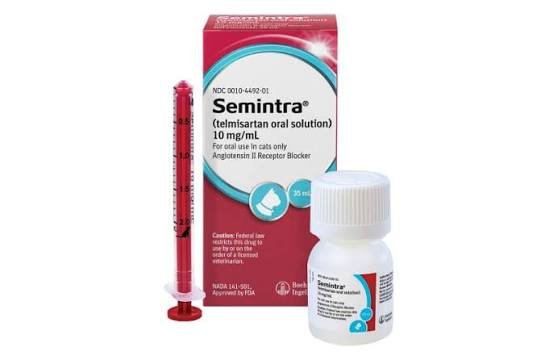
The development therefore raises a commercially important question: could a domestic Chinese manufacturer challenge an established multinational brand in a specialised, long-term companion-animal treatment category?
What the approval means for Boehringer Ingelheim
For Boehringer Ingelheim, the immediate implication is the arrival of another potential competitor in China’s feline telmisartan market. The scale of the commercial impact will depend on the new product’s pricing, availability, veterinary acceptance and ability to secure repeat prescriptions.
1. Potential pressure on pricing and market share – Semintra has benefited from established brand recognition, product familiarity and an existing veterinary distribution presence. However, domestic manufacturers may have opportunities to compete through local production, distribution relationships and price positioning.
If Hisun launches its product at a meaningful discount to Semintra, some veterinary practices and pet owners may consider it as an alternative, particularly where treatment costs are a concern.
The key commercial risk for Boehringer Ingelheim is potential price pressure and gradual erosion of market share, rather than an automatic or immediate loss of sales. No verified public data currently quantify the price difference between the products or establish any resulting change in Semintra’s Chinese sales.
2. Protecting Semintra’s brand differentiation
The entry of another telmisartan product could encourage Boehringer Ingelheim to reinforce the value proposition surrounding Semintra. This may include greater emphasis on veterinary education, appropriate patient selection, adherence to approved product information, monitoring of treatment response and support for long-term feline kidney care.
In chronic disease management, the commercial proposition extends beyond the active ingredient. Veterinary familiarity, product consistency, distribution reliability and confidence in the manufacturer can influence prescribing behaviour. The challenge for Boehringer Ingelheim will be to preserve these advantages while responding to a market in which domestic alternatives may compete more aggressively on price.
3. Reassessing the economics of the Chinese market
Hisun’s approval also highlights the strategic importance of local manufacturing and domestic regulatory expertise in China’s veterinary pharmaceutical industry.
A locally manufactured product may benefit from shorter supply chains or more established domestic distribution relationships. These advantages could improve its competitiveness, although there is not yet sufficient evidence to conclude that Hisun will have a lower cost base or achieve superior market access.
For Boehringer Ingelheim, the development provides a reason to monitor the economics of its Chinese product portfolio, including pricing, distribution costs and commercial investment.
Hisun’s strategic opportunity in companion-animal medicines
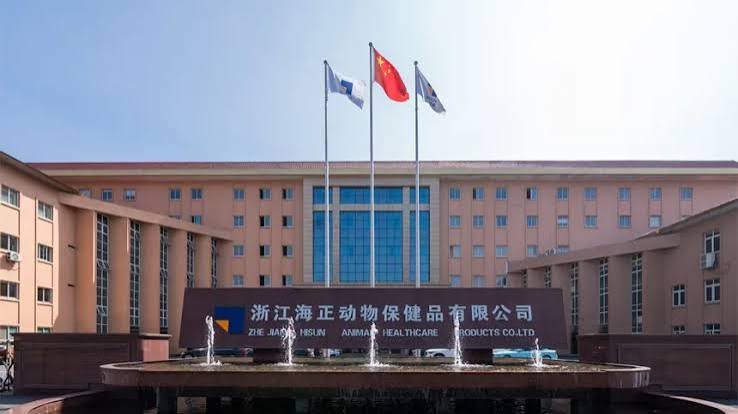
The approval is also a portfolio-development milestone for Zhejiang Hisun Animal Health Products, part of the Zhejiang Hisun Pharmaceutical group.
Entering the feline renal-care category offers an opportunity to expand beyond conventional veterinary medicines into specialised treatments for companion animals. These products may generate recurring demand when they are used to manage chronic conditions, although commercial success depends on diagnosis rates, treatment duration, market access and competition.
The company is also entering a category in which competitors already exist. Its success will therefore depend not only on its ability to compete with Semintra but also on its positioning against other telmisartan suppliers in China. The approval announcement itself identifies other domestic manufacturers operating in this therapeutic category.
The wider industry implication is that established pharmaceutical manufacturers in China may be able to use their production capabilities and regulatory experience to enter increasingly specialised companion-animal markets.
For multinational animal-health businesses, this creates a competitive question extending beyond a single product: can local manufacturers combine acceptable quality, attractive pricing and veterinary-channel access to establish durable positions in specialised therapeutic segments?
Why feline chronic kidney disease is a commercially important category
Feline chronic kidney disease is a significant long-term health concern, particularly among older cats. The condition requires veterinary assessment and ongoing management, creating demand for medicines and monitoring services over extended periods.
Telmisartan is an angiotensin II type 1 receptor blocker (ARB). By acting on the renin–angiotensin system, it can reduce urinary protein loss in appropriately selected cats with proteinuria. Its use is governed by the approved product information and the clinical circumstances of each patient.
Boehringer Ingelheim has previously highlighted the importance of feline CKD in its Chinese Semintra communications, citing estimates that prevalence increases substantially with age. Such estimates should be interpreted in the context of the populations and diagnostic methods from which they are derived.
From a commercial perspective, chronic kidney disease offers an established treatment need. However, the approval of an additional product does not, by itself, increase the number of diagnosed cats or establish how many existing patients will switch medicines.
Could the Chinese approval affect Semintra globally?
The direct regulatory impact of this approval is confined to China. Hisun does not automatically gain the right to market its product in Europe, the United States, India or other international markets.
Each jurisdiction has its own veterinary medicine registration requirements, quality standards and commercial arrangements. Any expansion beyond China would require the relevant approvals and compliance with applicable regulations.
For Boehringer Ingelheim, the immediate implications for international Semintra sales are therefore indirect. The development may provide an early indication of how domestic Chinese pharmaceutical manufacturers could compete with multinational companies in selected companion-animal therapeutic categories.
Three scenarios for the next 12–24 months
The commercial outlook will depend on execution following regulatory approval. Three scenarios merit attention.
Scenario 1: Gradual market entry. Hisun establishes distribution through selected veterinary channels and builds sales over time. Semintra retains a meaningful position through brand recognition, veterinary familiarity and established prescribing practices.
Scenario 2: Price-led competition. Hisun offers a material price advantage and gains adoption among price-sensitive clinics and owners. Competing suppliers respond, potentially putting pressure on branded-product pricing and market share.
Scenario 3: Limited commercial uptake. Adoption remains modest because the price advantage is limited, veterinary confidence takes time to develop, or existing competitors maintain strong positions.
What the animal-health industry should monitor
For Boehringer Ingelheim, Hisun and other participants in the veterinary pharmaceutical market, the next phase will be more informative than the approval announcement alone.
Indicator |
Strategic significance |
|---|---|
Hisun’s commercial launch date |
Confirms when the product becomes available to customers |
Actual selling price |
Establishes the extent of potential price competition |
Veterinary adoption |
Indicates whether the product gains clinical acceptance |
Distributor coverage |
Shows the breadth of commercial market access |
Semintra pricing and availability |
Helps identify potential competitive responses |
Further Chinese telmisartan approvals |
Indicates whether competitive intensity is increasing |
Registrations in overseas markets |
Determines whether the competitive impact extends beyond China |

