


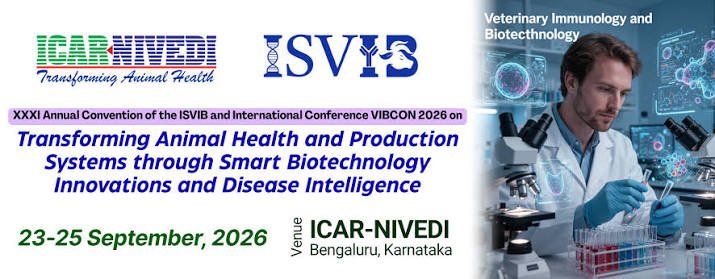
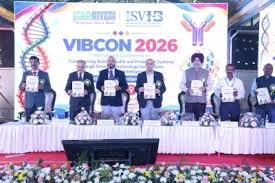
ICAR-NIVEDI, Bengaluru hosted the XXXI Annual Convention of the Indian Society for Veterinary Immunology & Biotechnology and VIBCON 2026 from 23–25 September, bringing together researchers, policymakers, veterinary professionals and industry around biotechnology and animal-disease intelligence.
The conference attracted more than 200 delegates and focused on the theme “Transforming Animal Health and Production Systems through Smart Biotechnology Innovations and Disease Intelligence.”
The programme covered:
-
Veterinary diagnostics
-
Vaccines
-
Immunology
-
Epidemiology
-
Disease intelligence
-
AI and machine learning
-
Advanced breeding
-
Transboundary disease control
-
Biotechnology adoption
AI moves closer to operational veterinary surveillance
A key theme was the integration of AI/ML and biotechnology into livestock-health systems.
This is strategically important for India because of the country’s huge livestock population and geographical diversity. Conventional disease surveillance can be constrained by field reporting delays, fragmented data and limited veterinary manpower.
AI-enabled systems potentially allow disease signals to be identified from combinations of:
Location + clinical reports + laboratory results + vaccination data + animal movement + historical outbreaks
The objective is to move from simply recording disease to identifying where disease risk is increasing.
Biotechnology and productivity converge
The conference also linked animal health with livestock productivity and advanced breeding. This is significant because disease resistance, genetic improvement, nutrition and diagnostics increasingly interact within modern livestock-production systems.
A future Indian livestock-health architecture could therefore increasingly connect:
Pashu Aadhaar → vaccination → disease surveillance → AI forecasting → diagnostics → intervention
Industry implications
The convergence creates opportunities for Indian companies in:
-
Molecular diagnostics
-
Veterinary vaccines
-
AI disease forecasting
-
Digital animal identification
-
Precision breeding
-
Epidemiological software
-
Farm-management systems
-
Point-of-care testing

