


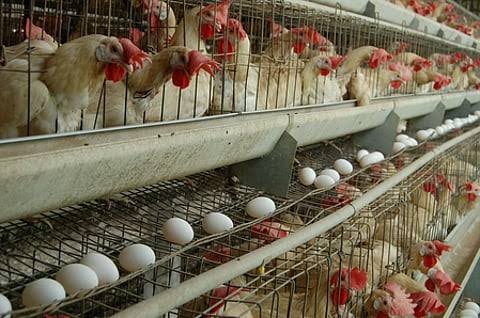
India’s poultry industry is facing a fresh wave of cost pressures as egg prices climb to record levels, driven by rising prices of key feed ingredients, including maize and soybean meal.
Industry reports indicate that farm-gate egg prices have approached ₹7 per egg, while retail prices in several cities have reached ₹8.50 to ₹9 per egg, reflecting the growing financial burden on poultry producers.
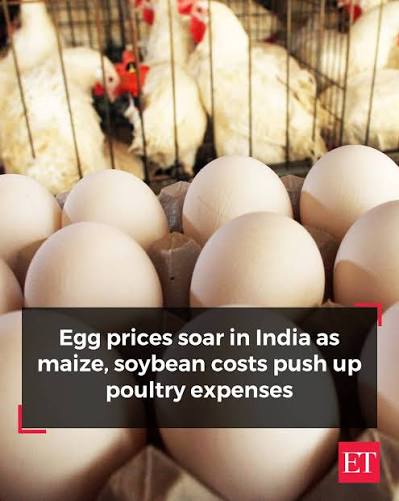
The increase is being fuelled by higher feed costs, lower egg production during the summer months and tighter market supplies. While the higher prices may provide temporary relief for some layer farmers, they also highlight the increasing volatility affecting India’s poultry value chain.
Feed Costs Continue to Dominate Poultry Economics
Feed remains the single largest expense in poultry production, accounting for 65% to 70% of the total cost of producing eggs and chicken. Two ingredients dominate poultry feed formulations:
- Maize, the primary energy source
- Soybean meal, the main source of protein
Both commodities have experienced sustained price pressure this year, significantly increasing production costs for poultry farmers. Industry associations have warned that the sharp increase in soybean meal prices has become one of the biggest challenges facing India’s poultry sector in 2026.
Soybean Meal Prices Have Risen Dramatically
Soybean meal prices have increased sharply due to tighter domestic supplies and strong demand from the livestock and aquaculture sectors. Recent industry estimates indicate that soybean meal prices have increased by more than 40% in recent months, forcing feed manufacturers to raise prices across the livestock sector.
Since soybean meal is an essential component of poultry feed, the increase has directly affected production costs for both egg and broiler farmers.
Many producers say that feed costs are now rising faster than improvements in farm profitability.
Maize Prices Continue to Add Pressure
Maize prices have also remained firm due to strong domestic demand. The poultry industry competes with several other sectors for maize supplies, including:
Animal feed manufacturers
Starch processors
Ethanol producers
Higher maize prices have further increased the cost of poultry feed, leaving producers with limited options to reduce production expenses.
Summer Heat Has Reduced Egg Production
Apart from higher feed costs, extreme summer temperatures have affected egg production across several poultry-producing states. Heat stress reduces feed intake by laying hens, leading to lower egg production and, in some cases, increased bird mortality.
The result has been a reduction in market supplies at a time when demand remains relatively stable. Industry representatives say that lower production has been an important factor behind the recent increase in wholesale and retail egg prices.
Consumers Are Paying More
The impact is now being felt by consumers. Across many Indian cities:
Farm-gate prices have approached ₹7 per egg.
Retail prices have increased to ₹8.50–₹9 per egg.
Eggs remain one of India’s most affordable and nutritious protein sources, but continued price increases could affect consumption, particularly among lower-income households.
Protein Inflation Is Gathering Pace
The rise in egg prices forms part of a broader increase in protein-rich food prices. Recent market analysis shows that inflation in products such as eggs, chicken and milk has accelerated, driven largely by higher feed costs and weather-related production challenges.
As poultry production becomes more expensive, consumers are likely to experience higher prices across several animal protein categories.
Farmers Face a Mixed Situation
Higher egg prices may improve revenues for some producers. However, increased income is often offset by sharply higher production costs. Poultry farmers continue to face rising expenses for:
Feed
Electricity
Labour
Transportation
Veterinary care
Farm maintenance
As a result, many producers report that profit margins remain under pressure despite stronger market prices.
The Poultry Industry Wants Policy Support
Industry organisations have repeatedly called for measures to stabilise feed ingredient supplies. Among the proposals discussed are:
Improving domestic availability of soybean meal.
Strengthening maize production.
Reviewing feed ingredient import policies during supply shortages.
Supporting research into alternative feed ingredients.
Encouraging greater feed efficiency through improved nutrition and genetics.
Reducing feed price volatility remains one of the industry’s highest priorities.
Why Feed Costs Matter
The poultry industry is one of India’s largest livestock sectors, producing billions of eggs and millions of tonnes of chicken annually. Small changes in feed prices can have a significant impact because feed represents nearly two-thirds of total production costs.
When feed becomes more expensive:
Farm profitability declines.
Consumer prices increase.
Investment decisions may be delayed.
Production growth slows.
This makes feed availability one of the most important drivers of poultry industry performance.
Industry Outlook
The outlook for India’s poultry sector remains positive over the long term, supported by rising incomes, urbanisation and increasing demand for affordable animal protein. However, the second half of 2026 is likely to remain challenging unless feed prices stabilise. Much will depend on:
The arrival of the new soybean harvest.
Domestic maize availability.
Weather conditions.
Government policy on feed ingredients.
Consumer demand.
If feed costs moderate later this year, poultry producers could see improved margins while consumers may benefit from more stable egg prices.
Key Statistics
| Indicator | Latest Position |
|---|---|
| Farm-gate egg price | Nearly ₹7 per egg |
| Retail egg price | ₹8.50–₹9 per egg |
| Feed share of poultry production cost | 65–70% |
| Main feed ingredients | Maize and soybean meal |
| Soybean meal price increase | More than 40% in recent months |
Key Takeaways
-
Egg prices in India have reached record levels due to rising poultry feed costs and tighter supplies
-
Farm-gate prices have approached ₹7 per egg, while retail prices have climbed to ₹8.50–₹9
-
Feed accounts for 65–70% of poultry production costs, making maize and soybean prices critical to farm profitability
-
Higher soybean meal and maize prices continue to squeeze poultry producers
-
Summer heat has reduced egg production, contributing to lower supplies and higher prices
-
Industry groups are calling for measures to improve feed availability and reduce input cost volatility

