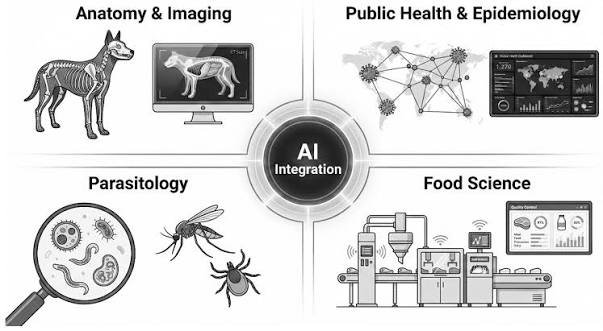
Veterinary AI moves from experimentation toward commercial deployment
Venture capital interest in veterinary artificial intelligence is increasingly concentrating on practical clinical and workflow applications—including diagnostic imaging, automated clinical documentation and veterinary practice-management software.
The investment pattern is significant because it shifts veterinary AI away from broad “AI for animal health” propositions toward products addressing identifiable bottlenecks: radiology capacity, documentation workload, administrative time and clinical decision support.
Recent financing provides evidence of this transition. Digitail raised $23 million in Series B funding in November 2025, while London-based veterinary software company Lupa raised about $20 million in Series A funding in October 2025, bringing its reported total funding to $25 million.
The trend has continued into 2026. Travv raised $1.6 million in seed funding in June 2026 to develop an AI-native veterinary diagnostic platform, initially focused on radiology workflows.
Radiology is emerging as a high-value AI application
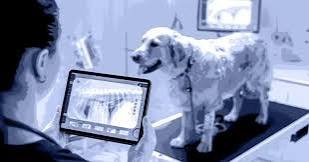
Veterinary diagnostic imaging is one of the clearest examples of AI moving toward point-of-care use.
SK Telecom developed X Caliber, an AI-based veterinary X-ray interpretation service. When launched in 2022, the platform could analyze canine X-rays and return results in approximately 30 seconds. SK Telecom reported detection rates of 84%–86% for specified abnormalities and 97% accuracy for vertebral heart-scale measurement.
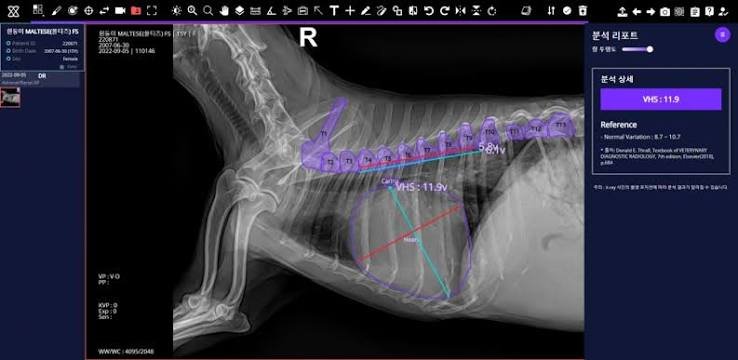
The technology has subsequently expanded beyond its original Korean market. In 2024, SK Telecom reported partnerships covering Australia, Indonesia, Canada and Southeast Asia, while expanding X Caliber’s coverage to cats as well as dogs.
In Canada, SK Telecom said X Caliber would be made available to more than 100 veterinary hospitals through its partnership with Nuon Imaging and Nikki Health Solutions. The company reported that the newer version could analyze dog and cat X-rays in about 15 seconds, with reported sensitivity of 86%–94% across specified applications.
The investment implication is clear: veterinary radiology is attractive to AI developers because the workflow generates structured images, involves repetitive pattern-recognition tasks and faces specialist-resource constraints.
However, AI-assisted interpretation should not be equated with autonomous diagnosis. Performance varies by disease, species, image quality and clinical setting, and veterinarians remain responsible for integrating imaging findings with the clinical case.
AI scribes attack a different veterinary bottleneck: Documentation
A second investment theme is AI-powered clinical documentation.
Veterinarians spend substantial time documenting consultations, preparing medical records and completing administrative tasks. AI scribes are designed to capture consultations, generate structured notes and reduce after-hours documentation.
HappyDoc, an AI scribe built specifically for veterinary practices, raised $2.2 million in November 2024. The company said the funding would support product development and expansion of its veterinary AI assistant.

The category has since attracted larger-scale deployment. In June 2026, VetRec partnered with Veterinary Emergency Group (VEG) following a six-month pilot, with the company reporting that its AI documentation platform had become the official AI-scribe partner across more than 70% of VEG hospitals.
Meanwhile, a May 2026 survey commissioned by CoVet of 127 veterinary professionals found that 91% of respondents said AI was already having its biggest impact on documentation, while 98% expressed interest in AI tools for administrative tasks. These are survey findings from a company-associated source and should therefore be treated as directional rather than independent industry-wide evidence.
Investment case is increasingly about ROI—not AI novelty
The emerging veterinary AI market suggests that investors are becoming more interested in measurable workflow economics than in AI capability alone. The most commercially attractive applications tend to have four characteristics:
-
High-frequency workflows — such as consultations, imaging and medical records.
-
Measurable time savings — minutes saved per consultation or report.
-
Existing data streams — X-rays, medical records, consultation audio and laboratory data.
-
Clear economic value — greater clinical capacity, reduced administrative burden or improved practice throughput.
This helps explain why veterinary radiology and AI documentation are receiving attention alongside broader veterinary software platforms.
A 2026 systematic audit of commercial veterinary AI products found a growing commercial market but also highlighted a critical issue: transparency and validation remain inconsistent across products. The researchers developed a veterinary AI transparency framework and assessed how commercial systems disclose evidence supporting their performance.
That finding is particularly important for investors, veterinary groups and animal-health companies. The next competitive advantage may be evidence. An AI platform that claims 95% accuracy is not necessarily more useful than one reporting 90% accuracy. Investors and veterinary customers increasingly need to know:
-
What species were studied?
-
Which diseases were evaluated?
-
What was the dataset size?
-
Was the validation independent?
-
How does performance change across different hospitals and equipment?
-
What is the false-negative rate?
-
Does the system improve clinical outcomes or simply speed up workflow?
Investment outlook: Veterinary AI is becoming a defined animal-health technology category
The evidence points toward a market moving through an important transition.
Phase 1: AI experimentation
↓
Phase 2: Clinical pilots
↓
Phase 3: Workflow integration
↓
Phase 4: Measurable ROI and multi-clinic deployment
The latest funding and commercial deployments suggest parts of veterinary AI are moving from Phase 2 toward Phases 3 and 4. Radiology, documentation and practice-management platforms are currently among the most visible areas, but the opportunity extends to pathology, dermatology, treatment decision support, remote monitoring, laboratory interpretation and livestock applications.
For animal-health investors and strategic buyers, however, the key question is no longer simply:
“Does this company use AI?”
It is:
“Does its AI solve a costly veterinary problem, demonstrate clinically meaningful performance and integrate into the existing workflow?” That distinction could determine which veterinary AI companies become durable platforms—and which remain technology demonstrations.