



UK veterinary authorities are escalating biosecurity protocols following a fresh surge in Bluetongue Virus Serotype 3 (BTV-3) cases across Great Britain.
Defra Case Tracking & Regional Spread
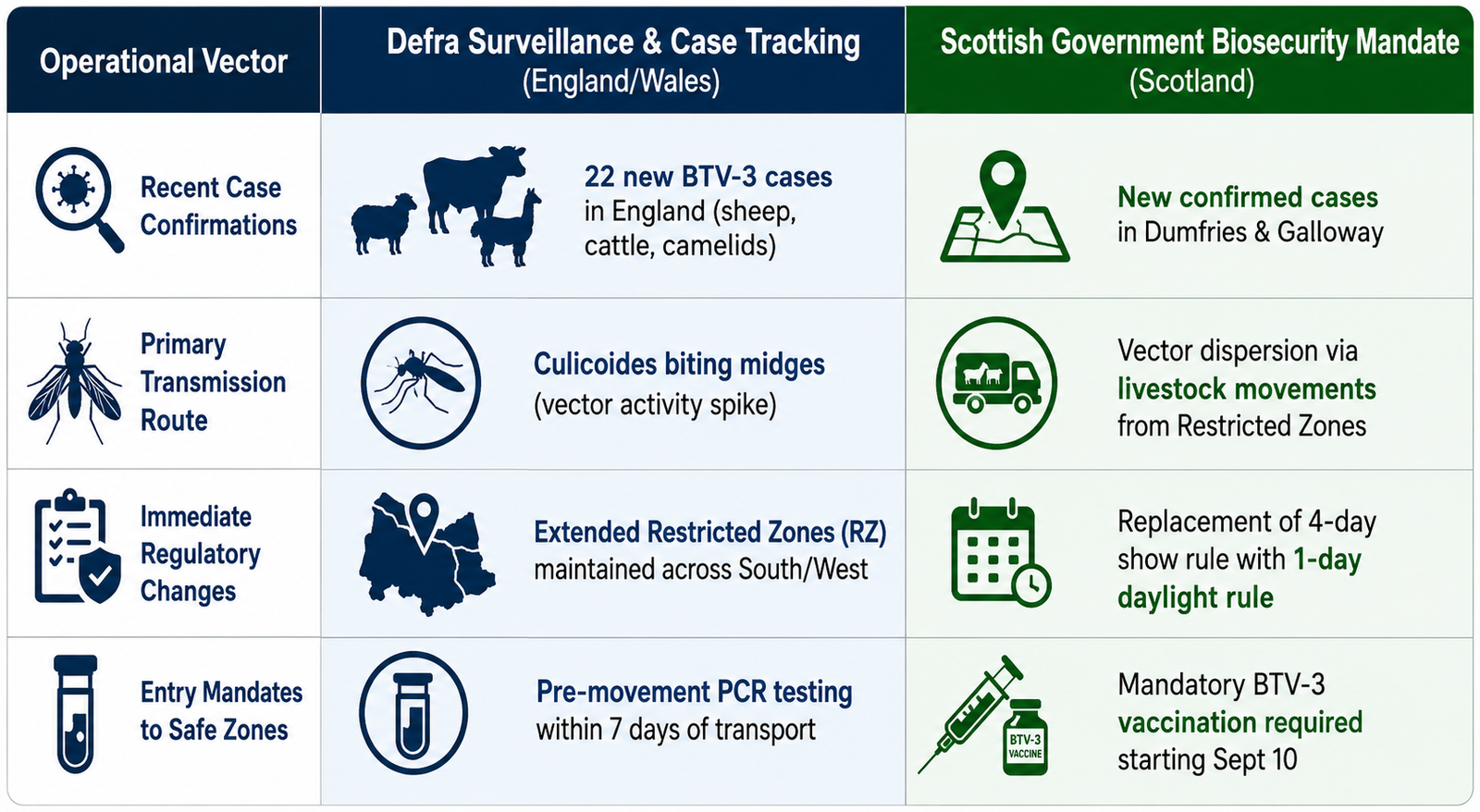
According to the GOV.UK Bluetongue Situation Tracker, the Department for Environment, Food & Rural Affairs (Defra) confirmed 22 new cases of BTV-3 in England, comprising 20 cases in sheep, two in cattle, and an additional positive case confirmed in a camelid herd following voluntary pre-movement testing.
The total caseload for the 2026–2027 vector season now exceeds 510 cases across Great Britain. While England remains the primary epicenter—with heavy concentrations in Devon, Cornwall, and Somerset—new cases in Dumfries and Galloway, Scotland, have triggered immediate emergency biosecurity protocols.
Scottish Government Policy Response
In response to the expanding threat from the Restricted Zone (RZ) in England and Wales, the Scottish Government’s Animal Health Division announced emergency movement restrictions and vaccination rules to protect livestock herds:
-
Suspension of the 4-Day Show Exemption (Effective August 22, 2026): The former allowance permitting Scottish animals to spend up to four days attending shows or sales in an RZ without re-testing is officially suspended. It is replaced by a strict 1-day rule, requiring livestock to travel to and from an RZ within a single calendar day during daylight hours.
-
Mandatory BTV-3 Vaccination (Effective September 10, 2026): All BTV-susceptible livestock (sheep, cattle, and camelids) moving from an RZ into Scotland to live must be fully vaccinated for BTV-3 prior to transport. While any approved BTV-3 vaccine product is permitted under state regulations, cattle vaccinated with Bultavo-3 receive specific testing exemptions.
-
Strict Pre-Movement Testing: Unvaccinated animals or those undergoing transit must continue to present a negative PCR test result taken within seven days prior to crossing into Scottish holdings.
Clinical Guidance & Industry Impact
UK Chief Veterinary Officer Christine Middlemiss continues to urge livestock keepers to remain on high alert. Bluetongue is a non-contagious, midge-borne viral disease causing severe fever, mucosal lesions, lameness, and high mortality—particularly in sheep flocks.
Because BTV-3 vaccines authorized for emergency use reduce clinical signs and mortality rather than completely preventing viremia, strict movement restrictions combined with targeted vaccination remain the principal defenses against wider agricultural disruption. Farmers suspecting clinical signs are required by law to notify the Animal and Plant Health Agency (APHA) immediately.

