



Japan has confirmed its first highly pathogenic avian influenza (HPAI) detection in wild birds for the 2026–27 season, following the identification of H5-subtype virus in dead large-billed crows collected in Akita Prefecture.
The confirmation was announced by Japan’s Ministry of the Environment and subsequently communicated by the Ministry of Agriculture, Forestry and Fisheries (MAFF). The development has prompted strengthened wildlife surveillance and renewed biosecurity warnings for commercial poultry producers across the country.
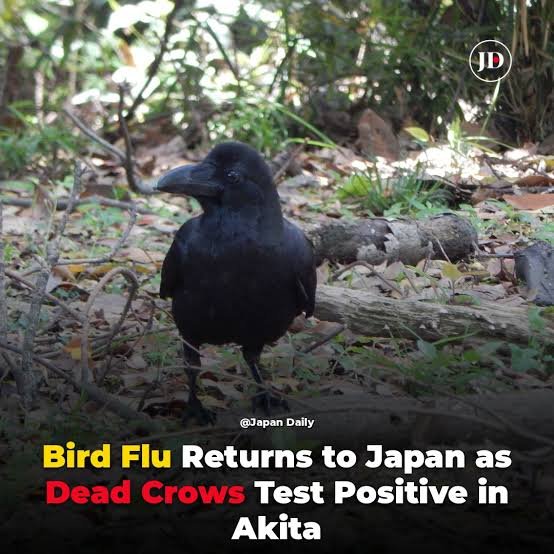
First wild-bird HPAI detection of the season
The infected birds were collected in Yuri-Honjo City, Akita Prefecture. According to the Ministry of the Environment:
-
Dead large-billed crows were initially recovered on 30 October.
-
Additional dead crows were collected on 1 November.
-
Further birds were collected on 2 November.
-
Samples were sent for genetic testing.
-
H5-subtype HPAI virus was confirmed on 6 November.
The detection represents Japan’s first confirmed HPAI case in wild birds during the 2026–27 season. The authorities have not reported this particular incident as a commercial poultry farm outbreak.
Japan establishes a 10-kilometre wildlife surveillance priority zone
Following confirmation, authorities designated an area within a 10-kilometre radius of the recovery location as a priority wild-bird surveillance zone.
The purpose is to increase monitoring and identify additional infections at an early stage. The response is particularly relevant because wild birds can serve as reservoirs and vectors for avian influenza viruses, increasing the potential exposure of domestic poultry.
MAFF strengthens poultry biosecurity
Japan’s Ministry of Agriculture, Forestry and Fisheries issued notifications to prefectural governments and poultry industry organisations calling for renewed implementation of disease-prevention measures. The key priorities include:
-
Strengthening farm perimeter security.
-
Preventing wild-bird access to poultry housing.
-
Improving disinfection at farm entry points.
-
Monitoring poultry mortality and clinical signs.
-
Restricting unnecessary personnel and vehicle movement.
-
Ensuring rapid reporting of suspected infections.
-
Strengthening surveillance around high-risk migratory bird habitats.
The Japanese poultry sector remains highly sensitive to HPAI outbreaks because commercial farm infections can lead to compulsory depopulation and movement restrictions.
The economic impact can extend well beyond the affected premises. Potential consequences include:
-
Loss of egg-laying capacity.
-
Reduced broiler production.
-
Disruptions to breeding and hatchery operations.
-
Increased farm-level biosecurity expenditure.
-
Higher egg and poultry prices.
-
Trade and movement restrictions.

