


This is a very comprehensive status report on India’s very ambitious National Animal Disease Control Programme which entails compulsory, regular, free of cost vaccinations against FMD and Brucellosis for eradication of these 2 diseases by 2030. A copy of this Official Status Report can be accessed here – Press Release_ NADCP Status Report Aug 2026
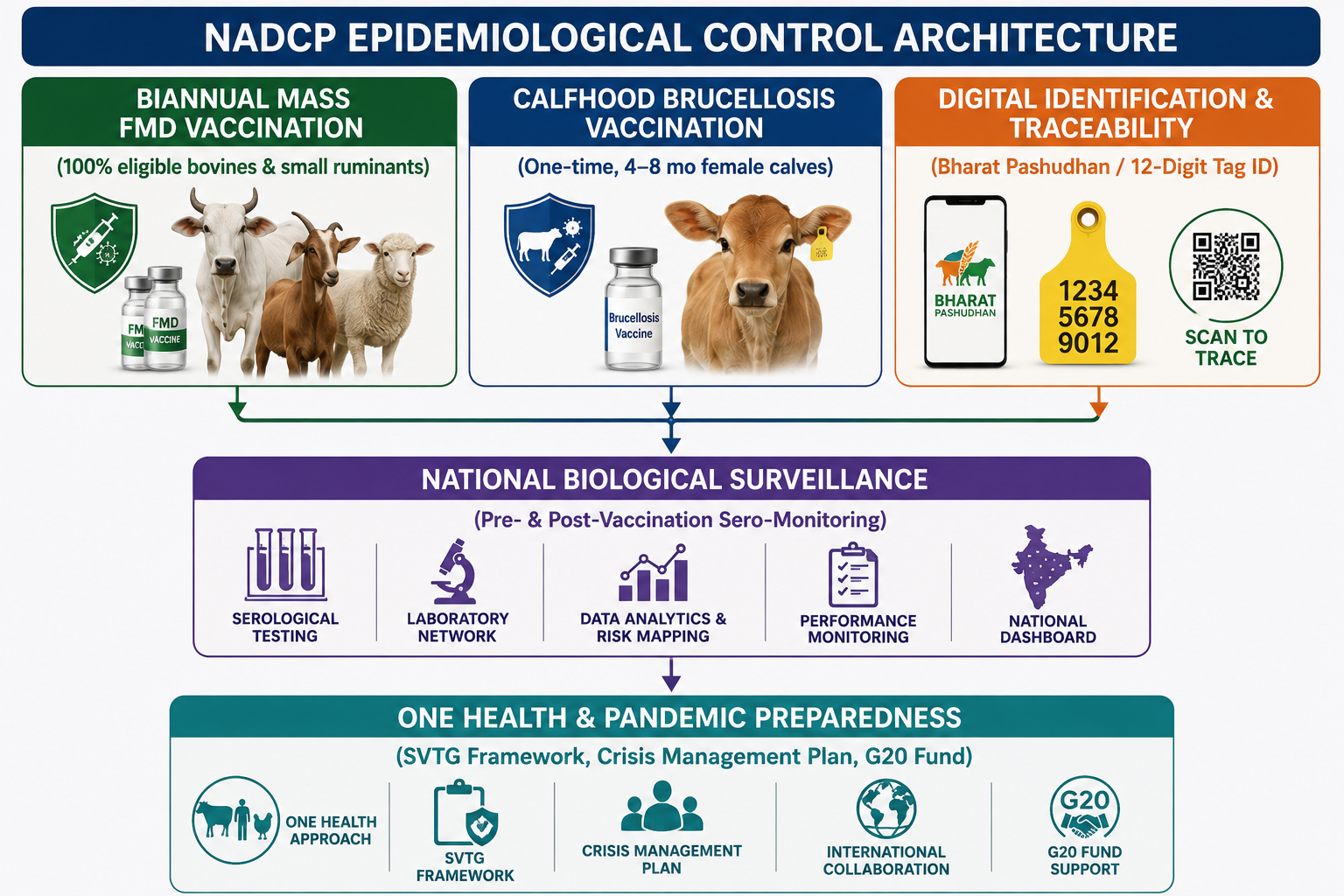
India’s agricultural sector is undergoing a structural transformation driven by the National Animal Disease Control Programme (NADCP). Launched in September 2019 with a 100% central funding mandate, the NADCP represents one of the world’s largest targeted animal health initiatives.
The initiative aims to control and eliminate Foot and Mouth Disease (FMD) and Brucellosis across India’s livestock population, which totals 535.78 million animals (including 302.79 million bovines per the 20th Livestock Census).
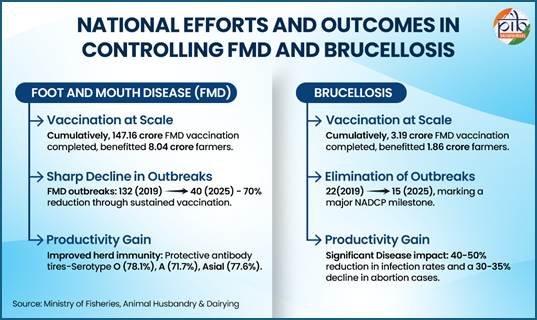
Through the administration of 147.16 crore (1.4716 billion) FMD vaccine doses benefiting 8.04 crore (80.4 million) farming households, the program has achieved measurable reductions in disease incidence, increased herd immunity, and contributed to growth in national dairy productivity.
1. Disease Burden & Target Pathogens
Infectious animal diseases historically caused substantial economic losses across rural India due to decreased milk yield, reproductive failure, reduced draft capacity, and international trade restrictions.
-
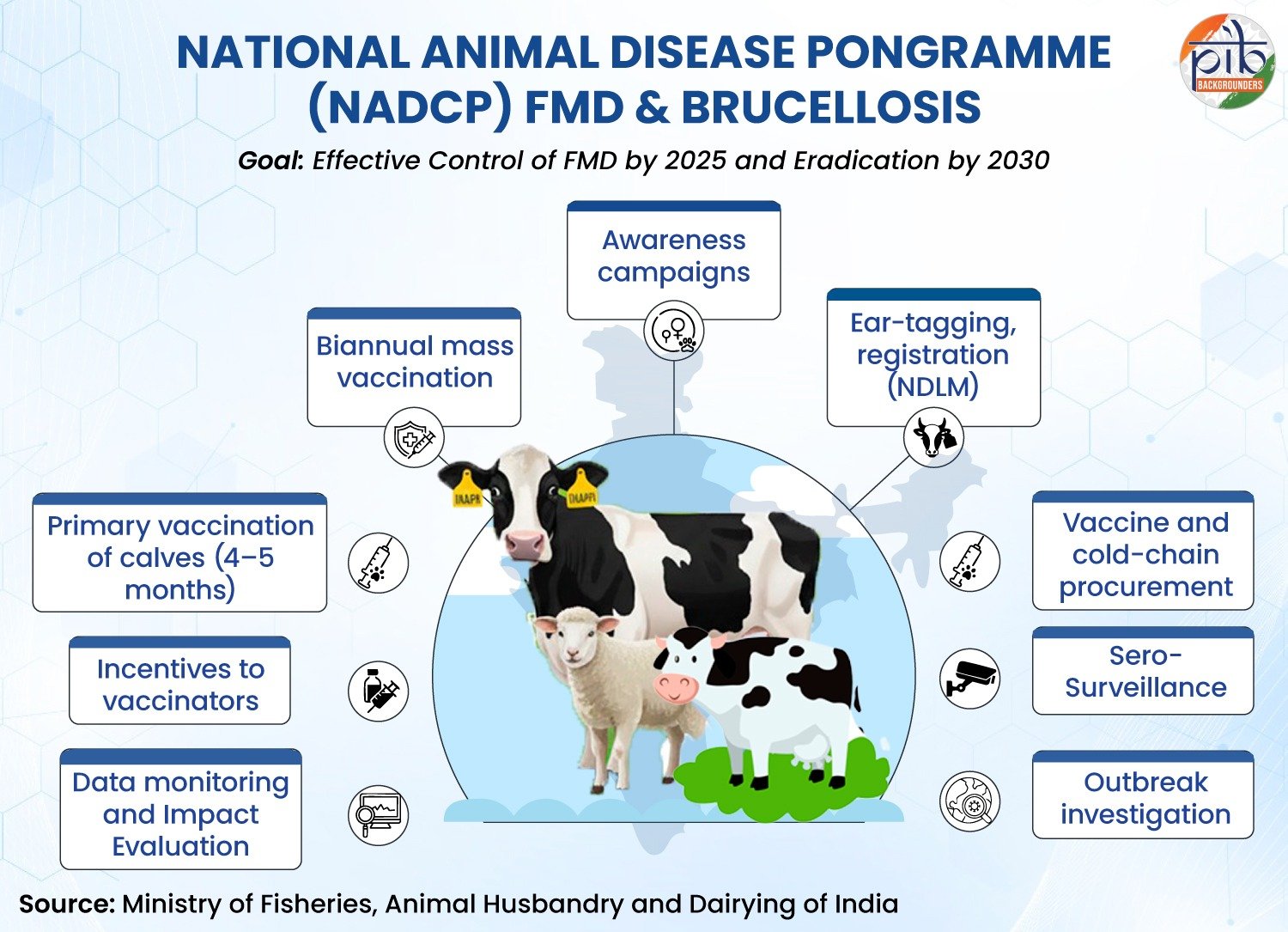
Foot and Mouth Disease (FMD): Highly contagious viral infection affecting cloven-hoofed species. The disease severely reduces milk output, impairs growth in youngstock, and restricts access to international animal product export markets.
-
Bovine Brucellosis: Chronic bacterial infection disrupting reproductive function. Because no curative treatment exists for livestock, vaccination of young female calves is the primary method for preventing infection spread.
2. Epidemiological Outcomes & Outbreak Reduction
Sustained vaccination protocols have yielded measurable reductions in reported disease outbreaks and circulating viral loads across the country.
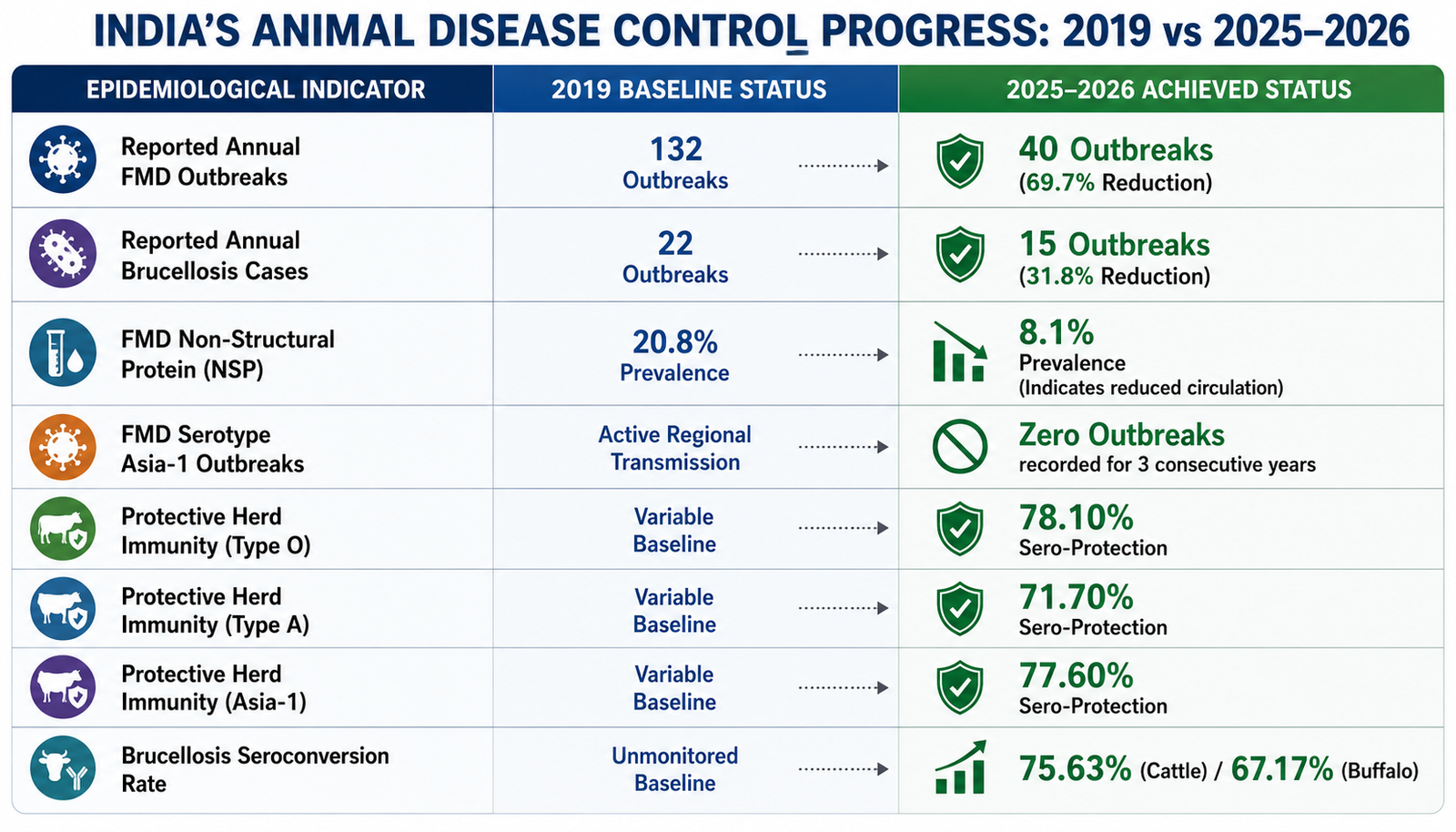
Protection in Migratory Pastoral Livestock
Beginning in 2024, FMD vaccination was expanded to cover pastoral sheep and goat flocks. Dedicated migratory vaccination routes were established across Haryana, Himachal Pradesh, Uttarakhand, Jammu & Kashmir, and Ladakh, helping reduce vector transmission along seasonal transhumance routes.
3. Macroeconomic Gains: Bovine Productivity and Milk Production
The reduction in endemic disease burden directly correlates with gains in livestock yield and total national milk output over the past decade.
India’s average milk production increased from 146.31 million tonnes in 2014–15 to 247.87 million tonnes in 2024–25, reflecting a 69.41% total gain. National policy targets aim to achieve an average bovine yield of 3,000 kg/animal/year by 2030.
4. Institutional Framework, Digital Integration, and Budgetary Allocation
To support long-term disease management, the Government restructured animal health funding by subsuming the NADCP, the Livestock Health and Disease Control (LH&DC) component, and the Pashu Aushadhi initiative into a single umbrella scheme: the Livestock Health and Disease Control Programme (LHDCP).
The total budget outlay for the LHDCP for Financial Year 2026–27 is set at ₹2,010 crore.
5. One Health Integration & Pandemic Preparedness
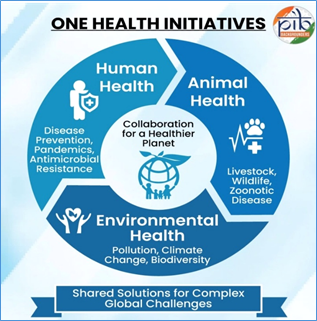
The NADCP works alongside international pandemic preparedness initiatives, recognizing the connection between human, animal, and environmental health.
-
National One Health Mission: Established following the 21st meeting of the Prime Minister’s Science, Technology, and Innovation Advisory Council (PM-STIAC), integrating disease surveillance across human health, veterinary, and environmental departments.
-
G20 Pandemic Fund Project: A $25 million USD initiative titled “Animal Health Security Strengthening in India for Pandemic Preparedness and Response”, implemented in partnership with the Asian Development Bank (ADB), FAO, and the World Bank.
Regulatory Policy Releases:
-
Standard Veterinary Treatment Guidelines (SVTG): Establishes evidence-based prescribing protocols to promote antimicrobial stewardship and support the National Action Plan on Antimicrobial Resistance (NAP-AMR).
-
Crisis Management Plan (CMP) for Animal Diseases: Establishes standard operating procedures for rapid containment, quarantine, and recovery during disease outbreaks.
Summary & Strategic Horizon
The National Animal Disease Control Programme has evolved from a mass vaccination initiative into an integrated livestock healthcare infrastructure. By pairing field vaccination with digital tracking on the Bharat Pashudhan Portal, cold-chain logistics, and One Health surveillance, the program has reduced FMD and Brucellosis incidence while supporting dairy productivity gains across India.
Future policy directives focus on maintaining WOAH-aligned disease-free zones, expanding genomic surveillance, utilizing AI-driven epidemiological modeling, and supporting sustainable livestock production as part of the Viksit Bharat 2047 national development framework.
Regulatory & Institutional References
-
Department of Animal Husbandry and Dairying (DAHD). (2026). National Animal Disease Control Programme (NADCP) Operational Dashboard & Guidelines. Ministry of Fisheries, Animal Husbandry & Dairying, Government of India.
-
Bharat Pashudhan Portal. (2026). National Digital Livestock Mission (NDLM) Database Statistics.
-
Press Information Bureau (PIB Delhi). (2026, August 22). Building a Disease-Free Livestock Sector: Comprehensive Performance Update on NADCP and LHDCP. Release ID: 2212290.
-
Indian Council of Agricultural Research (ICAR-DFMD). (2025). Annual Sero-Surveillance and Sero-Monitoring Report for Foot and Mouth Disease in India.
-
World Organisation for Animal Health (WOAH). (2025). Terrestrial Animal Health Code: Bovine Spongiform Encephalopathy, Foot and Mouth Disease, and Brucellosis Standards.

